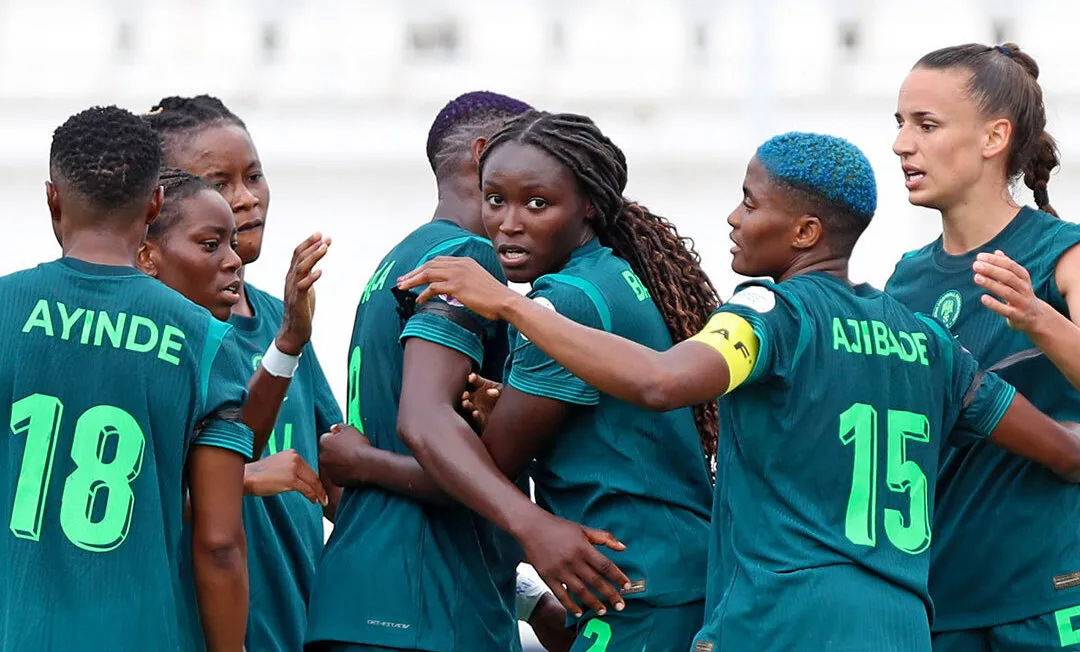
The Nigeria senior women’s national team, the Super Falcons, have officially vacated their training camp following the unexpected postponement of the 2026 Women’s Africa Cup of Nations (WAFCON). Head coach Justine Madugu and his squad returned to Nigeria on Wednesday after concluding a productive two-match international friendly series against the Indomitable Lionesses of Cameroon in Yaoundé. While the team had originally planned to transition directly from their Cameroonian expedition to a final high-altitude training phase in Morocco, those plans were scrapped after the Confederation of African Football (CAF) moved the tournament’s kickoff from March to July 2026.
As a result of the calendar shift, the ten-time African champions have been granted leave to return to their respective domestic and overseas clubs. The decision to disband the camp comes after CAF cited “unforeseen circumstances” for the delay, pushing the competition to a new window that will now run from July 25 to August 16. Despite the revised dates, the governing body has notably refrained from confirming if Morocco will retain its status as the sole host or if the tournament might be moved to a different nation, leaving a cloud of administrative uncertainty over the event’s logistics.
“Nigeria’s Super Falcons will now be decamped following the postponement of the 2026 Women’s Africa Cup of Nations. Justine Madugu’s side returned to the country on Wednesday after playing two friendlies against the Indomitable Lionesses of Cameroon in Yaoundé last week. The African champions were initially expected to head to Morocco for the final phase of their preparations.”
The disruption is particularly significant for Nigeria’s tactical preparation, as the team had been intensifying efforts to defend their continental crown. The Super Falcons are currently drawn into a competitive Group C, where they are scheduled to face off against Zambia, Egypt, and Malawi. The July rescheduling means that Coach Madugu will now have to re-evaluate his scouting and invitation strategy, as the new dates fall during the heart of the European off-season and the heat of the North African summer, potentially impacting player availability and conditioning.
“The players have now dispersed to their different clubs after the Confederation of African Football (CAF) rescheduled the tournament for July. CAF, however, remains silent on the country that will host the biennial competition. The Super Falcons are drawn in Group C with Malawi, Zambia, and Egypt.”
For the Nigerian Football Federation (NFF), the task now involves reorganizing the team’s lead-up fixtures to ensure the players remain sharp during the four-month hiatus. While the immediate goal of a March title defense has been thwarted, the extra time provides an opportunity to further integrate the new talents Madugu introduced during the recent Cameroon trip. As the continent waits for CAF to finalize the host city details, the Super Falcons remain the team to beat, even if their journey to an 11th title has taken an unexpected detour.
About the Author