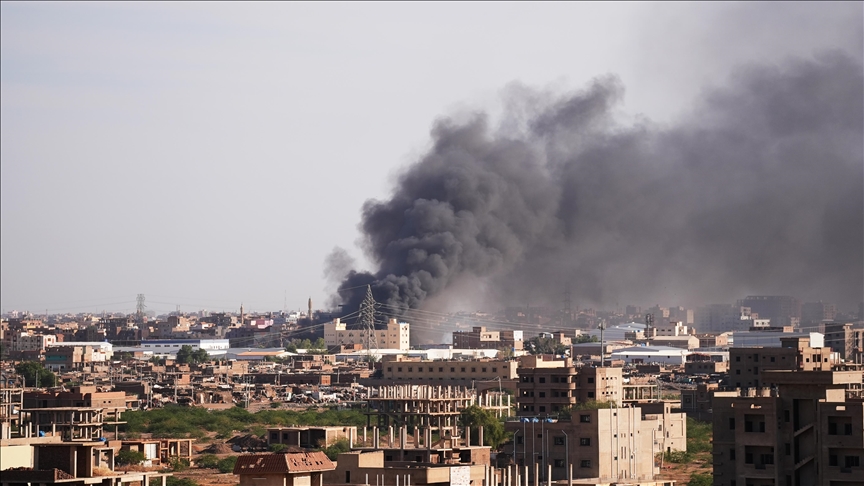
At least 28 civilians have been killed in two separate drone strikes in Sudan, the latest in a wave of attacks that continues to deepen the country’s humanitarian crisis and push civilian casualties from drone warfare beyond 500 this year.
According to health workers who spoke via satellite connection amid an ongoing communications blackout, the attacks occurred hundreds of kilometres apart — one in the western Darfur region and the other in Kordofan.
The deadlier strike hit a busy market in North Darfur’s Saraf Omra on Wednesday, killing 22 people, including an infant, and leaving 17 others injured.
A health worker at the local clinic said the drone struck a parked fuel truck inside the market, triggering a fire that rapidly spread through nearby stalls and crowded trading areas.
“The drone hit a parked oil truck, which caught fire along with part of the market,” said local vendor Hamid Suleiman, describing scenes of panic and destruction.
Saraf Omra serves as a commercial hub for surrounding remote communities across Darfur, making the attack especially devastating for local residents already affected by prolonged insecurity.
Several hundred kilometres east, another drone strike targeted a truck travelling along a road in North Kordofan, killing six civilians and injuring ten others.
Medical officials in El-Rahad said the victims were travelling between the army-controlled towns of El-Rahad and Umm Rawaba when their vehicle was hit.
According to hospital sources, three of the recovered bodies were severely burned.
The attack was blamed on the Rapid Support Forces, which remains locked in conflict with the Sudanese army.
Drone warfare has increasingly targeted Sudan’s central east-west highway, a critical route linking Darfur to eastern regions under army control through El Obeid.
The conflict between the Sudanese military and the Rapid Support Forces, which erupted in April 2023, has already killed tens of thousands and displaced around 11 million people, creating what the United Nations describes as the world’s largest hunger and displacement crisis.
According to the UN, more than 500 civilians were killed in drone strikes between January and mid-March alone, with the Kordofan region now considered one of the most dangerous battlefronts.
The UN human rights office has warned that the growing use of drones reflects the devastating impact of relatively cheap but highly destructive technology in densely populated civilian areas.
Last week, a strike blamed on the Sudanese army hit El-Daein Teaching Hospital in Darfur on the first day of Eid al-Fitr, killing 70 people and injuring 146 others.
Days earlier, another drone attack blamed on paramilitary forces killed 24 people in Tine, raising fresh concerns over regional spillover into neighbouring Chad.
In response, Chad’s Information Minister Gassim Cherif Mahamat said troops had been deployed along the country’s 1,300-kilometre desert border, warning that N’Djamena was prepared to respond proportionately to any further attacks.
Meanwhile, the United Nations’ new special envoy for Sudan, Pekka Haavisto, has begun his first official visit to the country in an effort to support renewed peace efforts.
Despite repeated international appeals for a ceasefire and calls for foreign actors to avoid deepening the conflict, fighting continues with little sign of immediate de-escalation.
About the Author