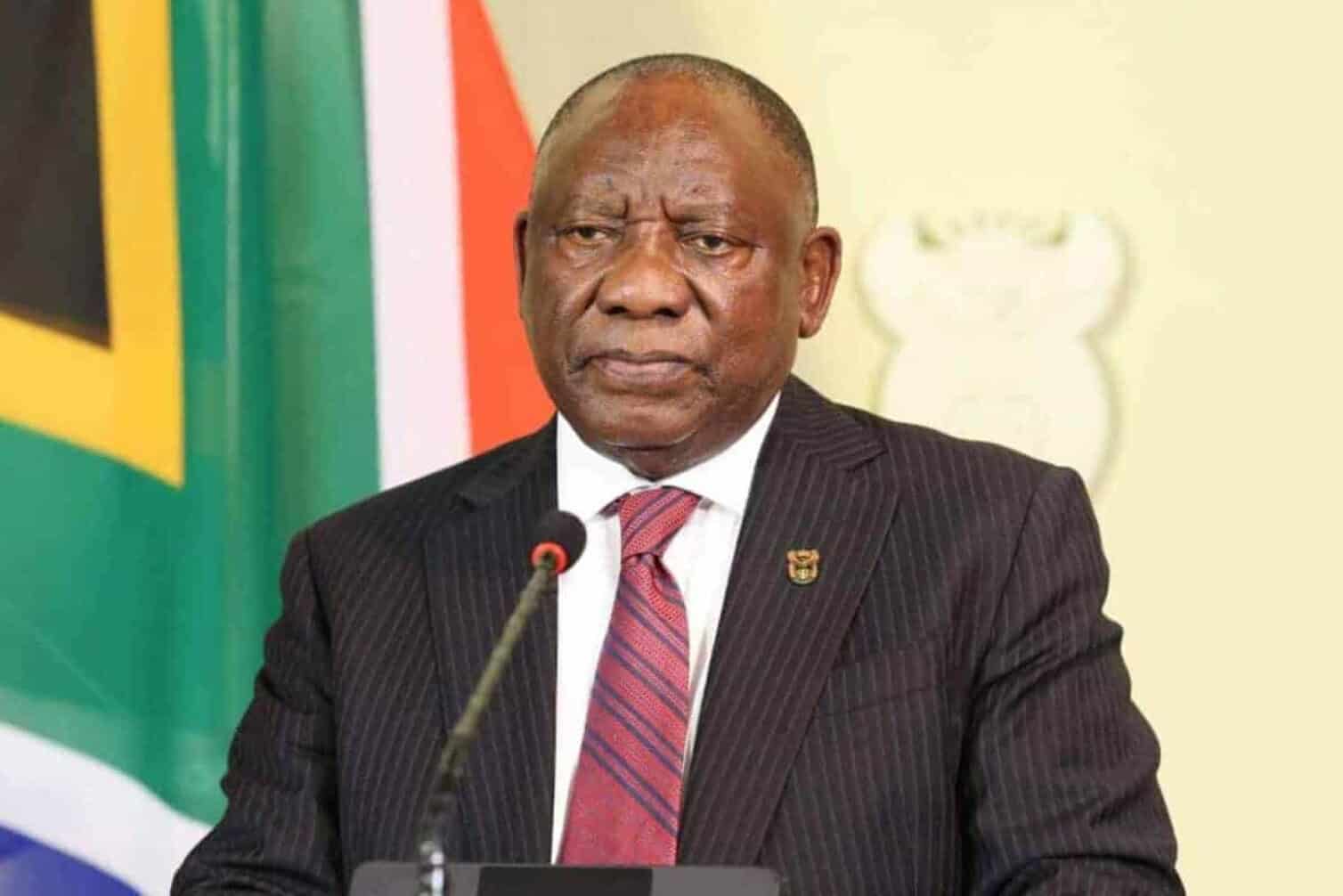
President Cyril Ramaphosa will deliver his ninth State of the Nation Address (Sona) in Cape Town on Thursday evening.
Expectations suggest more words of encouragement about the country’s persistent societal challenges, but South Africans have yet to see tangible results.
Opponents and allies made their demands known, calling for more concrete actions over plans and platitudes.
Ramaphosa’s Sona 2025 review
Here are a few highlights from Ramaphosa’s 2025 Sona and how the issues evolved of the next 12 months.
Continental force
Ramaphosa opened his 2025 speech with a tribute to the South African National Defence Force (SANDF) soldiers who lost their lives in the Democratic Republic of Congo a few weeks prior.
“They lost their lives not in pursuit of resources, territory of power, but they lost their lives so that the guns on our continent may be forever silenced.
“We salute our gallant soldiers,” said the president.
A year on, the SANDF has withdrawn from its involvement in the DRC as part of the United Nations peacekeeping efforts there.
The Presidency stated this weekend that the decision was “influenced by the need to consolidate and realign the resources of the SANDF”.
‘A nation that works for all’
The theme of last year’s Sona was ‘a nation that works for all’.
Ramaphosa will take the podium in Cape Town while Johannesburg residents have gone weeks without water – a flashpoint highlighting general municipal issues.
Ramaphosa admitted that municipalities had not been properly managed and pledged to begin the recovery.
“Starting this year, we will work with our municipalities to establish professionally managed, ring-fenced utilities for water and electricity services to ensure that there is adequate investment and maintenance,” Ramaphosa said 12 months ago.
‘Water is life’ read banners at a Johannesburg water protest on Wednesday, with the South African Human Rights Commission noting that education, healthcare and gender equality were all affected.
“The classification and concomitant declaration of the water crisis in the country as a national disaster constitutes a reasonable measure in the circumstances,” the SAHRC stated on Thursday.
Unemployment
South Africans’ ability to lift themselves out of poverty through job opportunities is limited, with StatsSA reporting that the labour force underutilisation rate stands at 44.9%.
“This year, we will finalise a modernised and comprehensive industrial policy that drives economic growth.
“To create jobs, we must leverage our unique strengths and our unrealised potential to build the industries of the future,” stated the president.
This did not materialise as several large corporates, mainly in the mining, finance and automotive industries, downsized or exited the country completely.
StatsSA stated that total employment decreased by 79 000 – 0.7% year-on-year – between September 2024 and September 2025.
Economic growth
Unemployment cannot be addressed without economic growth, with Ramaphosa setting a modest 2025 target.
“To create this virtuous cycle of investment, growth and jobs, we must lift economic growth to above 3%,” Ramaphosa stated last year.
StatsSA reported sub-1% economic growth for three quarters in 2025.
Dr Roy Havemann, senior economist at the Ipulmelelo Growth Lab at the Bureau for Economic Research, said barriers to economic growth included inefficient state-owned enterprises, fiscal policy and weak investment
“A policy reset would restore growth. The 1994 policy choices hold lessons for 2025. Indeed, from 1994 to 2004, growth accelerated from near zero to 5%,” Haverman told The Citizen previously.
NHI
Ramaphosa vowed to begin laying the groundwork for the ambitious provision of free, quality, universal healthcare.
“The National Health Insurance (NHI) will save many lives by providing a package of services. Our most immediate priority is to strengthen the health system and improve the quality of care,” he said.
Multiple organisations initiated legal action against the NHI’s formation soon after the Act was promulgated, with several matters still before the Constitutional Court.
Later this year, Ramaphosa and Health Minister Aaron Motsoaledi will look to overturn a Gauteng High Court ruling that allows for a review of the NHI Act’s signing.
Corruption
The scourge of government over the years, Ramaphosa made the annual promise to clamp down on corruption.
He highlighted the Special Investigating Unit and the Asset Forfeiture Unit’s recovery of over R10 billion in state capture cases.
This was five months before KwaZulu-Natal Police Commissioner Lieutenant General Nhlanhla Mkhwanazi implicated Minister of Police Senzo Mchunu and senior police officials in widespread corruption.
The fallout saw Mchunu suspended and Ramaphosa establish the Madlanga Commission of Inquiry, which began phase two in late January.
National Dialouge
Ramaphosa’s 2025 Sona was the first under the government of national unity (GNU), where he launched the national dialogue.
“The national dialogue must be a place where everyone has a voice. It must be a place to find solutions that make a real difference in people’s lives,” he said.
Criticised for its R700 million price tag, the dialogue launched in August but faded into the background.
In December, Ramaphosa announced the steering committee nomination list, and on 17 and 18 January, an induction event for the 99-member committee was held at Unisa.
In addressing the steering committee, Ramaphosa hit many of the beats from his 2025 Sona.
“Poverty, unemployment and inequality are deep wounds that prevent our country from reaching its full potential, with crime, gender-based violence and corruption haunting our communities.
“As we confront uncomfortable truths and ask difficult questions, we must create spaces where discussions encourage healing. We must speak with courage and listen with humility,” the president stated.
NOW READ: Sona 2026: Here are five things Ramaphosa should focus on during his speech
About the Author