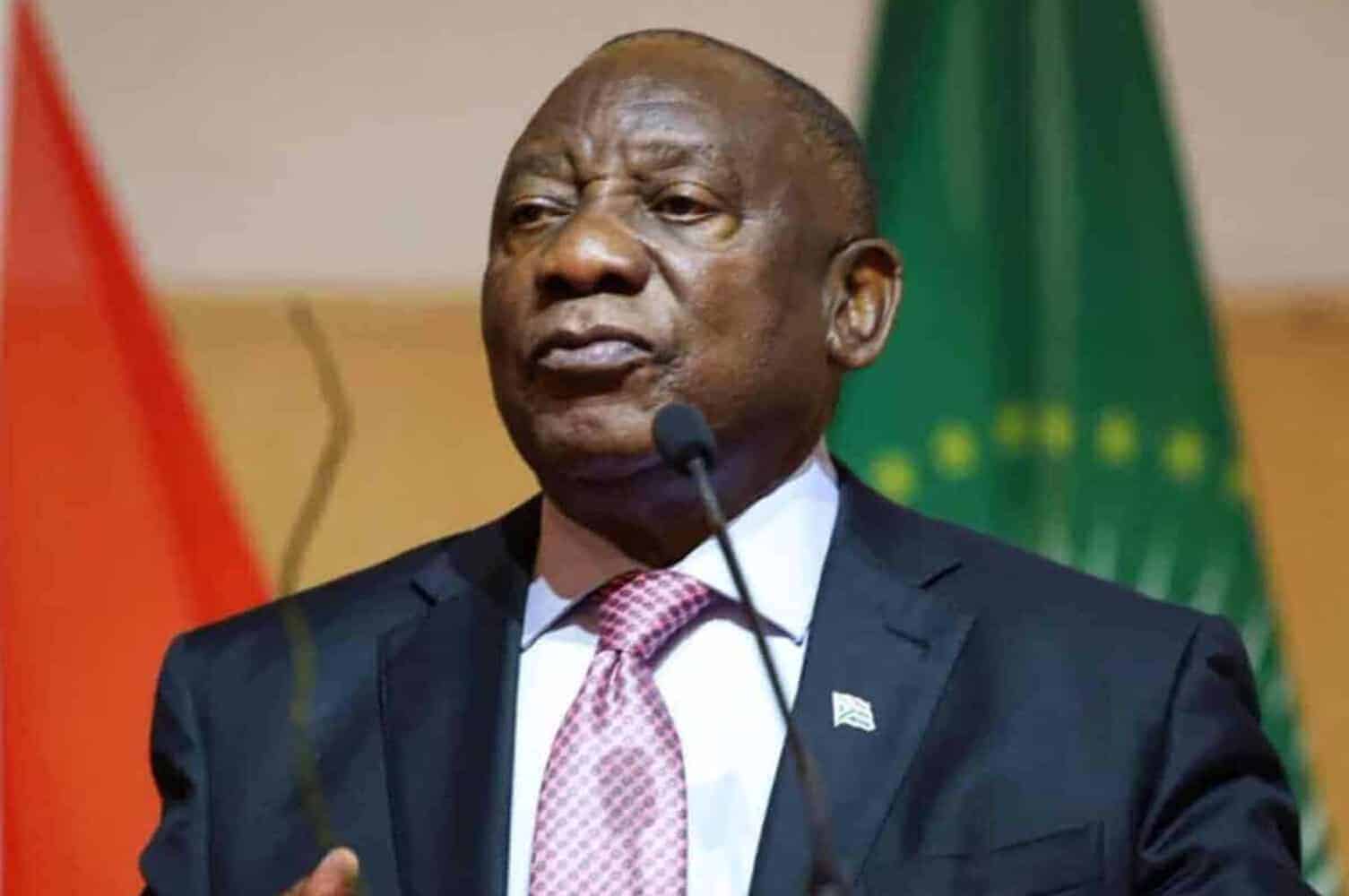
President Cyril Ramaphosa will deliver his ninth State of the Nation Address (Sona) in Cape Town this week, and questions have been raised about whether he will offer the country any new ideas to grow the economy and create jobs.
The country’s economy has been struggling to grow since 2009, and youth unemployment stands at more than 45%, while South Africa is still regarded as one of the most unequal societies in the world.
Ramaphosa’s party lost the 2024 general elections and is now in a power-sharing arrangement with other parties. The two big parties in this government of national unity (GNU) do not share a common vision for economic growth.
Always the same promises
Theo Neethling, a political analyst from the University of Free State (UFS), told The Citizen that economic growth has been a big challenge for Ramaphosa and those who came before him.
“South Africa’s underlying political and socio-economic challenges have remained largely unchanged, and this is reflected in the recurring themes of successive SONAs. Over the past decade in particular, job creation has featured prominently, consistently framed as the primary response to unemployment, poverty, and inequality.
“While the priority has remained constant, the emphasis has shifted—from broad policy frameworks such as the New Growth Path in the early 2010s, to a stronger focus on investment, youth employment, and public-private partnerships in later years.
“During the Covid-19 period, direct public employment and stimulus programmes dominated, followed more recently by renewed emphasis on enabling private-sector-led growth alongside state-led job schemes,” he said.
The DA has proposed a new Bill called the Economic Inclusion for All Bill. They claim this new bill can grow the economy, fast-track investment, and produce jobs for South Africans.
The ANC has also held several meetings to discuss ways to grow the economy; during one of its National Executive Committee (NEC) meetings, it came up with what it called a 10-point plan. But they emphasised that BBBEE would remain government policy.
Focus on municipalities
In an election year, Neethling said Ramaphosa will also emphasise the importance of functional municipalities and ensuring residents have access to basic services.
“Sonas have also regularly acknowledged deepening problems at the municipal level, including governance failures, service delivery breakdowns, financial distress, and limited capacity.
“These issues are typically presented as constraints on development and growth, with recurring calls for national and provincial intervention and the professionalisation of local government.
“However, municipal dysfunction has seldom been treated as a central focus, instead forming part of broader governance narratives, often with limited attention to accountability and implementation failures.”
Do South African’s care about the Sona?
Meanwhile, Neethling said public perception around Sona’s has grown increasingly ambivalent.
“While widely recognised as an important constitutional ritual, many South Africans view it little enthusiasm and even scepticism—as a familiar script that reiterates commitments but offers limited reassurance that long-standing challenges affecting daily life will be resolved,” he said.
The Sona occupies a central place in South Africa’s constitutional democracy, serving as a key moment for executive accountability, policy direction, and political symbolism.
In a manner that has become very flamboyant and dramatic over the years, the Sona brings together the Executive, Legislatures and Judiciary, it formally opens the parliamentary year and sets the government’s governing agenda.
NOW READ: Vavi criticises ANCYL after its call for youth unemployment to be declared a national disaster
About the Author