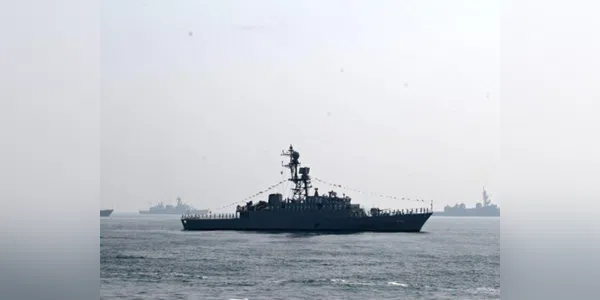
Sri Lanka has taken custody of an Iranian naval vessel after it requested permission to dock due to engine failure, just one day after another Iranian warship was reportedly sunk by a US submarine in nearby international waters.
The incident follows the sinking of the Iranian naval ship Iris Dena, which was struck by a torpedo approximately 44 nautical miles off Sri Lanka’s southern coast. The attack reportedly resulted in the death of at least 87 crew members.
Pete Hegseth described the strike as a historic demonstration of American naval power, claiming it was “the first sinking of an enemy ship by a torpedo since World War II.” However, the attack was strongly condemned by Iran, whose Foreign Minister Abbas Araghchi warned that the United States would “bitterly regret” the operation.
The following day, another Iranian vessel, the Irins Bushehr, requested permission to dock at a Sri Lankan port after reporting mechanical problems.
After internal deliberations, Sri Lankan authorities approved the request, allowing the ship to berth at the northeastern port of Trincomalee rather than the commercial port of Colombo, citing concerns that docking at the main economic hub could disrupt maritime trade activities.
A total of 208 crew members were evacuated from the vessel, including officers, cadets, and sailors. The evacuees were subsequently transported to Colombo for medical and humanitarian assistance.
“Our policy is to maintain neutrality while upholding humanitarian values,” said Anura Kumara Dissanayake. He added that the country’s intervention reflected its commitment to international maritime conventions and the protection of human life.
Sri Lanka has emphasized that it intends to remain neutral amid the escalating US–Israeli military campaign against Iran, balancing its traditional non-aligned diplomatic stance with humanitarian responsibilities.
Authorities are also continuing search operations in Sri Lankan territorial waters for missing crew members from the Iris Dena. Thirty-two survivors are currently receiving treatment in the southern city of Galle for serious injuries.
Sri Lanka maintains significant economic and diplomatic ties with both countries, importing roughly $250 million worth of Iranian crude oil annually, which is repaid through monthly tea exports. Meanwhile, the United States remains the primary destination for Sri Lankan garment and apparel exports.
About the Author