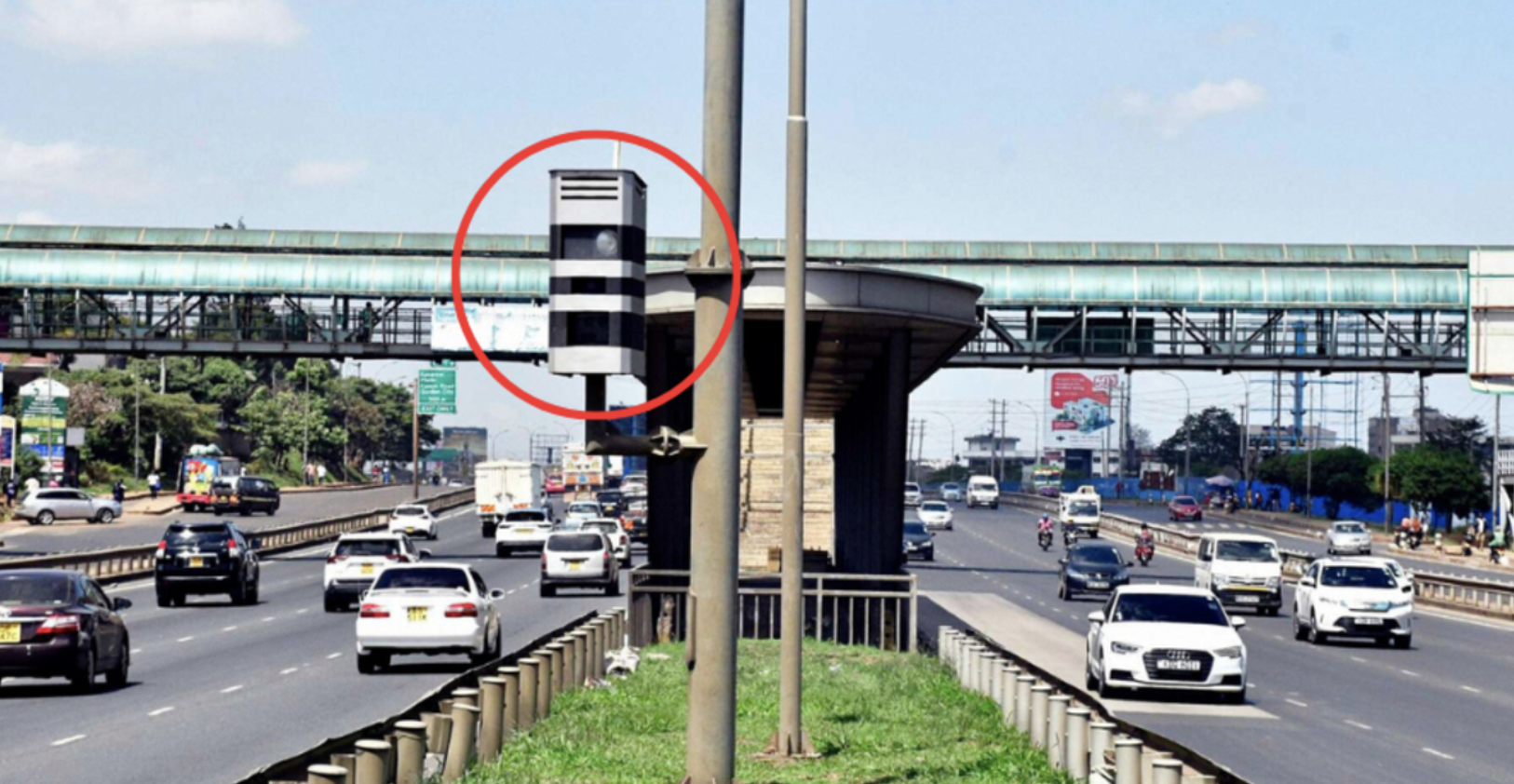
Kenya’s transport regulator says all speed cameras installed under the country’s new automated traffic enforcement system will be clearly marked with warning signs, even as officials await further guidance following a directive issued by the High Court of Kenya.
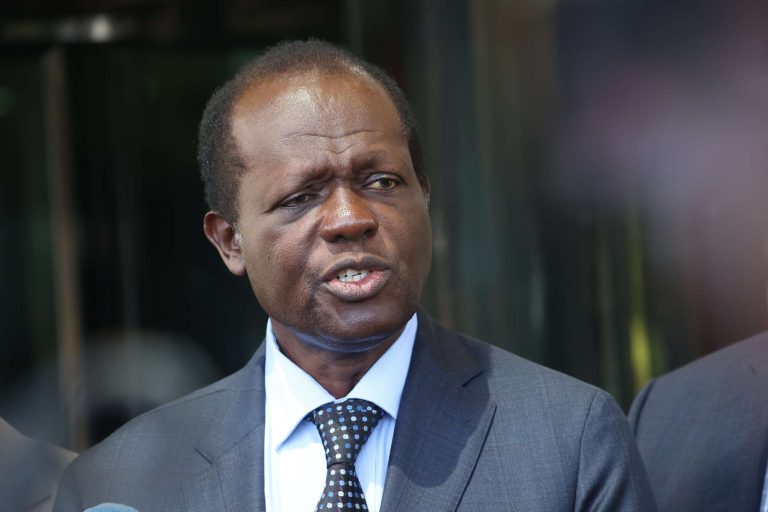
In an exclusive interview with the Daily Nation, the National Transport and Safety Authority’s (NTSA) new Director General, Nashon Kondiwa, said every speed camera will be accompanied by clear signage notifying motorists that they are entering a speed monitoring zone.
According to Mr Kondiwa, speeding violations will be automatically detected by installed cameras, while other offences may still be monitored directly by enforcement officers.
“It’s a mix of both depending on the offense and how it is detected and captured,” Mr Kondiwa said.
He added that the new automated camera system is designed to improve road safety and accountability.
“The system will combine automated cameras and traditional police enforcement to detect violations, including speeding and other minor traffic offences outlined under Section 117 of the Traffic Act,” said Mr Kondiwa.
Mr Kondiwa made the revelations after the High Court temporarily halted enforcement of NTSA’s automated instant traffic fines system.
On Thursday, the High Court issued a conservatory order stopping the issuance, generation, or enforcement of automated traffic penalties pending the determination of a constitutional petition challenging the system.
The orders restrain NTSA, its Director-General, and other agencies involved in the system from “issuing, generating, demanding or enforcing instant or automated traffic penalties produced through algorithmic or other automated decision-making systems.”
The court further barred the implementation of the Instant Fines Traffic Management System until the matter is heard inter partes.
The case was filed by civil society organisation Sheria Mtaani and advocate Shadrack Wambui, who argue that the digital penalties scheme violates constitutional safeguards governing criminal justice, fair administrative action, and data protection.
According to Mr Kondiwa, the automated system will rely on vehicle registration records to determine responsibility. Fines generated by cameras will be directed to the registered owner of the vehicle.
“The vehicle owner has the ultimate responsibility for how the vehicle is used on the road,” he said. “However, offences related specifically to driver behaviour may be captured manually by enforcement officers.”
On how motorists will receive evidence of violations for offences detected automatically, he said that notifications will include an accompanying GIF and photo, especially for automatically detected offences, along with details such as location, date and time of the alleged violation.
Drivers will also receive SMS alerts directing them to the official fines portal.
“The messages will come from the official government domain, fines.ntsa.go.ke and include a unique reference number that can be verified at payment points operated by KCB Group,” he said.
According to Mr Kondiwa, the payment restriction to bank branches is a deliberate strategy to protect motorists from fraud.
“This is a strategic approach to protect the public from fraudsters who may take advantage when motorists don’t have full information,” he added.
Additional payment methods, such as mobile and online platforms, may be introduced once the network of cameras expands.
“When we reach a threshold of 100 fixed cameras, we will change the payment mode for more flexibility,” he said.
Meanwhile, NTSA is yet to publicly release a complete map of every camera location in Nairobi, mainly to prevent drivers from deliberately avoiding enforcement zones. However, several known corridors and approximate numbers have been reported.
Some of the confirmed or widely reported monitoring areas include: Thika Superhighway, Safari Park area, Jomoko/Thika Road turnoff, Allsops–GSU HQ stretch, Pangani/Muthaiga interchange, Roysambu/TRM area and Nairobi Expressway.
Roads being monitored
Other areas include, Museum Hill exit area, after Nyayo Stadium section, Southern Bypass, near the virtual weighbridge (Ngong Road side), Northern Bypass, and Gitaru/Wangige stretch (mobile cameras common).
Other major Nairobi corridors are being monitored are Mombasa Road, Waiyaki Way, Kiambu Road, Likoni Road/Industrial Area and major junctions and accident prone areas.
On the Nairobi Expressway, a speed limit of 80 km/h has been set for the section between Museum Hill and Westlands, as well as on the stretch after Nyayo Stadium.
On Mombasa Road, the speed limit is 80 km/h from Nyayo Stadium to Sameer Business Park near General Motors, and from Cabanas near JKIA to Mombasa Road.
On Waiyaki Way, the speed limit has been set at 60–80 km/h between Kangemi and Uthiru.
Urban areas generally have a speed limit of 50 km/h, while highways and dual carriageways permit speeds of between 80 km/h and 110 km/h.
Traffic cameras – equipped with artificial intelligence (AI) – monitor for speeding, lane violations, and driver distractions, including mobile phone use while driving.
When a violation is detected, the system automatically reads the vehicle’s registration plate and instantly sends an SMS to the registered owner, detailing the offence and the corresponding fine.
NTSA’s penalty structure for traffic violations as follows: exceeding the speed limit by 6–10 km/h incurs a Sh500 fine; 11–15 km/h over the limit carries a Sh3,000 fine; and 16–20 km/h above the speed limit attracts a fine of Sh10,000.
Repeat offenders may face licence suspension under a 20-point demerit tracking system.
At the same time, Mr Kondiwa said the automated system will follow strict calibration standards to ensure accuracy.
“All cameras are regularly calibrated according to international standards and manufacturer specifications,” he said.
Independent oversight of the calibration process will involve the Kenya Bureau of Standards and the Kenya Accreditation Service.
Guide on camera placement
“Motorists who believe a violation was issued incorrectly will be able to challenge the fine through an appeals process involving the transport regulator, the licensing board and the courts,” he said.
The Director General further said transparency will be a key part of the system’s rollout. Crash data rather than revenue targets will also guide camera placement.
He said cameras will be installed in locations identified through geospatial analysis of crash and collision records.
“The cameras will be installed based on the risk level of the road,” he said. “This is data-driven and based on geo-mapped crash and collision data.”
The enforcement system forms part of a wider initiative to enhance vehicle safety and compliance nationwide.
The Director General acknowledged that existing vehicle inspection systems have struggled with outdated equipment and manual procedures.
“Motor vehicle inspections are currently not very accurate due to ageing equipment and manual procedures,” Mr Kondiwa said.
To address this, the government plans to begin outsourcing vehicle inspection centres in July 2026, with the aim of modernising the process.
This will introduce automated systems and standardised procedures, enabling the regulator to concentrate on oversight and licensing.
The NTSA will also continue to conduct enforcement operations with the National Police Service to ensure that passenger vehicles, buses, and trucks meet safety standards.
Additionally, new regulations approved by Parliament will require the quicker removal of stalled vehicles from roads under the updated commercial vehicle rules, which are scheduled to take effect in July 2026.
Mr Kondiwa said these combined measures, including automated enforcement, improved inspections and stronger compliance checks, are intended to reduce accidents and make Kenya’s roads safer.
About the Author