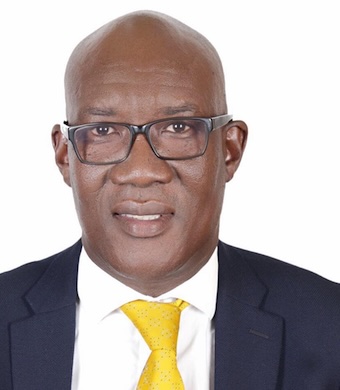
Marshall Alenyo is shaping up to be one of the most closely watched members of the 12th parliament.
An eloquent lawyer by trade, he was recently elected as the MP for Jonam County in Pakwach district. For many, the real question isn’t how he got there, but how far he can go. In Kampala’s corporate circles, Alenyo is already a well-known figure.
He is the kind of person you call when you need a sharp MC, a savvy fixer, or someone who can turn a dull boardroom meeting into something electric. But over the next five years, the entire country will get to see a different side of him; the debater, the lawmaker, the strategist.
Back in 2015, he surprised many when he retired from ministry of Internal Affairs at the rank of Senior Immigration Officer (legal) to join private practice with Kob Advocates.
Those who have followed his journey say Alenyo is more than just a gifted speaker. He is an influencer and an enforcer; someone who can persuade, organize and mobilize. And that combination of skills, some say, makes him a genuine threat to even those in much higher office.
“Alenyo doesn’t just talk,” one MP who preferred anonymity because he is conflicted, said.
Even as he celebrates his first electoral victory after coming short in 2021, Alenyo is already aiming higher, eyeing the powerful position of deputy speaker. On the surface, it might seem ambitious for a first-time MP to go straight for the jugular.
But for those who know him, it is entirely in character. This is a man who has built a career on turning moments into momentum. So, does he actually stand a chance? Well, several dynamics are at play.
For one, it is widely believed that Thomas Tayebwa, the current deputy speaker, will seek re-election, though nothing is set in stone.
Alex Wamala, a political analyst and commentator, offers some perspective: “The focus of the 2021 speakership was on Jacob Oulanyah and Rebecca Kadaga yet in the end, it was Anita Among. So, in Ugandan politics, anything is possible. Ambition is often mistaken for arrogance. But Parliament is a house of experience, and first-timers who aim for the top table must prove they bring more than just enthusiasm. Alenyo’s legal mind gives him an edge, but he will need to show he can marshal votes.”
And that’s where the numbers get interesting. Coming from West Nile, Alenyo enters the race with what many estimate to be a bloc of at least 40 MPs from the region. But it is not just about geography.
Alenyo carries with him a powerful legacy; he is the son of the late Esrom Alenyo OO, a respected political icon in the greater Alur region. That name still carries weight.
Veteran journalist and author Ben Bella Ilakut notes, “In Uganda, political heritage is currency, but only if you can spend it wisely. Alenyo inherits a name, but he will need to build his own mandate.”
And build it he has. A lawyer, a commissioner, a corporate MC, a devoted family man, and now, a legislator with national ambitions. But perhaps the most intriguing layer to his profile is his proximity to power.
What’s more, Alenyo enjoys significant support from the Patriotic League of Uganda (PLU). In fact, during the recent presidential campaigns, he was instrumental as one of the 10 deputy heads of the PLU Tuko Pamoja team that mobilized votes for President Museveni in Pakwach.
He is said to have been a big factor in helping the president get 72 per cent in a constituency previously dominated by FDC in parliament. Ironically, whereas he holds strong roots in PLU, he is also known to be a close friend of the influential Odrek Rwabwogo, the Senior Presidential Advisor on Special Duties and Chairman of the Presidential Advisory Committee on Exports and Industrial Development (PACEID).

Married to Patience Rwabwogo, daughter of President Museveni, he is a major influencer in the political sphere in the country. In all this, what makes Alenyo’s candidacy credible is that his name ticks all the boxes of power brokers.
Political commentator Charles Rwomushana reflects on what this means: “When you advise the king, people assume you have the king’s ear, and that changes the calculus. In a parliamentary race, that kind of perceived influence can be just as powerful as a bloc vote.”
What’s more, West Nile has been searching for a unifying national figure since the passing of former Speaker Francis Ayume. Those who came after were often too old, too cautious, or too unambitious to claim a seat at the country’s top table.
Alenyo, by contrast, represents something new: a symbol of hope for the next generation. His bid for deputy speaker is not just about a title; it’s about giving the region a voice where it matters most.
So, for the young people in Pakwach, Nebbi, Zombo, and across West Nile, Alenyo’s rise is a reminder that leadership is built through resilience, service, and an unwavering commitment to the people.
Whether he wins or not, he is already changed the conversation. Even if he loses the deputy speakership, the dynamics of Ugandan politics show that if indeed Anita Among serves her second term as speaker up to 2031, a big likelihood is that Thomas Tayebwa may start his term as speaker.
On the basis of rotation in reference to regional balance as is always the case, the deputy speaker will have to be from the West Nile and it is for that reason that Alenyo can take a loss now, but become the unanimous choice for deputy speaker in 2031. That is what strategy is called in politics.
About the Author