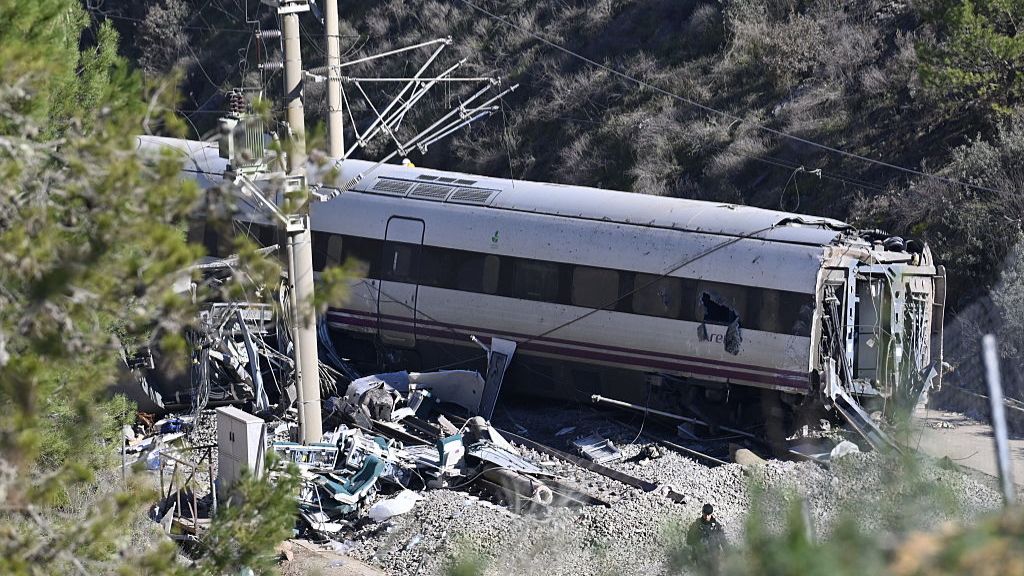
Train drivers across Spain have begun a three-day nationwide strike, protesting what they describe as inadequate safety guarantees and a steady decline in conditions across the country’s rail network.
The industrial action follows two deadly train accidents in January that have intensified scrutiny of Spain’s rail infrastructure and its management.
The first tragedy occurred on 18 January in Adamuz, southern Spain, when a high-speed train derailed and collided with another travelling in the opposite direction, killing 46 people in what became the country’s deadliest rail disaster in more than a decade. Just two days later, a second accident near Barcelona claimed the life of a trainee driver and injured at least 37 passengers after a local train derailed.
The January crashes caused widespread disruption for travellers and cast a shadow over Spain’s once-praised rail system. Subsequent safety inspections uncovered faults and maintenance shortcomings on several routes, further deepening concerns among rail workers.
The train drivers’ union, Semaf, said the strike aims to compel authorities to confront what it described as the “constant deterioration of the rail network.” The union is demanding the recruitment of additional personnel, increased investment, and improved maintenance to ensure safer rail operations nationwide.
A preliminary investigation into the Adamuz crash by Spain’s rail accident investigation commission (CIAF) found grooves on the wheels of the derailed train and on three earlier trains, suggesting a fracture in the track that may have occurred before the train passed over it. The findings have heightened concerns over infrastructure integrity on key routes.
In the Catalonia incident, rail officials believe a wall collapsed as the train was passing, striking the driver’s cab before causing the train to derail. The first carriage, where most of the injured passengers were seated, sustained severe damage.
Semaf has described the two collisions as a “turning point,” insisting that urgent and far-reaching measures are needed to restore confidence in the safety of Spain’s railway system.
The crisis has also taken on a political dimension. Prime Minister Pedro Sánchez is expected to face intense questioning in parliament later this week over the failures in the rail system and the government’s handling of the incidents.
Investment in rail infrastructure has come under sharp scrutiny. While the Socialist-led government has rejected claims of underfunding, noting that €700 million has been invested in upgrading the Madrid–Andalusia line in recent years—including the section where the Adamuz crash occurred—tensions remain high.
Transport Minister Óscar Puente dismissed suggestions that the accidents were the result of poor maintenance or outdated infrastructure. “We are not dealing with a lack of maintenance, obsolete infrastructure, or insufficient investment,” he said.
Despite these assurances, the strike underscores growing friction between rail workers and the government, as questions over safety, accountability, and the future of Spain’s rail network continue to mount.
About the Author