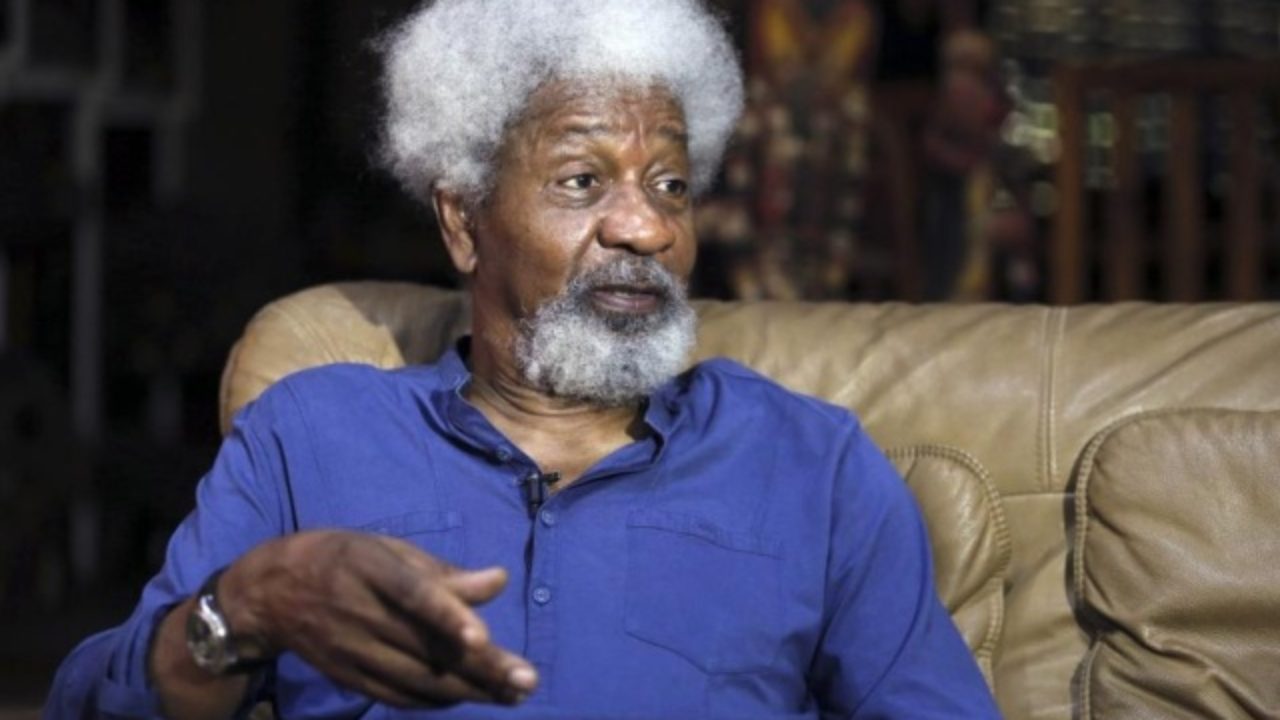
Nobel Laureate, Prof. Wole Soyinka, on Thursday, warned that societies that ignore their history and fail to confront injustice risk sliding into tyranny, stressing that cultural identity and historical consciousness are essential to justice and national renewal.
Soyinka, who made this known at the centenary anniversary of the Yoruba Tennis Club, Lagos, traced the origins of the club to a broader struggle for social liberation, dignity and self-definition among Nigerians.
Soyinka, who was the Guest Lecturer at the event, said the organisation that eventually became the Yoruba Tennis Club was conceived not merely as a social gathering, but also as part of a historical movement aimed at reclaiming dignity in the face of oppression.
He described the club’s name as a powerful affirmation of identity, rejecting the notion that embracing Yoruba heritage contradicts global or universal values.
“What is wrong with being Yoruba?” Soyinka asked, insisting that cultural rootedness does not negate cosmopolitanism.
He argued that humanity is not organised around cultural erasure but around the recognition and dignity of origins.
“The founders of the club clearly understood who they were and what they stood for,” he stated.
Soyinka recalled Nigeria’s post-independence trajectory, saying that many leaders were eager to replace colonial rulers without dismantling the structures of injustice they inherited.
He stated the excitement surrounding independence often overshadowed the need for deep reflection on governance, accountability, and justice.
The playwright explained that his early work, ‘A Dance of the Forests’, was deliberately pessimistic, as it was intended to warn against repeating historical errors.
Contrary to expectations that the play should celebrate independence, Soyinka said he believed the real work of nation-building was only just beginning.
“The future is not merely about liberating ourselves from the past,” he said, adding that progress requires remembering, confronting, and learning from past mistakes in order not to reproduce them in new forms.
He warned that tyranny does not always arrive suddenly but often emerges when societies neglect justice, silence dissent, and allow leaders to step comfortably into the shoes of former oppressors.
“The failure to confront historical wrongs makes nations vulnerable to repeating cycles of abuse and domination,” the Nobel Laureate said.
Soyinka stressed that institutions such as the Yoruba Tennis Club have a responsibility beyond celebration, urging them to remain vigilant spaces for reflection, dialogue, and moral courage as Nigeria navigates its future.
The centenary lecture, he noted, should therefore serve not only as a moment of celebration but also as a call to renewed commitment to justice, cultural integrity, and historical awareness.
Earlier in his remarks, Chairman, Yoruba Tennis Club, Chief OlawumiGasper, reaffirmed its commitment to preserving history, culture, and intellectual leadership.
He described the milestone as a reflection of the institution’s enduring legacy and its sustained role in shaping Nigeria’s cultural and intellectual landscape.
The club, founded a century ago, he noted, has remained firmly rooted in history and tradition while continuously engaging with contemporary national and global issues.
“Yoruba Tennis Club has long served as a meeting point for leaders, thinkers, and professionals committed to societal progress,” he stated.
Gasper described the renowned African literary scholar, Prof. Soyinka, as a man of deep intellectual capacity, cultural depth and moral clarity.
According to him, “ the interactive session with the scholar offered a rare opportunity to engage in wide-ranging conversations on contemporary national and global issues, spanning literature, culture, nationhood, humanity, conscience and the enduring role of history in shaping societies and values.”
He noted the engagement was particularly significant for students in attendance, many of whom have studied the works of the guest speaker, urging them to seize the opportunity to learn directly from a leading voice in African intellectual discourse.
The chairman also paid tribute to the founding fathers of the Yoruba Tennis Club, acknowledging their foresight, sacrifices, and commitment to the sustainability of the institution’s traditions and values.
Funmi Ogundare
About the Author