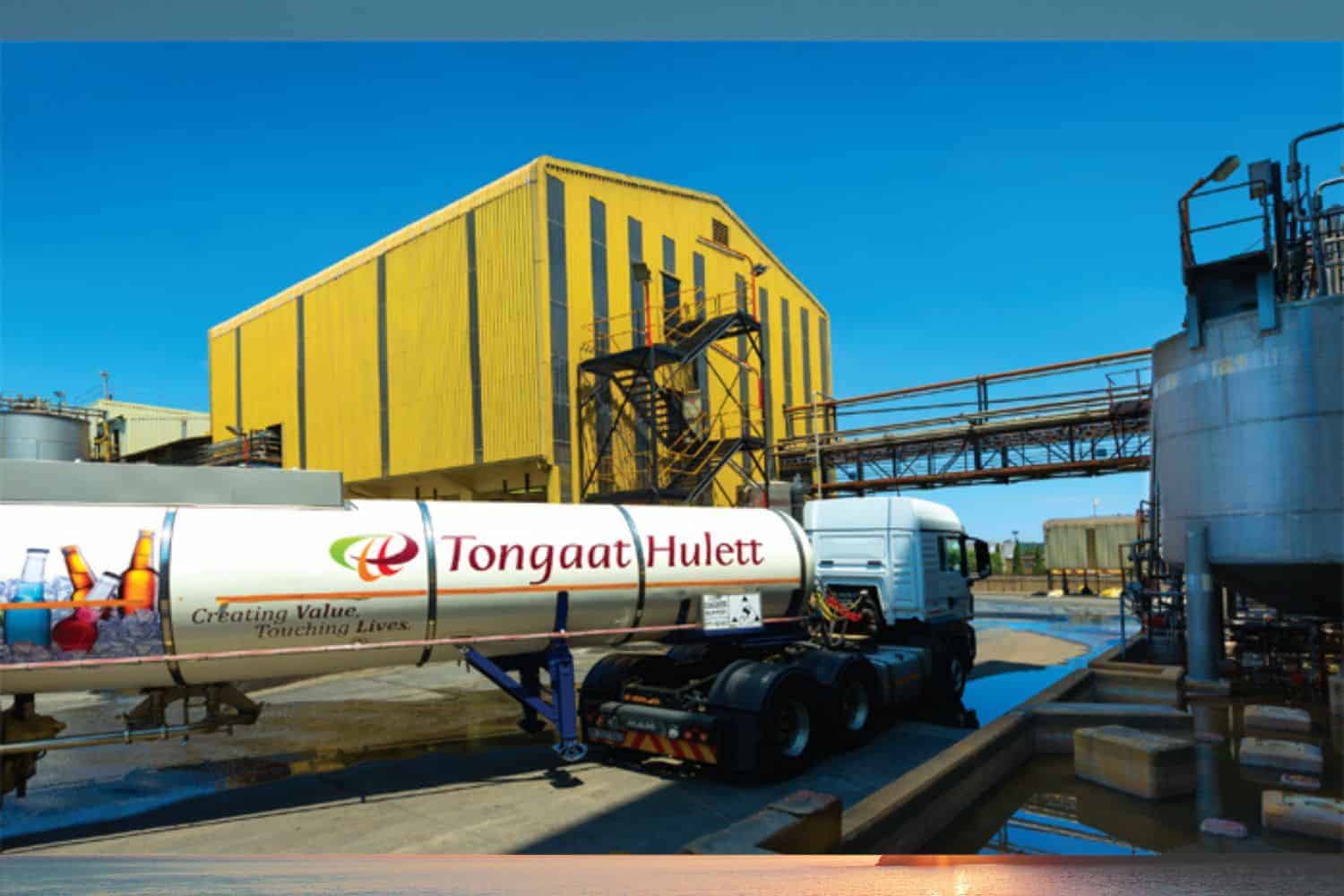
The potential liquidation of Tongaat Hulett is about more than just the company – there’s a broader economic implication that makes this ‘a very difficult and potentially explosive situation that requires calm heads’: Independent analyst Dave Woollam.
JIMMY MOYAHA: We move on to the Tongaat conversation, which has been a story we’ve been keeping an eye on for the longest time. Sadly we are heading down a path we have been trying to avoid – and that is the path of liquidation.
We’re going to look at this in a little more detail with independent analyst Dave Woollam – who we’ve previously had on the show – to look at the tangled conversation. Dave, lovely to have you back. Thanks so much for taking the time.
The last time you and I spoke, we were in the thick of business rescue. There were moving parts. We were trying to make sense of where we end up, and we were looking at things like the sugar tax, the rebates and all manner of conversations around Tongaat Hulett.
It looks as though we have finally concluded what would be the business-rescue proceedings and liquidation. The undesirable outcome is where we stand.
ALSO READ: Scopa urged to probe R6.3bn in Tongaat Hulett rescue funding
No solution found for the sugar business
DAVE WOOLLAM: Good evening, Jimmy. Thank you for having me.
Yes, it is a very sad day that some nearly seven years after the first, I guess, cracks within the Tongaat group were exposed, we’ve got to this point – two years into the business rescue and there doesn’t appear to have been a solution found.
I think it’s a very risky situation, because the broader economic implication for the region as a whole, some R5 billion worth of sugar has been paid – or R5 billion has been paid – to the farmers in the North Coast region that falls under the Tongaat Mills for their cane.
And cane is just not a product that can be transported. So it either gets crushed and milled and refined into sugar or it gets ploughed back into the ground.
I don’t believe that’s an outcome that will happen, but we seem to have got ourselves into a very difficult and potentially explosive situation now that really requires calm heads.
ALSO READ: Tongaat Hulett to be bought by Vision Parties, saving thousands of jobs
JIMMY MOYAHA: Dave, I want to look at what we are in this moment. Tongaat Hulett being a business that is more than a century old. It is 134-odd years that that business has been around.
The last that we heard, there was a conversation with a consortium called Vision to potentially step in and take over the business, get it out of business rescue and effectively save all the jobs and save the business.
It looks as though that didn’t go over too well if the business rescue practitioners have decided that the only alternative worth pursuing at this stage is liquidation.
Can we get a sense, perhaps, of what we know about what Vision has put on the table, and perhaps why that didn’t go so well?
Sugar business accumulates too much debt
DAVE WOOLLAM: Yes, I think there is a very complicated long backstory to this.
But to simplify it, I would summarise the situation as it being a company that is using gearing to buy a company that is over-geared.
What do I mean by that? Tongaat’s trouble began when it accumulated too much debt. This is an industry that really doesn’t operate on high gearing but, for various reasons, [it] expanded its property business [and] that became very lucrative, generated cash, and then stopped.
It started accumulating debt to plug the gap. It got to the year 2018, where that debt pile was R12 billion and simply unsustainable. Obviously, the accounts were being manipulated, so people didn’t realise that the company was either that indebted or could not afford to sustain or service that debt.
But now you have a company come along, Vision, which essentially acquired the lender-group claims – those loans that were owed to the consortium of bankers.
But from the very beginning, we had some concerns. We said ‘Well, where’s your money coming from?’ – and we could never get answers. As shareholders we couldn’t get answers to that question. Other parties have said they have had similar concerns.
What I think has transpired through time is that Vision don’t really have any of their own money, or are not prepared to put up their own money. So they’ve been trying to broker deals with funders who will help fund their acquisition of the over-indebted Tongaat.
Not a single rand – other than the emergency funding by the IDC [Industrial Development Corporation] – has been put into Tongaat.
So for two years the company has been languishing under the strain of this debt [plan] Vision have shown.
In the papers just recently released it appears that Vision have been desperately trying to get everybody else to fund the acquisition of Tongaat.
Ultimately, I think, it came to a point where the IDC said: ‘No, enough. You’re not putting in enough of your own money. We can’t finance you and you have all the upside.’
And when Vision started to demand more concessions from the IDC, I think that was the last straw.
Looking at the documentation, I’m certainly pleased that the BRPs [business rescue practitioners] drew a line and the IDC drew a line, because it appeared to me that this thing was moving in a way that was only going to benefit Vision and potentially put a lot of other stakeholders at risk.
ALSO READ: Tongaat Hulett’s business rescue stalled amid legal challenges
Is the business worth saving?
JIMMY MOYAHA: Dave, speaking of the IDC as a finance house or as a development finance institution [DFI], largely financing for different reasons what another financier may finance – reasons like protecting jobs, protecting industries – is there a thought here around potentially saying that Tongaat Hulett should become a state asset? Is there merit in that conversation? Is there enough of a business left to have that conversation – understanding that of course state assets are a completely different ballgame?
DAVE WOOLLAM: I think the role of the IDC is very important in providing the bridge between, say, the normal commercial interests of investors in critical industries like sugar, which is a very integrated industry. It’s an integrated value chain, from the growers to the millers to the refiners to the ultimate retail and commercial users.
I think the role that the IDC can play is very, very important, but I think there’s a big difference [in] a state-owned asset – and I’m very much against that. I think the IDC, just like the IFC [International Finance Corporation], the World Bank and other DFIs all around the world, all can play a very important bridging role to protect jobs, to protect industries.
But what’s happened here, I think, is that firstly the somewhat acrimonious nature of this whole process has pitted the industry against itself – the growers against the millers, the millers against the millers and the refiners – and it started kind of with the refusal to settle the Sasa [South African Sugar Association] levies that were due.
That triggered a lot of unhappiness. People then started to, I guess, try to get even or get back.
What has really happened now is the whole system has broken down with no trust between the parties. There is a lot of acrimony and a lot of bitterness. What we really need is calm heads.
And if I were to look at the role the IDC can play, I think they can still play a very important role in stabilising the business.
I think the business should be a standalone business, but I would probably be heading towards a model where there’s more deregulation in the sugar industry – there’s a lot of fighting over who gets what slice of the pie – but also a closer relationship between the growers and the millers.
We did put up a model quite some time back where we suggested there should be more like a cooperative structure between the millers and the growers sharing in the value of each region, because the sugar really can’t be sold to other millers.
You can only really sell it within about a 100km radius. So your millers and growers are very much intertwined.
And if you look, in the KZN region there is a company called UCL, one of the smaller players.
They actually operate on a fully cooperative basis – that is, the farmers and the millers all [form] one economic value pie – and they’ve been extremely successful over the years. In fact, that is the only sugar business that has stood head and shoulders above all the rest.
ALSO READ: JSE suspends Tongaat Hulett for second time in three years
JIMMY MOYAHA: It’s important to remember that collaboration could be the difference between the situation we find ourselves in and potentially saving a century-old business.
We’ll see where we go from here – whether or not the liquidation proceedings go ahead, or whether or not we can still save this business.
For now, we’ll leave the conversation on that note. Thanks so much to Dave Woollam, an independent analyst taking a look at Tongaat Hulett and it potentially heading towards liquidation.
This article was republished from Moneyweb. Read the original here.
About the Author