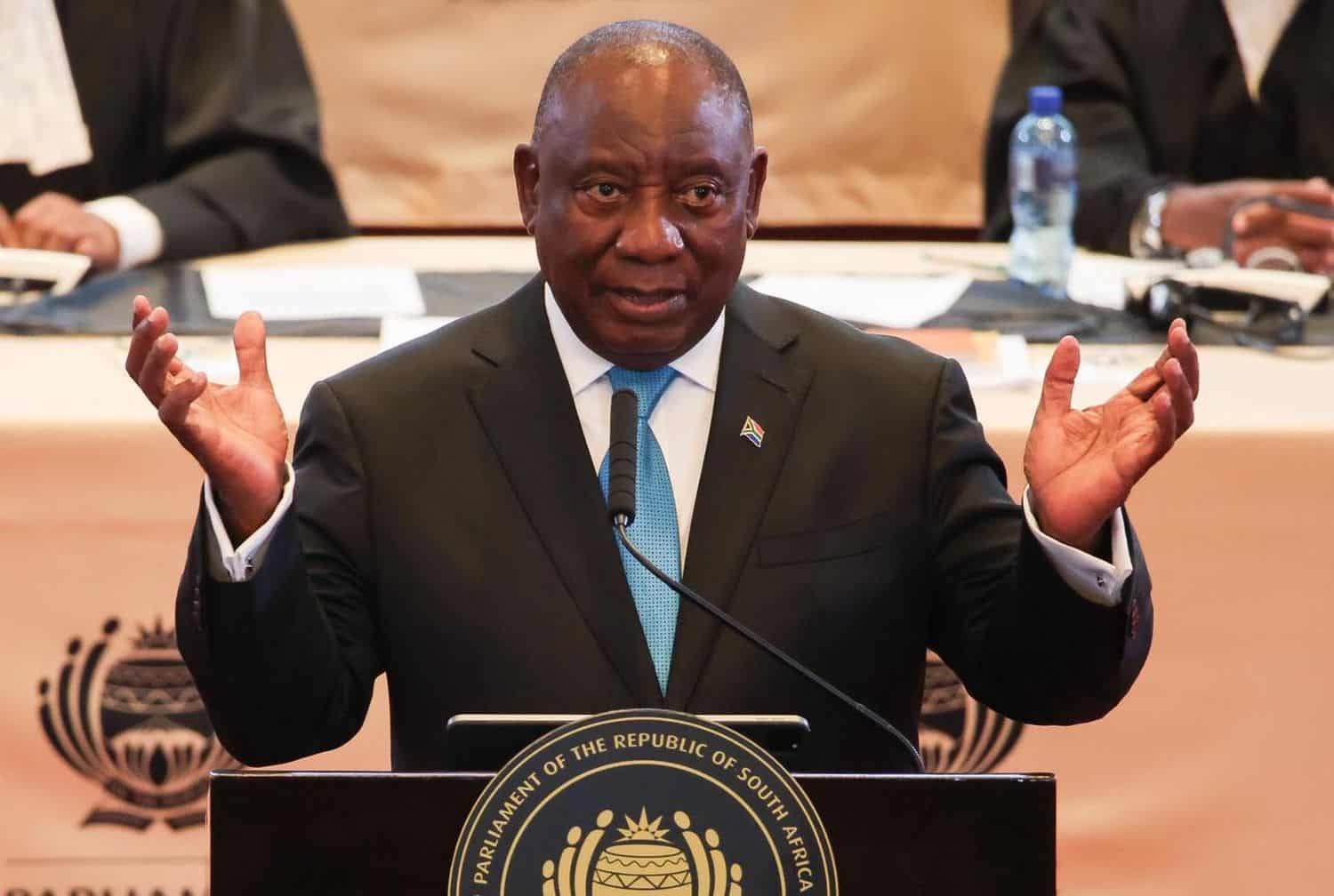
President Cyril Ramaphosa says he will deploy SANDF soldiers to the Western Cape and parts of Gauteng to fight gang violence and illegal mining.
He said this on Thursday night during his State of the Nation Address (Sona) in Cape Town.
“Now, as is required by the constitution, I will inform the National Assembly and the National Council of Provinces regarding the timing and place of the deployment of our soldiers and how much it will cost.
“We have to act to rid our country of gang violence,” he said.
Ramaphosa’s move to send the army into Cape Town comes months before the local government elections. It also comes at a time when the City of Cape Town has been accused of being anti-poor by building a wall along the highway from the airport in an attempt to fight crime.
The ministers of police and defence have been roped in to ensure that the army is sent where it is most needed.
Ramaphosa said the government is working on an integrated strategy to work on the root causes of crime.
“We are going to tackle gun crime by streamlining legislation and regulations on licensing, possessing and trading in firearms and ammunition. We will increase the enforcement of existing gun laws.
He also said the police force will be bolstered with thousands of new officers.
“We are putting more boots on the ground through the recruitment of 5 500 police officers, adding to the 20 000 officers we [previously] announced.”
ALSO READ: Ramaphosa pulls two ministers from Sona: Here’s why
Police corruption
Ramaphosa said the hearings that are taking place in the Madlanga Commission of Inquiry and those that are taking place in parliament’s ad hoc committee have exposed rampant corruption in the South African Police Service (Saps) and metro police. He said the country will not tolerate this.
“The rule of law depends on a police service that is ethical, responsive and rooted in the communities that it serves.”
He said that the police have already established a task team to ensure that investigations that come out of the Madlanga commission are undertaken “swiftly” without interference. He added that officers will face stricter vetting processes.
“The State Security Agency will revert the senior management of the police service and metro police departments, the vetting process will include lifestyle audits as well,” he said.
Ramaphosa said the recommendation of the Madlanga commission will be used to make changes.
“We are determined that the commission’s findings and recommendations will lay the basis for a fundamental reform of our criminal justice system,” he said.
“We are confident that these efforts will succeed because the great majority of police officers are dedicated to upholding the law and diligently service the people of South Africa,” he said.
Ramaphosa said his government will strengthen institutions such as the Special Investigations Unit (SIU), the National Prosecuting Authority (NPA), and the Hawks.
He said it is not correct that those who report corruption are victimised and, in some instances, threatened.
“The whistleblower protection bill will be introduced in parliament, among other things. This will criminalise retaliation and provide psychosocial, legal and financial support to whistleblowers,” he said.
The president said there will be a strict focus on restricting government procurement systems. The tender process, he said, is largely to blame for corruption in the public sector.
“The auditor general reports that the majority of incidents of corruption originate in the procurement system. We cannot allow this cancer to continue and we must therefore act.”
Water shortages
He said in addition to crime, water was another issue that has been problematic for most South Africans.
“We have all seen the pain that our people have been expressing through demonstrations in various parts of Gauteng. These protests have been fuelled by the frustrations that our people are feeling over inadequate, unreliable access to basic services such as water.”
Ramaphosa confirmed that he had instructed at least three ministers to skip Sona and attend to the water challenges in Johannesburg.
“As we speak, they are in Gauteng at the moment, engaging with our people, explaining to them how precisely government intends to immediately deal with the challenges that our people are expressing,” he said.
Ramaphosa said he has been informed by those ministers that the water pipes that are damaged are being repaired.
“The reservoirs are filling up again,” he said.
He blamed the water shortages in Johannesburg on poor planning and the inadequate maintenance of water systems.
“There is no silver bullet to address this challenge, which has its roots in systemic failures and many years of neglecting infrastructure,” he said.
Ramaphosa said to ensure water security, government is building new dams and upgrading existing infrastructure.
Over R150 billion has been committed for water infrastructure over the next three years.
NOW READ: The battle between Ramaphosa and Zuma continues at Sona 2026
About the Author