
Known as a semi-arid region within Uganda’s cattle corridor, Nakasongola district receives moderate rainfall, experiences distinct dry seasons, and endures high temperatures.
The area supports both livestock rearing and crop farming. However, the district faces significant challenges, including recurrent droughts, soil degradation, and land-use changes, which increasingly threaten pastoral and farming livelihoods. In response, government and development partners have increasingly prioritized climate-smart agriculture and irrigation as key strategies to build resilience among farming communities.
These interventions aim to ensure year-round production, stabilize incomes, and reduce dependence on erratic rainfall, particularly in drought-prone areas such as Nakasongola. Despite these challenges, some farmers are beating the odds and transforming Nakasongola into an emerging food basket.
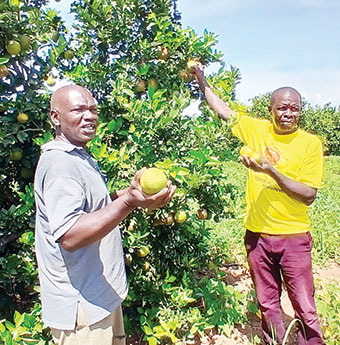
At the center of this transformation is the Kisa Kyamuka Farmers Development Group, located in Kaduuba village, Lwabyata sub-county, Nakasongola district. The group’s journey began under Operation Wealth Creation, through which members received cassava cuttings and improved varieties of maize, beans, mangoes, and oranges.
These interventions improved household incomes, enabling many members to educate their children and improve their living standards. In March 2025, Bernard Lwanga, the chairperson of the group, recounted how he previously farmed along the lakeshores.
Although the venture initially earned him some income, heavy rainfall often swept away his crops, forcing him to abandon the practice and return home. He later relied on fuel-powered generators to pump water to his gardens, which proved costly.
Despite the progress, the farmers are calling for the expansion of the irrigation scheme beyond the current 12 hectares and an increase in the number of government tractors at sub-county level.
They are also advocating for the establishment of a mini juice-processing factory to add value to mangoes and oranges, especially during bumper harvests.
“By making juice, we would add value to our produce, which is often bought cheaply by middlemen who reap more from our sweat,” Lwanga added.
However, despite bumper harvests and increased earnings, the group faces limited access to markets.
About the Author