xr:d:DAFgn_0zX9I:2,j:45538268775,t:23042007
South Africans are in for a treat with a partial solar eclipse visible across the country.
The partial solar eclipse will be visible from large parts of South Africa on Tuesday, 17 February.
Solar eclipse
The South African National Space Agency (Sansa) urged South Africans to use protective eyewear when viewing the solar eclipse.
“The partial eclipse will begin at 14:01 South African Standard Time (SAST), reaching maximum eclipse at 14:23 SAST with about 5% solar coverage in the Western Cape,” Sansa spokesperson Daleen Fouche said.
“The partial eclipse will end at 15:24 SAST, with a full duration of 1 hour and 23 minutes.”
What is a solar eclipse?
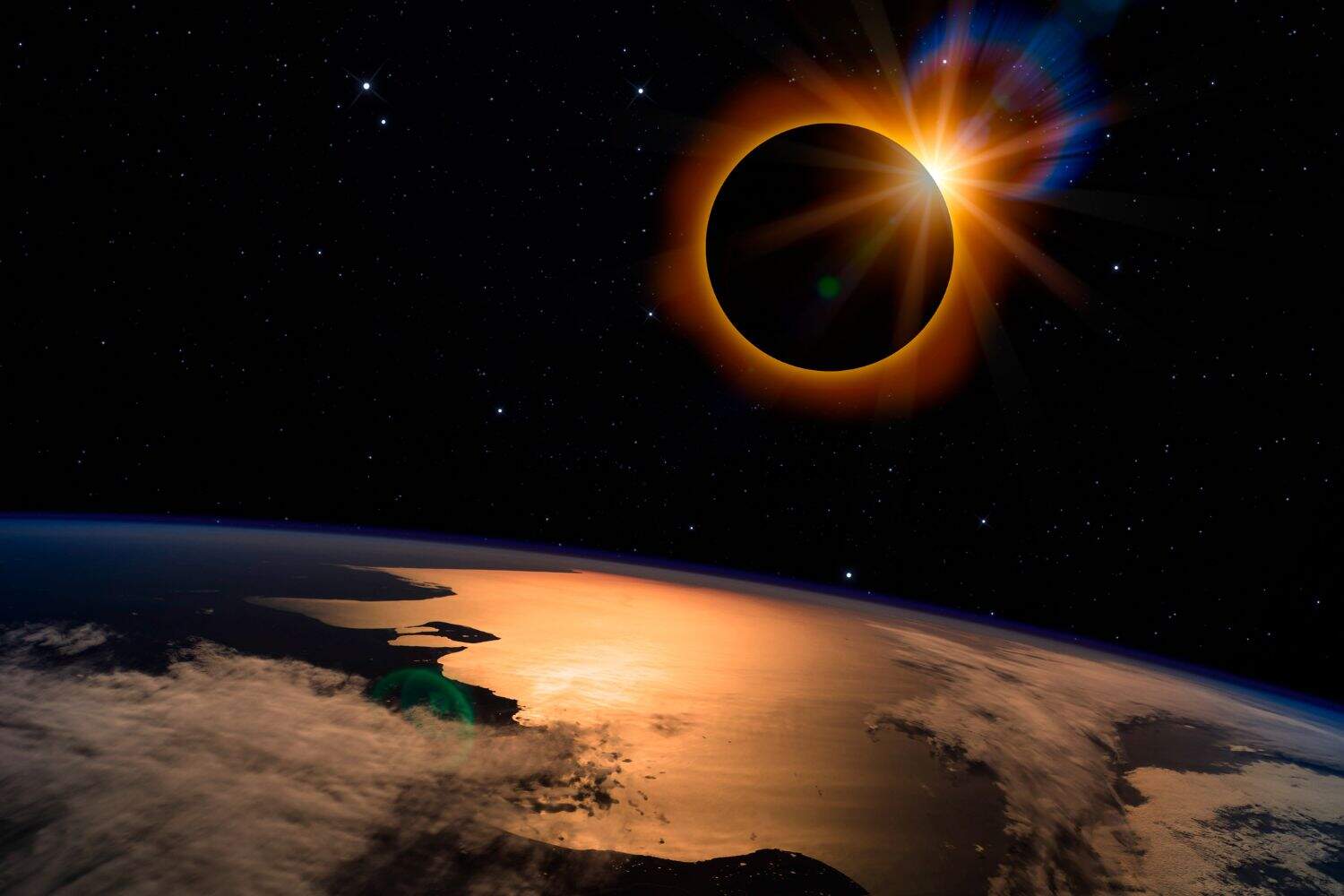
For South Africans, this is a rare occurrence: when the Moon passes between the Earth and the Sun, obscuring it.
During a partial solar eclipse, the Moon, Sun, and Earth do not align in a perfectly straight line, and the Moon casts only the outer part of its shadow, known as the penumbra, onto Earth.
How to watch online
The partial solar eclipse will be streamed live on the Sansa’s YouTube channel using its newly acquired solar telescope.
Sansa said it will use the 60mm white-light solar telescope, producing a white-light image.
Safety measures
If you are in the line of totality, the general rule is not to stare directly at the Sun. However, there’s an exception. Only when the Sun is completely hidden from view will you be able to stare directly at it and witness the corona.
Apart from that brief window, you must wear proper eye protection or specialised glasses to look at the Sun. If you don’t, you could suffer long-term or even permanent damage to your vision.
Inspect your solar filter or solar glasses before using them. Always make sure that the glasses you purchase are ISO certified. Make sure there are no holes in the lens and that it is not damaged in any way.
You can use older glasses if the pair isn’t broken. If you wear prescription eyeglasses, wear solar glasses over them to view the eclipse. Only remove the eclipse glasses after you have looked away from the sun.
Superstitions
Solar eclipse superstitions are deeply rooted in cultural, religious, and historical traditions across the globe, often viewing the phenomenon as a bad omen, a disruption of the natural order, or a spiritual event.
However, Nasa and other scientific organisations emphasise that solar eclipses are natural phenomena with no direct, negative, or supernatural effect on human health, food safety, or the environment.
NOW READ: Nasa Astronauts splash down on Earth after first-ever ISS medical evacuation [VIDEO]
About the Author