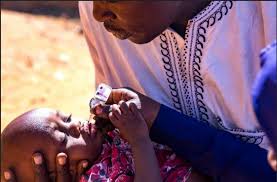
To curb cross-border polio transmission, Sokoto authorities are intensifying immunisation efforts in six local government areas along the Niger Republic border, as the state battles a resurgence of circulating vaccine-derived poliovirus type 2 (cVDPV2), a mutated strain from the live virus used in oral polio vaccines that can cause paralysis in under-immunised children.
State Immunisation Officer, Bashar Garba, said that the initiative will strengthen routine immunisation and ensure that children who cross international borders are vaccinated. Supported by the Solina Centre for International Development and Research (SCIDaR), specialised teams will be deployed to prevent children from leaving or entering Nigeria with the virus.
“We will provide routine immunisation, including polio vaccines, to every child living along the borders. Any child crossing the border will be vaccinated to stop the virus from spreading into Niger or back into Nigeria”, Garba said.
Sokoto began intensifying routine immunisation in late 2025, but this year’s campaign will be more comprehensive, aiming to reach every eligible child. “Our top priority for 2026 is to expand routine immunisation coverage and interrupt transmission of cVDPV2″, Garba explained.
The strategy involves identifying and enumerating all eligible children, recording vaccination details, and assigning tracking numbers to ensure completion of all doses. Enumeration is scheduled to begin on Saturday, 14 February, and will continue for six days, with vaccinations set to start in March.
“On 7 March, during Ramadan when many children are at home, we will carry out mass vaccinations to make sure no child is missed”, Garba added. The state also plans to strengthen routine immunisation with injectable Inactivated Polio Vaccines (IPV) on a quarterly or biannual basis.
About the Author