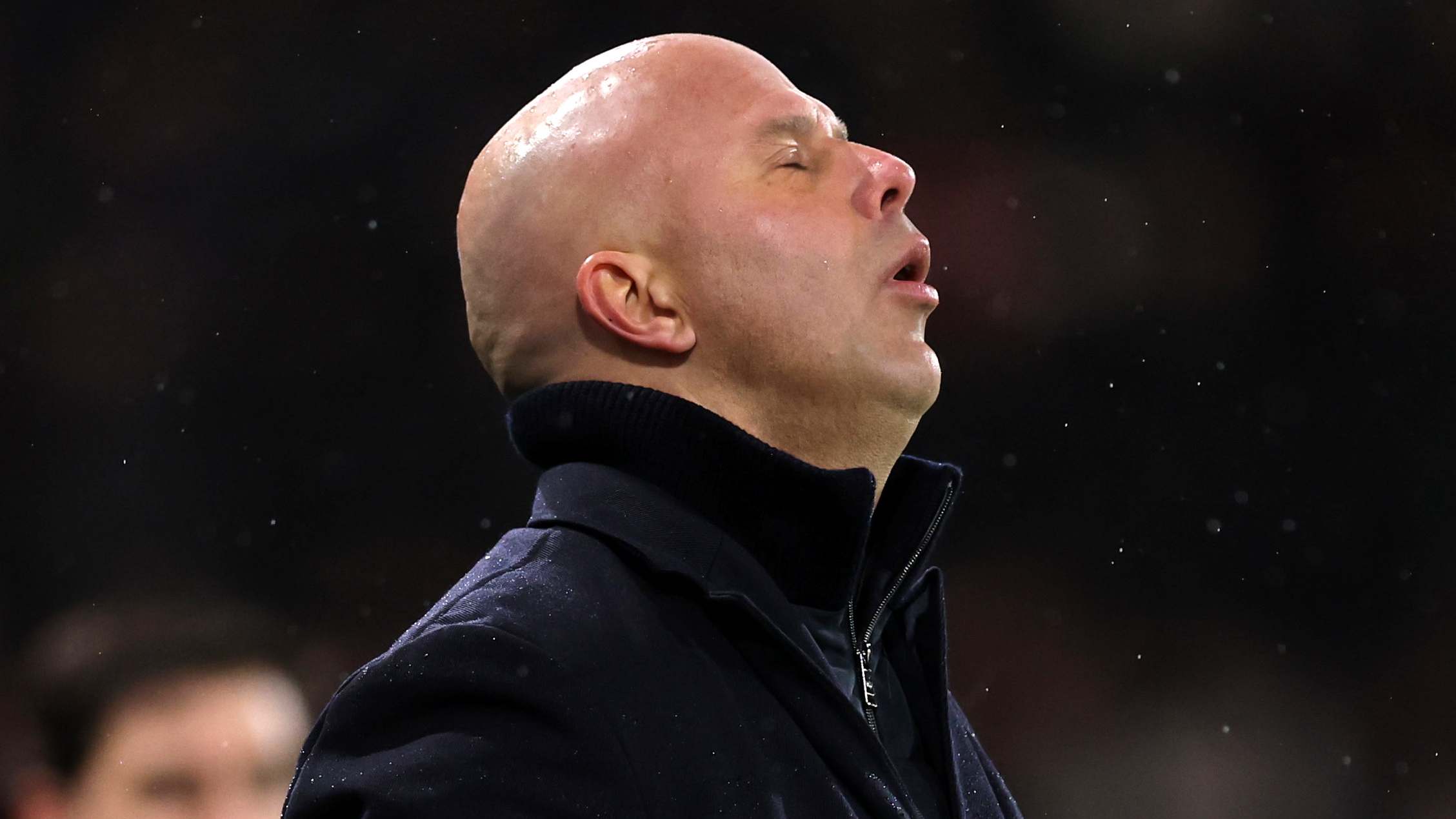
Liverpool manager Arne Slot refused to attribute his side’s 2-1 defeat at Wolverhampton Wanderers to mere bad luck, instead delivering a scathing critique of a tactical crisis he feels is jeopardizing their season. Following the Tuesday night collapse at Molineux, the Dutch tactician highlighted a chronic inability to convert territorial dominance into goals from open play. Despite the Reds controlling nearly 66% of the ball and earning 11 corners, they were stunned by a late Andre winner that took a wicked deflection in stoppage time, nullifying Mohamed Salah’s equalizer and leaving the visiting side with nothing to show for their efforts.
Slot’s post-match reflections, shared during an interview on Wednesday, underscored a growing reliance on dead-ball situations to mask an increasingly toothless attack. While Liverpool’s defensive record has largely been respectable, the manager expressed deep concern that his players are failing to capitalize on the volume of possession they enjoy. He noted that while the team creates more than their opposition, the clinical edge required to kill off matches is missing, often leaving them vulnerable to the kind of “sucker punch” witnessed in the fourth minute of added time.
“Same old story,” Slot said in a post-match interview obtained by our correspondent on Wednesday. “Recently, we are picking up points because many times we’ve scored from set-pieces, but what did not change in the last five, six or seven games is that we struggle and find it very hard to score from the open-play chances that we do create. Not as many as I would like from all the ball possession we have, but enough and far more than the other team. But, end result, we score one and they score two – and indeed another time in extra time, so it sums up our season again in this game as well.”
The former Feyenoord boss was particularly critical of the opening 45 minutes, describing the first-half display as poor and the delivery from set-pieces as lacking quality. Though the performance levels rose after the interval, with Virgil van Dijk and Salah both coming agonizingly close to securing a late lead, the inability to find a breakthrough proved fatal. Slot conceded that Gary O’Neil’s Wolves were excellently organized, and admitted his instructions to move the ball with more speed and width were not executed with the necessary precision to disrupt the hosts’ compact low block.
“What I mean with ‘it sums up the season’ is that that we’ve had far more ball possession than the other team, we’ve created more open-play and in-general chances than the other team, but from open play we struggle to score. Today again, we had a lot of set-pieces. First half, [they were] very poorly taken – a bit similar to how we played. I don’t think we played a very good first half.”
Slot concluded by addressing the psychological toll of repeatedly conceding decisive goals late in matches, even when the opposition has been largely neutralized. By allowing Wolves to score twice from essentially one clear-cut opportunity, Liverpool’s structural weaknesses were laid bare. The manager agreed with captain Virgil van Dijk’s assessment that the team’s buildup play has become “predictable,” stressing that unless they learn to dominate the flanks and increase the tempo of their side-to-side transitions, their season risks being defined by these missed opportunities.
About the Author