In 2013, when Manyangwa, a town north-east of the capital, Kampala, was still shaking off its rural edges and inching toward becoming one of Wakiso’s fastest-growing commercial corridors, Gerald Ndawula thought he had made a smart investment.
At a public auction conducted by Equity Bank Uganda, Ndawula successfully bid Shs 60 million for a foreclosed property along the Gayaza–Kalagi Road. The land, listed as Kyaddondo Block 178, Plot 604 at Manyangwa Trading Centre, had been repossessed by the bank after a mortgage default.
Thirteen years later, Ndawula says he has never taken possession of the land. What began as a routine foreclosure sale has spiraled into a protracted legal dispute, with Ndawula accusing the bank of breaching its contractual duty to deliver vacant possession, and of holding onto his money for over a decade while benefiting from it.
“I purchased the suit land and developments thereon comprised in Kyaddondo Block 178 Plot 604 at Manyangwa from Equity Bank at a total sum of Shs 60 million, which was duly received by the bank as the seller,” Ndawula states in court affidavits.
Bank records show the money was paid through bank drafts issued by Standard Chartered Bank Uganda. On October 24, 2013, the two parties signed a land sale agreement.
Under its terms, once payment was received, Equity Bank was required to provide all documents necessary to transfer ownership, including the duplicate certificate of title, signed transfer forms, and a mortgage discharge. Ndawula says he received the paperwork, lodged it at the Wakiso land registry, and paid Shs 600,000 in stamp duty and Shs 17,000 in registration fees.
But when he attempted to take possession and begin developments, he ran into resistance. A third party, Barbra Kiconco, lodged an encumbrance at the land registry, claiming spousal interest in the property as the wife of the former mortgagor. She challenged the legality of the mortgage and foreclosure.
Registration stalled. Access stalled. Development stalled. Ndawula says he immediately notified Equity Bank and demanded vacant possession, as required under the sale agreement, which stipulated delivery within one month. Instead, he says, the matter dragged into court.
Kiconco’s suit was eventually dismissed on February 9, 2016. Following the court order, Ndawula was registered as proprietor on April 15, 2016.
“I was only registered on the certificate of title in 2016 after the bank provided a court order dismissing the suit filed by Barbra Kiconco at the Commercial Court,” he says.
But registration, he argues, was not the same as possession. According to Ndawula, the property has remained occupied, and despite repeated requests, including email correspondence, the bank has not facilitated eviction or delivered vacant possession. He says he even requested to be offered an alternative property, but none was provided.
“I eventually got fed up, engaged my lawyers and filed the instant suit to recover monies paid to the bank, damages, and interest on all pecuniary awards arising from breach of contract,” he says.
The financial stakes have grown significantly over time. Ndawula claims that had he invested the Shs 60 million elsewhere in 2013, he could have earned more than Shs 400 million by now, citing appreciation in land values and lost rental income.
“From the time I deposited my money with the bank as consideration for the purchase, the bank has made use of and gained from my money in its core lending business,” he argues.
In what Ndawula describes as an unexpected move, Equity Bank recently deposited Shs 60 million into his Standard Chartered account without prior consent. He says he immediately instructed that the funds be reversed, arguing that the refund did not address interest, damages or the unresolved occupation of the property.
At its heart, the dispute highlights the risks buyers face when purchasing foreclosed property at auction — particularly where spousal consent and third-party interests are contested.
As Kampala’s outskirts continue to urbanise rapidly, such cases raise difficult questions about due diligence, contractual obligations and the limits of protection for buyers navigating Uganda’s foreclosure market.
For Ndawula, what was meant to be a stepping stone into property investment has become a 13-year standoff, one that remains far from resolved.
EQUITY BANK SPEAKS OUT
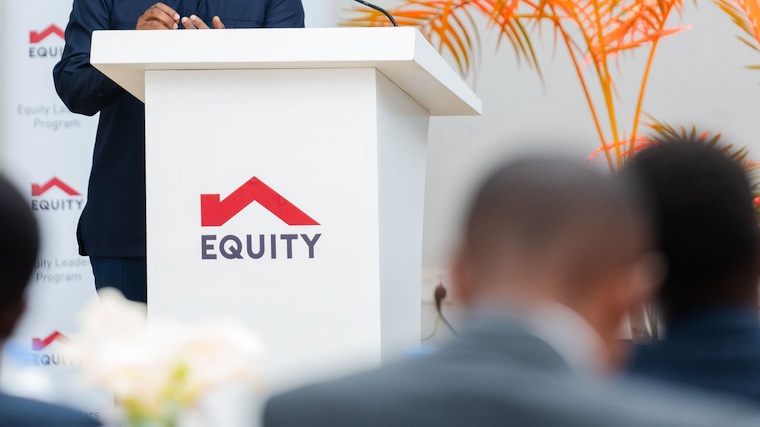
Clare Tumwesigye, Head of Marketing and Communication at Equity Bank Uganda, said the bank initiated the sale of the property through legitimate foreclosure procedures. Although the bank received payment from the purchaser, subsequent claims by third parties affected the completion of vacant possession.
She said the bank later engaged relevant parties to resolve the dispute and refunded the purchaser the principal sum paid. All related claims were ultimately dismissed by the court.
“Given that the matter has been the subject of judicial proceedings and subsequent applications, we are constrained from providing further specific commentary due to the confidential and sub judice nature of aspects of the dispute,” she said.
Tumwesigye emphasized that the bank acted within the law, complied with court processes, and refunded the principal amount in full. She added that Equity Bank Uganda remains committed to resolving disputes through lawful and structured channels and continues to uphold fairness, due process, and regulatory compliance in all its foreclosure and recovery processes.