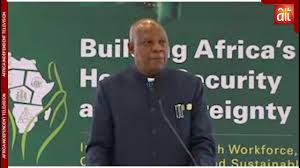
Vice President Kashim Shettima has called on African countries to strengthen their health systems and reduce dependence on foreign aid, urging the continent to build self-reliant health security.
Shettima made the appeal on Friday during a high-level side event titled “Building Africa’s Health Security Sovereignty”, held alongside the 39th Ordinary Session of the African Union Assembly of Heads of State and Government in Addis Ababa. The event also marked the launch of the Africa Health Security and Sovereignty Initiative, a partnership between Nigeria and the Africa Centres for Disease Control and Prevention aimed at mobilizing investment in health workforce development, community health systems, and sustainable immunization programs.
According to a statement from Stanley Nkwocha, Senior Special Assistant to the President on Media and Communications, Shettima emphasized that Africa must strengthen domestic health capacity to avoid reliance on global supply chains and the shifting priorities of international donors.
“Our health security cannot remain subject to the uncertainties of distant supply chains or the shifting priorities of global panic”, he said, citing the COVID-19 pandemic, when many African countries struggled to access vaccines, oxygen, and essential medical supplies as wealthier nations prioritized domestic needs.
Shettima stressed that health security is both a national and continental priority, noting that diseases and counterfeit medicines do not respect borders. “There is dignity in endurance, but endurance is not a strategy. Leadership is measured not by how long vulnerability can be withstood, but by how deliberately we reduce it”, he said.
He outlined measures Nigeria is taking to strengthen its health system, including increased domestic health financing, expanded local pharmaceutical production, and improved regulatory oversight. He highlighted the Nigeria Health Sector Renewal Investment Initiative, launched in December 2023, which has secured over $2.2 billion to revitalize more than 17,000 primary healthcare centers, train 120,000 frontline health workers, and expand health insurance coverage.
Efforts to improve epidemic intelligence and emergency preparedness through the Nigeria Centre for Disease Control and Prevention include expanded laboratory networks and genomic surveillance. To curb substandard medicines, Nigeria has strengthened the National Agency for Food and Drug Administration and Control (NAFDAC) by upgrading quality-control laboratories and streamlining compliance for local manufacturers.
The government is also implementing the Presidential Initiative to Unlock the Healthcare Value Chain, aimed at removing bottlenecks in domestic pharmaceutical production and attracting investment into drug manufacturing, diagnostics, and biotechnology research. Shettima emphasized that private sector involvement is essential to achieving continental health sovereignty.
Furthermore, Nigeria’s Coordinating Minister of Health and Social Welfare, Muhammad Pate, highlighted efforts to build a reliable health workforce database and enhance capacity-building programs to address rural-urban disparities in health worker distribution.
About the Author