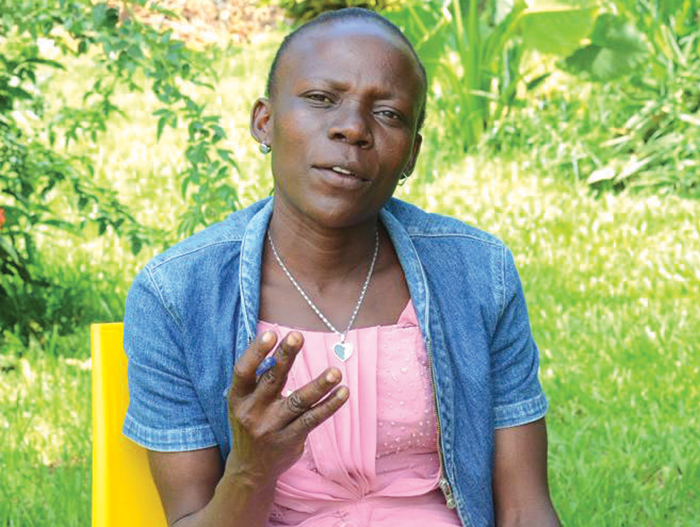
For Sylvia Namukose, the shift from subsistence farming to commercial production didn’t begin in a boardroom or a bank.
It started with a simple message on the radio, and a decision to try something new. Not long ago, she was growing groundnuts in small quantities in Kibale, just enough to get by. Today, she speaks of tonnes.
“Before that, I used to grow groundnuts in a small quantity,” she said.
“But after joining this project… that’s when I started growing groundnuts in tonnes.”
Namukose is one of many women whose lives are being reshaped by Heifer International’s efforts to turn farming into a business. At a recent Women’s Day celebration in Jinja, her story stood alongside others, each pointing to a quiet transformation taking place across Uganda’s agricultural landscape.
The change is not just about bigger harvests. It’s about knowledge, access, and confidence. Through training in record-keeping, group savings, and modern farming practices, Namukose expanded her farm to six acres.
She now produces more than seven tonnes of crops and has diversified into poultry, which helps her manage daily expenses and pay school fees for her children. Elsewhere, the transformation is taking a more technological turn.
In Mbarara, Nakalema Assumpta, an IT engineer, is rethinking poultry farming. Her company, Hatch Rite, builds incubators that help farmers hatch eggs more efficiently, an idea she first developed as a university student after noticing a gap in the region.
“We are not just selling incubators; we are improving food security,” she said.
With support from a Shs 50 million grant, her business has grown into a registered company employing seven people and reaching around 1,000 farmers. In one case, a farmer’s flock grew from 200 to more than 2,000 birds after using her technology.
These individual stories reflect a broader shift in Uganda’s agriculture sector, where women are increasingly moving beyond production into value addition, innovation, and entrepreneurship.
Yet the scale of their contribution is often overlooked. Across the country, more than 88 per cent of rural women are engaged in agriculture, contributing over 90 per cent of food production labour.
Agriculture itself remains the backbone of the economy, employing roughly 70 per cent of the workforce and contributing up to a quarter of Uganda’s GDP. Despite this, access to land, financing, and markets remains limited for many women.
That gap is what initiatives like the SAYE project, backed by Heifer International and the Mastercard Foundation, are trying to close. By combining skills training, financing, and market access, the programme is designed to help women move from survival farming to sustainable business.
For many, the impact is already visible. What began as small plots and scattered efforts is slowly becoming something more structured, more ambitious, and, for women like Namukose, far more transformative.