High-level meeting expected to examine Tinubu administration’s reform agenda as global institutions project stronger growth for Nigeria by 2026…..
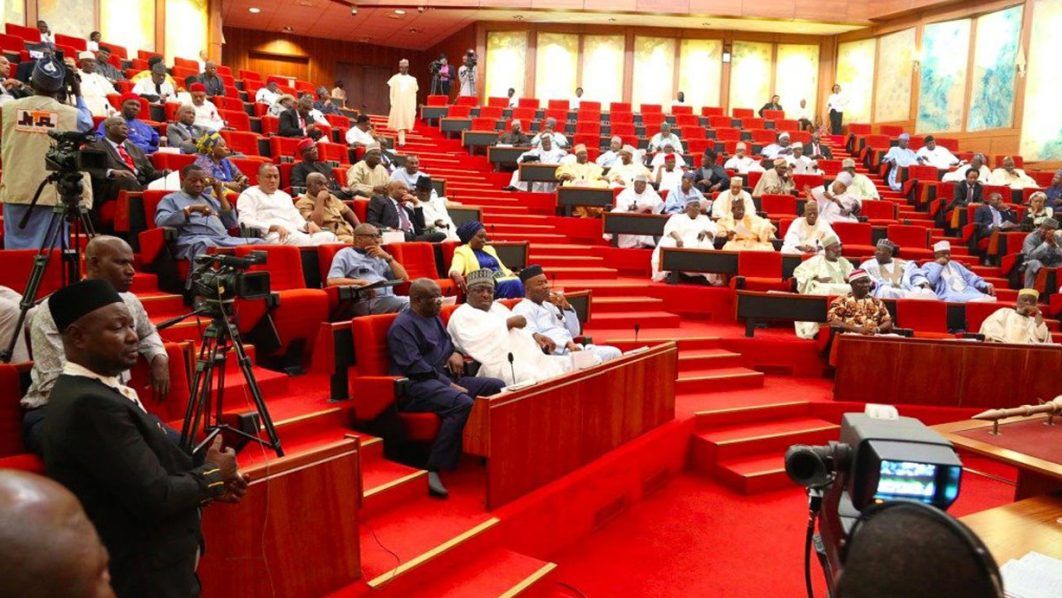
Nigeria’s Senate leadership is preparing for a strategic meeting with officials from the International Monetary Fund (IMF) as part of ongoing consultations aimed at reviewing the country’s economic direction and reform policies.
The engagement forms part of the IMF’s Article IV Consultation, a routine economic assessment conducted with member countries to evaluate fiscal policies, financial stability, and overall macroeconomic performance.
Lawmakers are expected to use the meeting to gain deeper insight into the Federal Government’s economic strategy while exploring potential areas of collaboration and policy guidance from the global financial institution.
The planned interaction was disclosed by the Deputy President of the Senate, Barau Jibrin, who noted that the consultation exercise would take place between March 4 and March 17, 2026.
During the period, an IMF delegation will meet with several key government institutions to assess Nigeria’s economic environment and ongoing reform efforts.
According to an official communication from the Federal Office of Finance, the IMF specifically requested a high-level meeting with the leadership of the Senate as part of its consultation programme.
“The Federal Office of Finance wishes to inform the leadership of the Senate and distinguished senators that, at the instance of the Federal Government of Nigeria, the International Monetary Fund Article IV Consultation in Nigeria has been scheduled to hold from March 4 to March 17, 2026,” the notice stated in part.
The meeting is expected to provide a platform for direct dialogue between lawmakers and IMF officials on Nigeria’s economic policies, fiscal outlook, and reform priorities under President Bola Tinubu.
Nigeria’s Economic Outlook
Nigeria’s economic outlook for 2025 has been described by international financial institutions as gradually improving but still vulnerable to structural challenges.
Organizations such as the IMF and the World Bank say recent policy changes and macroeconomic adjustments are beginning to stabilize the economy after a period marked by high inflation, currency volatility, and declining oil output.
For 2025, the IMF estimates that Nigeria’s economy could grow by about 3.4 percent, reflecting a modest rebound as activity strengthens in sectors outside oil.
Despite the improvement, analysts note that growth remains constrained by persistent inflation, fiscal pressures, and longstanding structural bottlenecks, including challenges in energy supply and infrastructure.
The World Bank has also projected an average growth rate of around 3.6 percent between 2025 and 2026, citing reforms such as the removal of fuel subsidies, exchange-rate unification, and tighter monetary policies as key factors improving investor confidence and government finances.
Much of the recent economic expansion has been driven by the services sector, particularly telecommunications and financial services.
Stronger Growth Expected in 2026
Looking further ahead, global institutions are expressing greater optimism about Nigeria’s economic trajectory.
The IMF has revised its growth projection for the country to about 4.4 percent in 2026, reflecting expectations that ongoing fiscal and monetary reforms will gradually strengthen macroeconomic stability and productivity.
Similarly, the World Bank believes Nigeria’s economy could expand by around 4.4 percent in both 2026 and 2027, potentially marking the fastest pace of growth the country has experienced in more than a decade.
Economists say this anticipated expansion will likely be supported by improvements in agriculture, services, and other non-oil industries, as Nigeria continues its push to diversify the economy beyond its traditional reliance on crude oil.
About the Author