Saudi Arabia has set a new and grim record for executions, putting at least 340 people to death so far in 2025, according to an AFP tally, after authorities confirmed the execution of three individuals on Monday.
The latest deaths occurred in the Mecca region, where the interior ministry said the convicted individuals were executed for murder, in a statement carried by the official Saudi Press Agency (SPA).
The figure marks the second consecutive year the kingdom has surpassed its own annual execution record. In 2024, Saudi Arabia carried out 338 executions, a number that already represented the highest total since rights groups began systematically tracking capital punishment in the country in the 1990s.
In recent years, the kingdom has ranked behind only China and Iran in the number of executions worldwide.
Drug-related convictions account for the majority of executions this year. Since January, at least 232 people have been put to death for narcotics-related offences, according to AFP’s count based on official announcements.
Analysts attribute the surge largely to Saudi Arabia’s intensified “war on drugs,” launched in 2023, with many of those now executed having been arrested in the early phases of the campaign and only recently convicted following lengthy legal proceedings.
Saudi Arabia resumed executions for drug offences at the end of 2022 after a roughly three-year suspension. The policy shift coincided with growing concerns over drug trafficking, particularly captagon—an illicit stimulant that, according to the United Nations, was Syria’s largest export under former president Bashar al-Assad, who was ousted last year. As the Arab world’s largest economy and a major regional market for captagon, Saudi Arabia has positioned itself at the forefront of efforts to stem the flow of the drug.
Since launching the anti-drug campaign, authorities have ramped up police checkpoints along highways and at border crossings, seizing millions of pills and arresting dozens of suspected traffickers. Rights groups note that foreign nationals—who make up a large portion of the kingdom’s workforce in construction, domestic service, and hospitality—have borne the brunt of the crackdown.
The kingdom continues to face sustained international criticism over its use of capital punishment. Human rights organizations argue that the scale of executions, particularly for non-violent drug offences, contradicts international law and undermines Saudi Arabia’s efforts to project a more modern and tolerant image. “These are not violent criminals, and most are foreign nationals.
Executing them violates international standards, which restrict the death penalty to cases of intentional homicide,” said Harriet McCulloch of the rights group Reprieve.
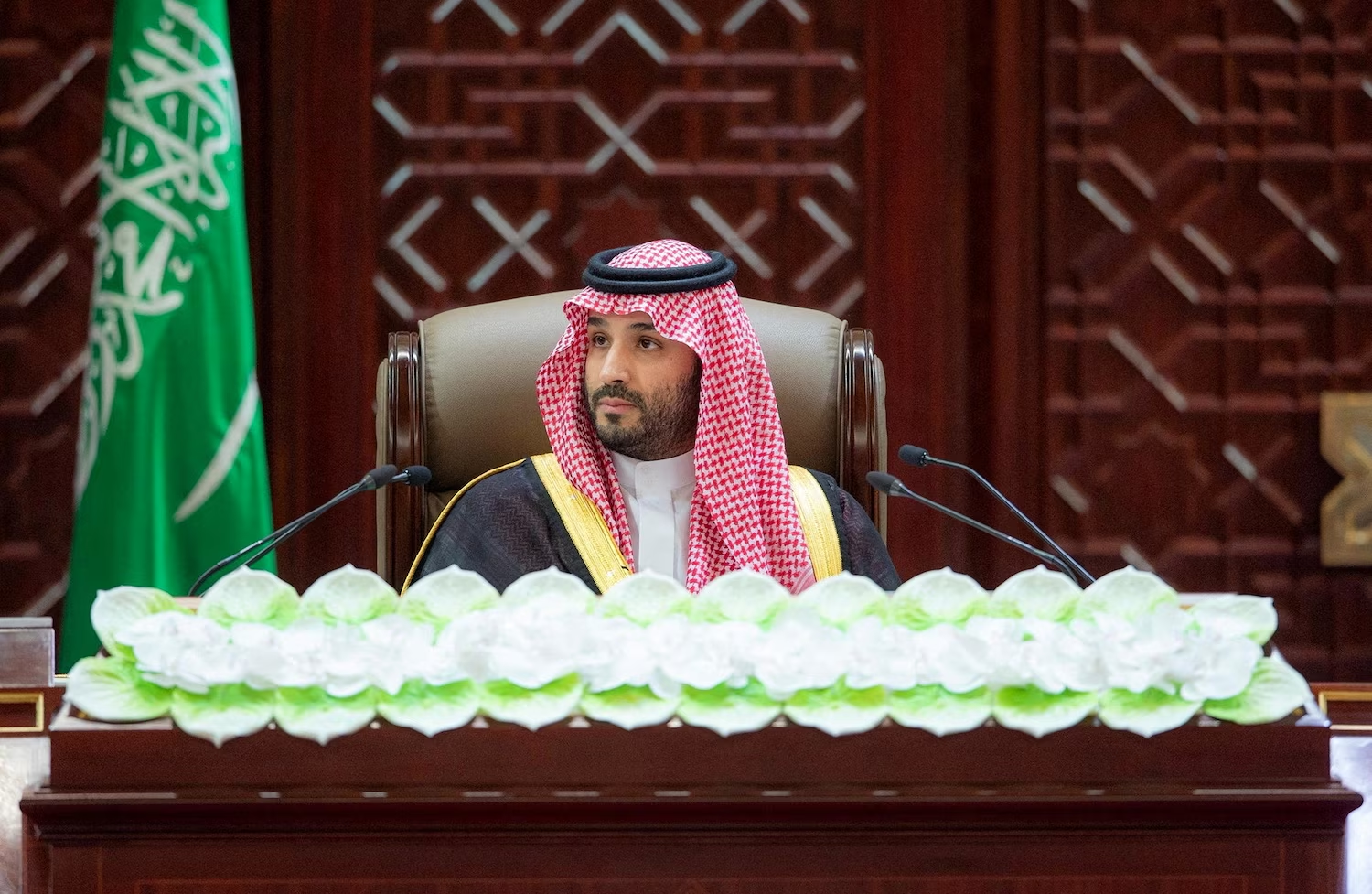
Activists also warn that Saudi Arabia’s reliance on capital punishment clashes with Crown Prince Mohammed bin Salman’s Vision 2030 reform agenda, which seeks to transform the kingdom’s global image while diversifying its oil-dependent economy.
The country has invested heavily in tourism, entertainment, and global sporting events, including hosting the 2034 World Cup.
Saudi authorities, however, defend the death penalty as a necessary tool to maintain public order, insisting that executions are carried out only after all legal appeals have been exhausted.
Amnesty International began documenting executions in Saudi Arabia in 1990, with reliable figures from earlier periods largely unavailable.
According to the organization, Saudi Arabia ranked as the world’s third-highest executor of death sentences in 2022, 2023, and 2024, trailing only China and Iran.
About the Author