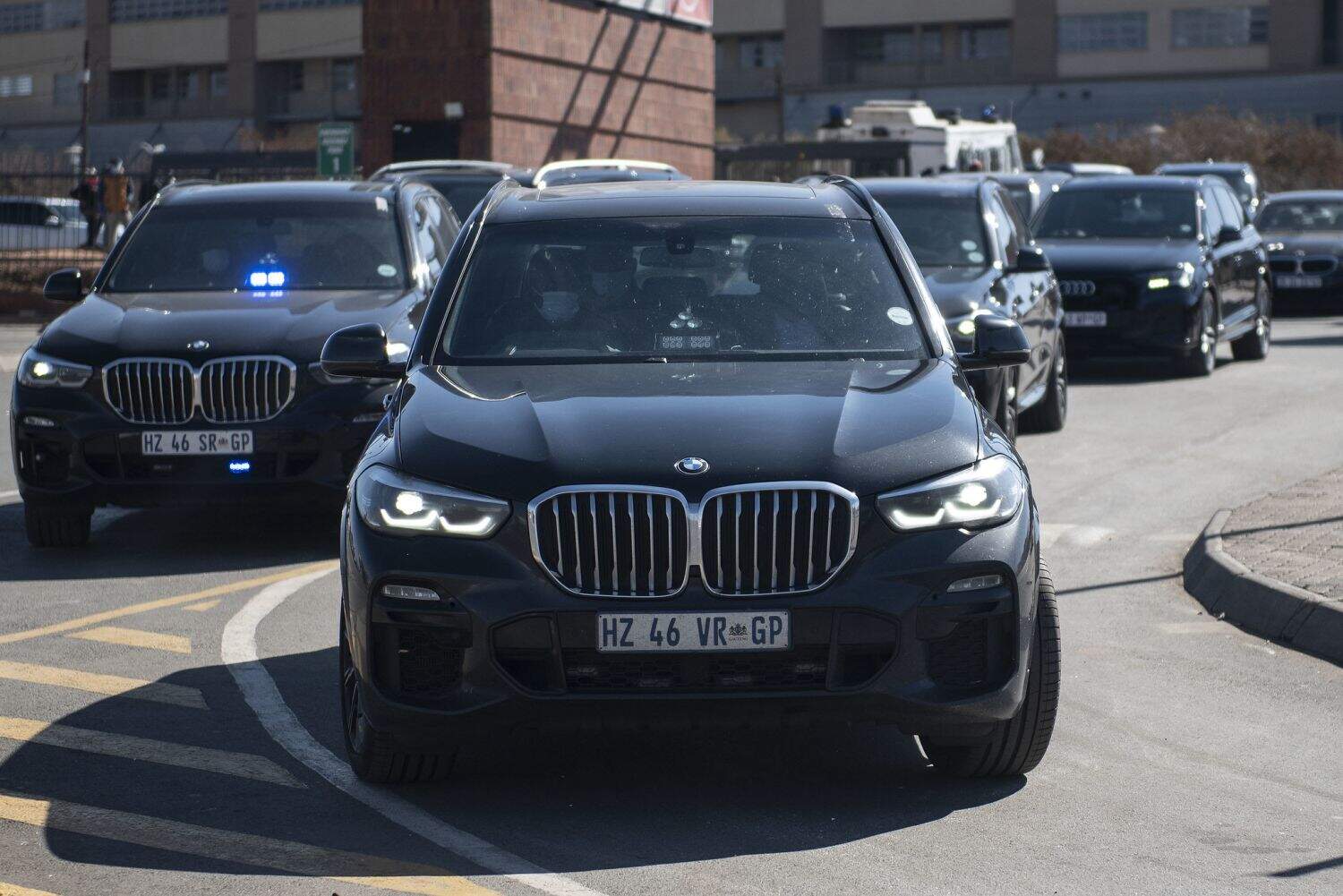
The number of Tshwane VIP protectors who are paid more than R1 million a year may double if the South African Municipal Workers’ Union (Samwu) gets its way.
Samwu has declared a dispute with the metro over a R35 000 monthly allowance that was approved by council in August last year in lieu of overtime, and unilaterally implemented thereafter.
The VIP protectors are members of the Tshwane Metro Police.
Currently only the mobile protectors qualify for the allowance; it excludes the teams that are office-bound and the advance teams who do risk assessments whenever the mayor and other top brass of the metro attend to events outside the offices.
According to Donald Monakhisi, Samwu secretary in the Tshwane region, extending it to these teams could more than double the number of members who qualify for the allowance, from the current 63.
Samwu has referred the matter to the Local Government Bargaining Council and is waiting for feedback on the next steps.
ALSO READ: Tshwane workers get 3.5% wage hike
Fellow municipal union Imatu has also declared a dispute with the employer about the allowance.
It argues that the real problem is the extremely long hours that members work and that the allowance does not address this issue.
Its dispute concerns the fact that the council implemented the allowance unilaterally despite objections from the unions.
The Imatu matter has been referred to arbitration. If Imatu succeeds, the issue will be remitted to the local labour forum.
Unanimous approval of allowance
Moneyweb previously reported that the council unanimously approved the allowance in August last year, which pushed the total annual remuneration of the affected members to over R1 million per year.
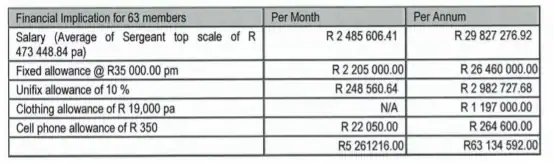
The motivation was that overtime payments for these members had spiralled out of control due to the exceptionally long hours they work.
The council wanted to prevent the Auditor-General (AG) from reprimanding it over the matter, as happened before.
ALSO READ: Tshwane must pay workers’ wage hikes
However, no budget provision was made for this allowance, which means the AG is still unlikely to be satisfied with it.
Who gets protected …
According to the report tabled before council on 28 August, the mayor, deputy mayor, speaker and chief whip are each entitled to two protectors per shift on a two-shift system.
Anything more than that may only be done with the approval of the South African Police Service (Saps) after it has conducted a risk analysis indicating that additional protection is necessary.
In Tshwane, the four politicians receive protection.
In addition, all members of the mayoral committee, the municipal manager and the head of the metro police have VIP protectors assigned to them.
It is not clear from the report whether the SAPS in fact conducted risk analyses for the additional persons’ protection and, if so, what the results were.
Moreover, Mayor Nasiphi Moya and metro police chief Yolande Faro allegedly each have six guards, instead of the four that, according to law, are allocated only to Moya.
Where are the risk assessments?
According to Lynette Burns-Coetzee of Imatu, the union requested proof of the required Saps risk assessments, but the council never provided it.
She says Imatu is concerned about the health of its members, who work on average more than 100 hours of overtime per month, in addition to their normal 173 working hours.
This exceeds the legal limit and could have a negative impact on members’ performance, an occupational health and safety expert told Moneyweb.
The issue arises against the backdrop of a settlement the council reached with the unions regarding the 3.5% salary increase that has been outstanding since 2021.
ALSO READ: VIP protection: Nearly R2.5bn projected to keep Ramaphosa and ministers safe
The council’s more than 21 000 employees will receive this increase from 1 March, with the backpay paid to them in salary-scale groups over three years because the council does not have the R1.5 billion needed to pay the full retrospective increase immediately.
Tshwane workers will also receive their annual increase on 1 July, which for this year has been set at 0.75% above the inflation rate.
This article was republished from Moneyweb. Read the original here.
About the Author