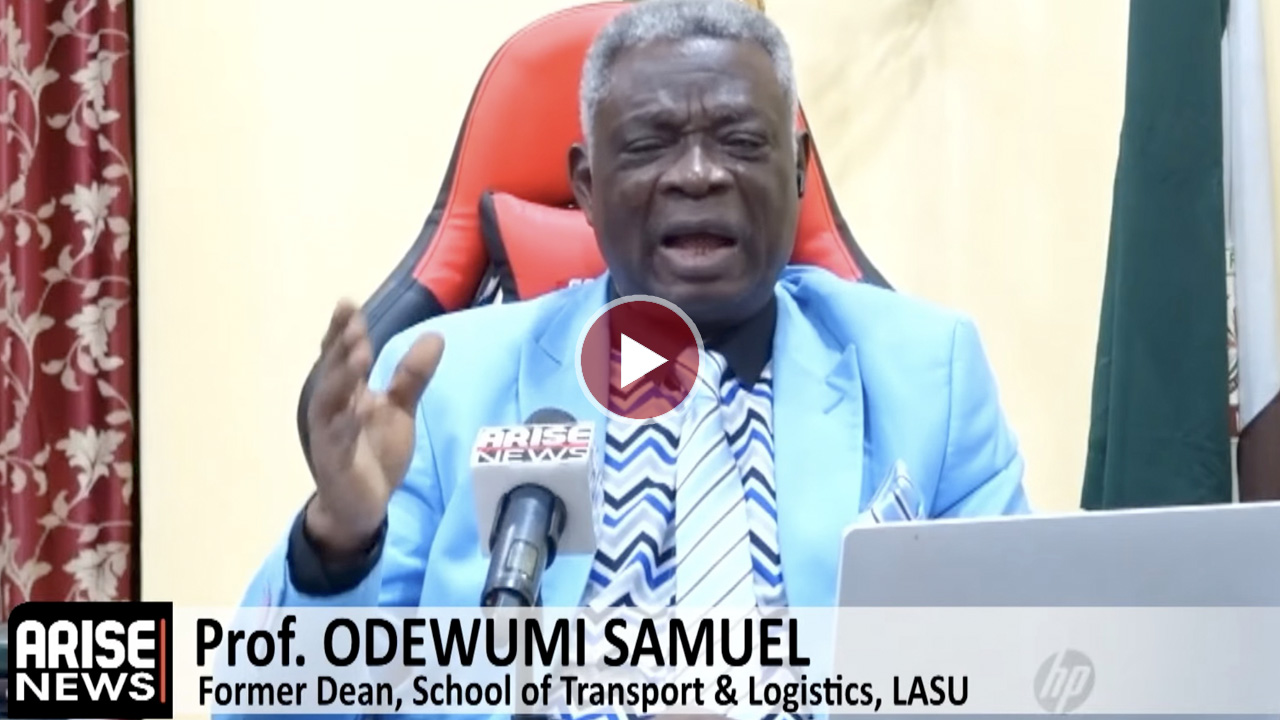
The Acting Vice-Chancellor of the University of Uyo, Prof. Odewumi Samuel, has cautioned that Nigeria’s rising debt profile is not inherently dangerous, but could damage the economy if borrowed funds are mismanaged or diverted from their intended purposes.
Speaking in an interview with ARISE NEWS on Friday, Odewumi described borrowing as “a double-edged sword,” stressing that its impact depends entirely on how effectively the funds are deployed.
“It is not whether you borrow or not that is the problem; it is what you do with it. If you are efficient and use it for the purpose intended, borrowing can foster development. But if mismanaged, it can damage the economy,” he said.
His comments come amid growing public concern over Nigeria’s plan to secure fresh external loans, including $5 billion reportedly from First Abu Dhabi Bank and $1 billion from UK Export Finance, to support debt servicing and infrastructure.
Odewumi emphasised that no country has sufficient internal resources to fund all its development needs, making borrowing a necessary economic tool when properly structured.
“Loan, in the hands of professionals, is a wonderful instrument to tackle underdevelopment. You will never have enough money to execute all development projects at once,” he explained.

Highlighting the role of infrastructure, particularly transport and logistics, he added:
“Transportation and logistics are the arteries through which socio-economic activities move. Without them, economic life becomes stagnant.”
He argued that strategic investments in infrastructure can stimulate growth, provided corruption in procurement and execution is eliminated.
On the controversial $1 billion loan targeted at upgrading Nigeria’s ports, Odewumi defended the move, citing the deteriorating state of existing facilities, particularly in Lagos.
“The ports have suffered from disjointed incremental development — patching one problem after another. What this loan seeks to do is restore them comprehensively: quay walls, jetties, access roads, and evacuation systems,” he said.
He noted that Lagos ports currently handle about 90 percent of Nigeria’s maritime traffic, making their rehabilitation urgent.
“The one servicing the country now is degraded. We must fix what is working while we develop others. You cannot diversify effectively if your primary system is failing,” he added.
While acknowledging calls to expand port infrastructure beyond Lagos, including projects like the Ibom Deep Sea Port, Odewumi said diversification must be gradual and strategic.
“Diversification is important, but Lagos will remain central for a long time. The goal is complementarity, not competition. Other ports are coming up, but they have gestation periods,” he explained.
He likened port development timelines to “pregnancy,” noting that new infrastructure takes time before becoming fully operational.
Odewumi warned that infrastructure upgrades alone would not solve inefficiencies at Nigerian ports without addressing systemic corruption and operational bottlenecks.
“You can fix the hardware, but the software — the human element — is critical. Corruption is working like an elephant in the city. Some areas have become practically ungoverned,” he said.
He stressed the need for institutional reforms alongside physical upgrades to ensure lasting impact.
Addressing concerns over why port-related loans are tied to Nigeria’s sovereign treasury rather than port revenues, Odewumi explained that transport infrastructure typically delivers indirect economic returns.
“Transport is a facilitator. The return on investment does not come directly from the port but from the broader economy it enables,” he said.
He added that expecting ports to solely repay such loans could lead to increased tariffs and higher consumer prices.
“If you push repayment entirely onto port users, it will reflect in the cost of goods. Government intervention, even subsidies, is justified in such cases,” he noted.
Odewumi concluded by warning that repeated ad hoc interventions in port management have failed to deliver sustainable results.
“Borrowing for infrastructure is only one part of the story. Without fixing the system and the people managing it, we will continue to face the same challenges,” he said.
Boluwatife Enome