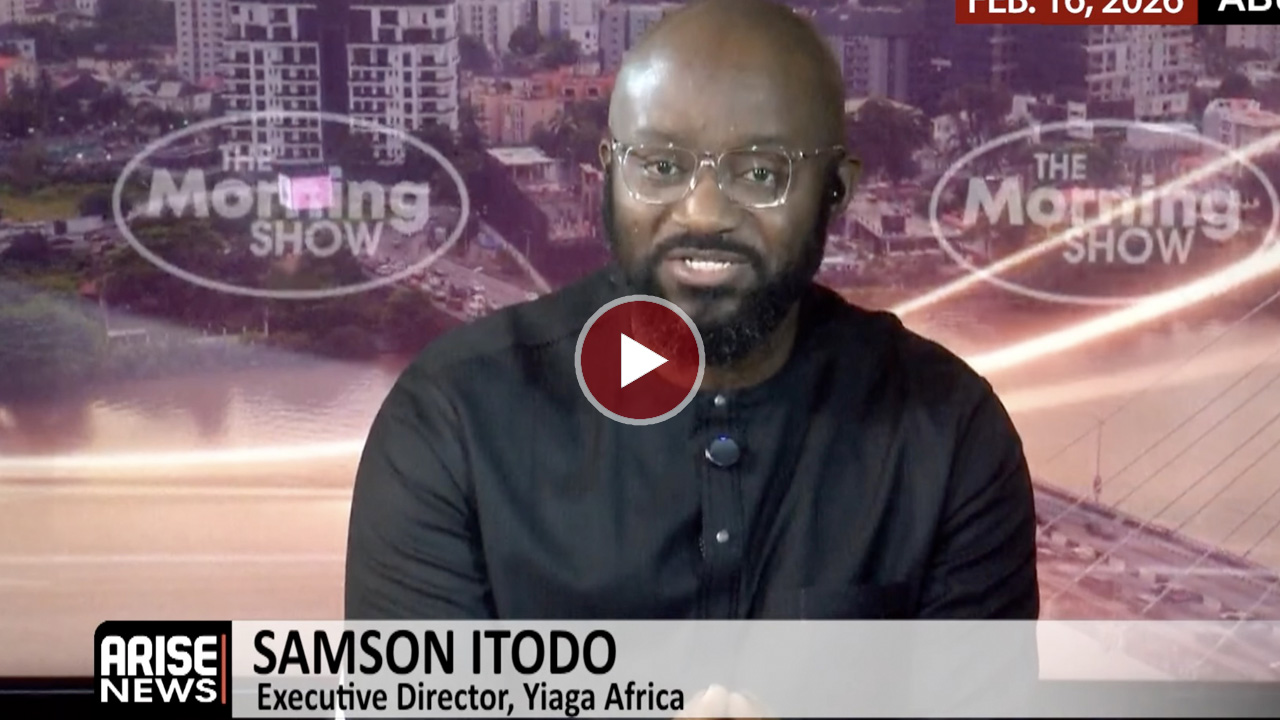
Samson Itodo, Executive Director of Yiaga Africa has emphasised that Nigeria’s 2027 general elections are facing mounting challenges due to legislative delays, political maneuvering, and potential conflicts with religious observances, while cautioning that these issues could affect voter turnout, election credibility, and overall public confidence in the electoral process.
Speaking In an interview with ARISE NEWS on Monday, Itodo stressed that the Independent National Electoral Commission (INEC) acted correctly in releasing the election timetable, but noted that revisions were inevitable due to ongoing political and legislative complications.
“INEG did not in any way err in law. It has performed its own duty.We all know, every Nigerian knows as of today, that that timetable will be revised and INEG will have to issue a revised timetable.It’s posthumous that INEG fixed February 20th, 2027 for the Presidential and National Assembly election.”
He highlighted concerns over potential clashes with religious observances, including both the Muslim fasting season and the Christian Lenten period. “Some of the dates being referenced are dates that are not static. And I have concerns that when we start altering timelines from circular activities like elections on the basis of religious considerations, we might be boxing ourselves into a very difficult situation. If you fix the election after Easter, you would have approximately 29 days to the deadline. 29 days is too narrow because you need to conduct the elections. What if there is runoff? What if you have reruns? So it becomes very tight.”

Beyond scheduling, Itodo raised alarm over deliberate political strategies aimed at creating confusion. “The truth is, if you read the handwriting on the wall, there is a section of the political class that is leveraging confusion because they know very well that when there is confusion, they overstretch our institutions. Our accountability institutions now make it difficult. It makes it difficult for them to hold them to account. They overstretch and overwhelm us as citizens. Every single week we wake up to one absurdity within our policy, just to discourage citizens from asking questions so they don’t show up at elections. Before you know it, we are already in less than 25% because citizens don’t trust the process, and manipulation is easier when people don’t show up.”
Funding remains another major concern. Itodo questioned whether INEC would receive the full budget required to conduct the elections efficiently. “Well, if experience is something to go by, then I doubt if INEC will get all this money before the next election because even the 2023 elections, one year or two years after the elections, INEC didn’t secure all this funding. Think about the state of the economy as of today.”
He also criticised provisions in the Electoral Act amendments that could compromise electronic result transmission. “Quite frankly, that particular proviso is unambiguous. And I would say that it does not in any way confer legitimacy on the electronically transmitted results. Because even if you say that results shall be transmitted electronically, and you go ahead and say, what would take precedence is the EC880, we know that in Nigeria, the default position is in that proviso and not in the precedence text.”
This is why that legislative overkill is just unacceptable.”
Itodo further pointed to conflicting data from institutions on network coverage as evidence of attempts to misinform. “So how come that in 2022, NCC told INEC that 93% of polling units have network coverage? And it appears that three years after, Some say it’s 97%. 97? Yeah, they asked for 3G network. Three, four years after, the same NCC, and I have it on good authority, because senators have told me, in fact, up to last night, that based on data available to them from the same NCC, that we don’t have that level of coverage. And it’s on the basis of that that they made that particular proposal. So it just tells you that there is a deliberate, you know, effort either to misinform or to capture this entire process.”
“It’s just clear. Let’s read the handwritings on the wall. Because if you care about electoral transparency and the credibility of the 2027 elections, then every politician who is on the ballot should be interested about the credibility of the process that brings them up. Because at the end of the day, we all will benefit if the process is transparent. But it’s just obvious they are scared of electronic transmission because they know it will limit their schemes and their election regain schemes to the specific.”
Itodo concluded that the responsibility for the current electoral uncertainties rests squarely with political elites. “And if anything happens to the 2027 elections, no one should blame citizens. No one should blame the media. No one should blame our religious institutions. The blame should rest with the political class who have actually gotten us into this mess.”
Itodo urged lawmakers to prioritise public interest over partisan concerns to avoid further undermining electoral integrity. “Nigerians are looking forward to the outcome of the conference committee’s meeting today. And we hope that they will adopt the House provision because that’s consistent with citizens’ demand and that’s where Nigeria should be.”
Erizia Rubyjeana
About the Author