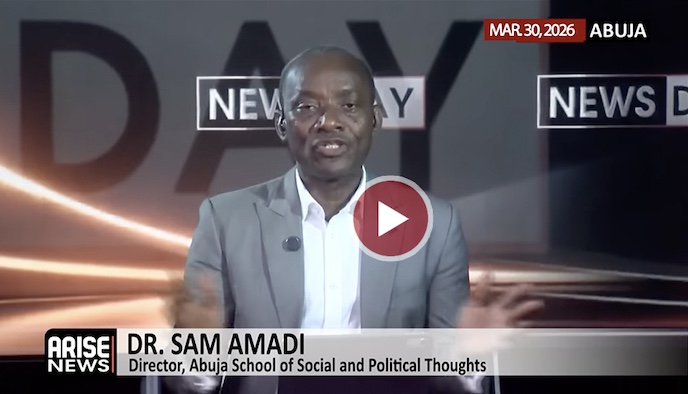
The Director of the Abuja School of Social and Political Thought, Dr. Sam Amadi, has described Nigeria’s party conventions as an example of “costly politics,” arguing that they consume significant resources while failing to strengthen democratic processes, instead promoting waste, exclusion, and inefficiency within the political system.
Speaking during an interview on ARISE News on Monday, Amadi criticised the structure and execution of party conventions in Nigeria, noting that they have become extravagant exercises with little democratic value.
“So what we’re witnessing today is, if I’m about to write an article, I’d call it ‘Costly Politics.’ It’s that in a country that needs to better husband resources, we’re just wasting it,” he said.
He pointed out that large-scale conventions often involve unnecessary spending despite predetermined outcomes.
“So do you need to bring 8,000 presumed people across the country with a few people getting killed, with all the fanfare, all the expenditure, to basically announce a list that already exists?” he asked.
According to him, such processes could be handled more efficiently without the elaborate gatherings.
“That was just wasting money, just wasting time, creating unnecessary inconveniences to just do something they could have sat in their offices and the governors come together and stamp it through,” he said.
Amadi further argued that the high cost of political activities in Nigeria does not translate into genuine democratic outcomes.
“So it’s a big question around our democracy that actually, democracy is not that expensive, but politics in Nigeria… is very expensive. And politics does not necessarily convert to democracy,” he said.
He maintained that the current system prioritises spectacle over substance, undermining democratic ideals.
“At the end of the day, the whole night vigil, the whole singing and dancing, and millions spent or billions spent just to do what could have been done,” he said.
Amadi also highlighted the opportunity cost of such spending, especially in a country facing critical development needs.
“And then you look at the cost vis-à-vis how much this country needs, how much we’re putting into education, how much we’re putting into healthcare… this is costly in two dimensions,” he said.
“In terms of the Naira value of what we spend and in terms of what we miss out on… the idea of decency, the idea of process, the idea of order, the idea of democracy itself,” he added.
Amadi’s remarks underscore concerns about the growing disconnect between political expenditure and democratic value in Nigeria, warning that without reforms, party conventions may continue to erode rather than strengthen the country’s democratic system.
Triumph Ojo
About the Author