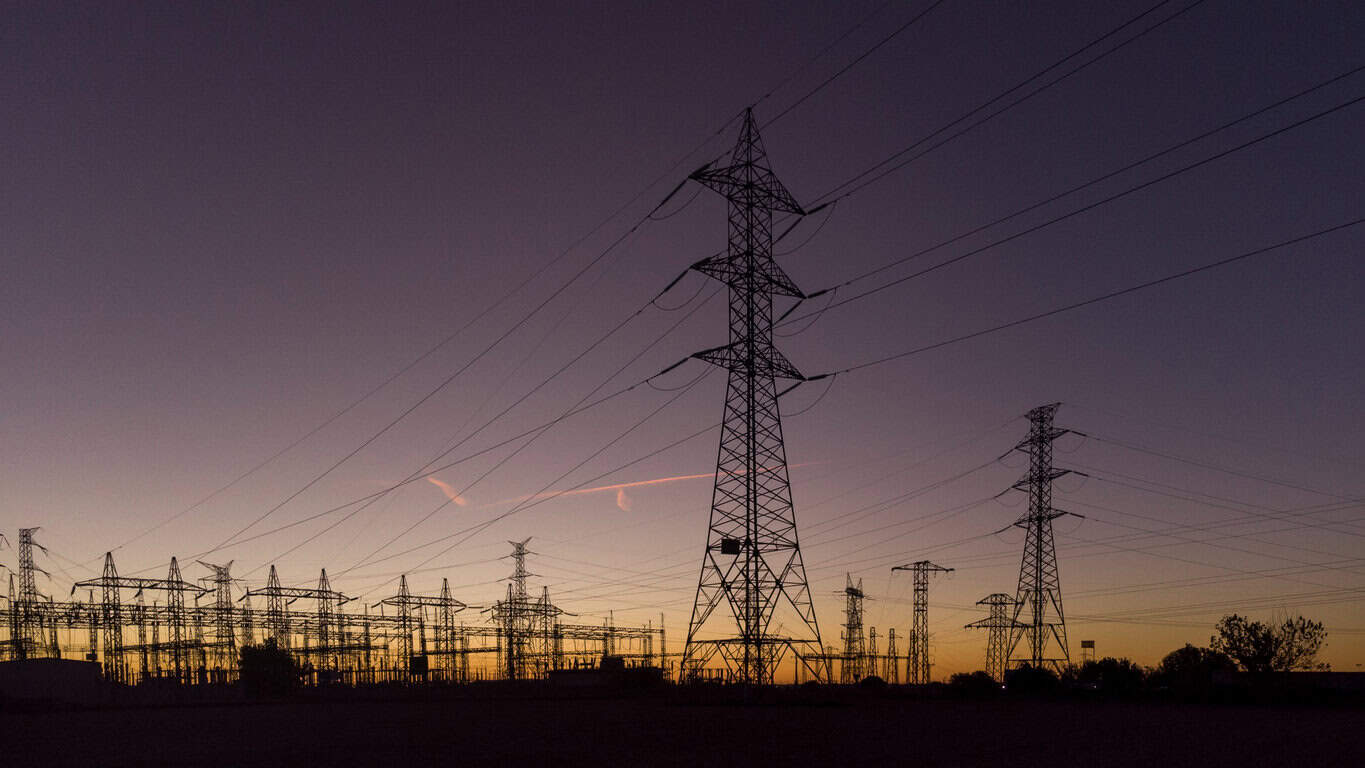
At sunset with a completely clear sky and against the light, an electrical substation with towers of a high voltage line.
The South African Local Government Association (Salga) has expressed shock at Eskom’s move to issue disconnection notices to 14 municipalities over unpaid electricity debts running into billions of rands.
While acknowledging Eskom’s financial pressures, Salga warned that cutting supply would have severe humanitarian, economic and governance consequences, particularly for paying residents who risk being caught in the fallout.
The association insists electricity must be treated as a critical service, urging national government, Eskom and municipalities to find sustainable solutions that avoid harm to communities and local economies.
Eskom cites legal process for disconnections
Eskom said it had issued the notices through the Promotion of Administrative Justice Act (Paja), saying the affected municipalities would have an opportunity to make representations as to why the disconnection should not go ahead.
Eskom said it had “exhausted all reasonable avenues through the Intergovernmental Relations Framework Act (IGR)”, adding that the 14 towns and cities had failed to settle their accounts for at least the past 18 months, nor met National Treasury’s requirements for municipal debt relief.
Salga portfolio head for energy and electricity distribution Nhlanhla Ngidi said: “We believe that electricity supply should be treated as a critical service, and that measures that may disrupt supply should be considered only as a last resort.”
Ngidi said while the association recognises Eskom’s financial sustainability challenges and the importance of enforcing payment discipline across the electricity value chain, all parties to the IGR discussions had been at pains to discourage a shut-off process in terms of Paja.
The Paja process does not benefit anyone, including Eskom itself, he said.
“Salga, Eskom and other affected national departments, such as National Treasury, as well as cooperative governance and traditional affairs, have been in discussions to find solutions to the Eskom debt issues, which includes assisting some of those municipalities entering into distribution agency agreements with Eskom,” Ngidi said.
ALSO READ: Eskom warns of possible electricity supply interruption to Govan Mbeki Municipality over R6.5bn debt
Structural challenges behind municipal debt
He said Salga supports the consultation process as an opportunity for municipalities, Eskom and the national government to find workable and sustainable solutions that avoid electricity supply interruptions.
He added the accumulation of municipal debt to Eskom, now exceeding R110 billion, was the result of multiple structural and systemic challenges rather than a single factor.
He said the high levels of non-payment by households, businesses and government departments in several cities significantly undermine municipal revenue collection.
Electricity revenue is often used to cross-subsidise other municipal services, meaning shortfalls directly affect Eskom payments, he said.
Eskom says action needed to protect system
Eskom’s interim group executive for distribution, Agnes Mlambo, said initiating the Paja process ensures Eskom complies with legal requirements, while taking necessary steps to maintain the stability of the electricity supply system.
“We have to address rising debt to protect the operational stability we have restored and the financial discipline we have rebuilt in the first three years of our turnaround strategy to deliver on our developmental mandate,” she said.
“Through the turnaround strategy, we are enabling businesses to protect and create jobs as well as supporting strategic industries to remain competitive, which in turn enables communities to thrive.”
Mlambo said Eskom would determine the way forward once all representations submitted through the Paja process have been fully considered.
NOW READ: Eskom threatens Ekurhuleni power cut
About the Author