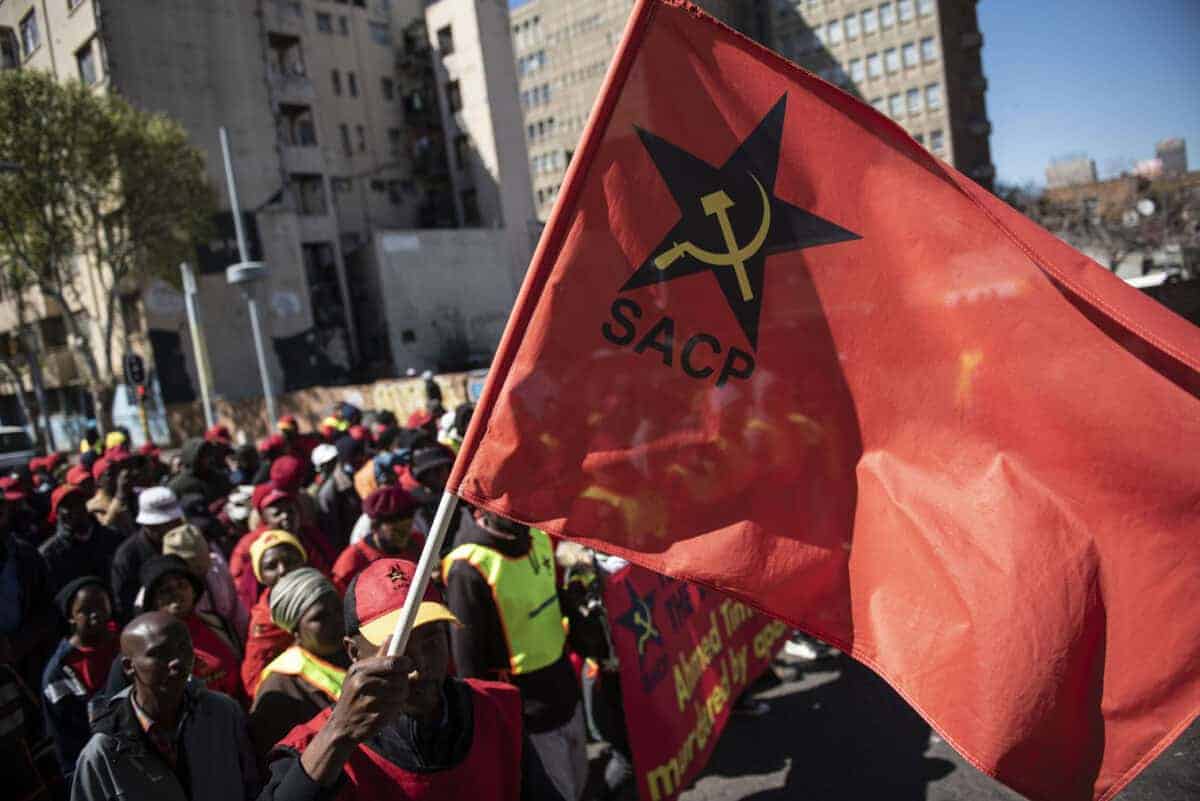
While the ANC faces inevitable electoral setbacks due to its governance failures, experts argue the South African Communist Party’s (SACP’s) decision to contest independently this year should be the least of its concerns.
Political analyst George Tsibani of the University of Johannesburg and independent analyst Goodenough Mashego agree that the SACP lacks mass appeal, something the ANC has enjoyed for the last three decades.
Analysts say SACP lacks grassroots support
By design, communist parties are not mass-based, but rather intellectual platforms for leftist elites and activists, they say.
Their intervention comes as the SACP campaigns separately for the first time in decades, breaking away from the ANC-led alliance.
The SACP resolved in December 2024, to contest outside the ANC umbrella, accusing its ally of embracing neoliberalism and abandoning a pro-poor agenda.
Tsibani says the ANC’s real vulnerability lies in voter frustration over poor service delivery, not the SACP split.
“The ANC is widely seen as having peaked in 1994, and declined after Polokwane in 2007. The SACP’s move may symbolise fragmentation of the left, but it will not dent the ANC’s electoral performance,” he said.
Tsibani also questioned the SACP’s organisational strength: “Its lack of branches and wards undermines its ability to contest meaningfully. By distancing itself from the alliance, the party risks irrelevance.”
Organisational strength questioned
He warned the vacuum could benefit other worker-orientated parties, notably the Labour Party which registered with the Electoral Commission in March 2024, after an Amcu congress resolution to launch a workers’ party.
Tsibani predicted that contesting alone in the 2026 local elections might consign the SACP to the same political oblivion as the PAC and Azapo.
Mashego agreed, stressing that the SACP’s strength derived from dual membership with the ANC.
“It is virtually invisible in communities. That deficit will weigh heavily in the elections. The party may even seek joint ballots with MK or the EFF in a desperate bid to coalesce. But in doing so, it risks splitting the black vote.”
About the Author