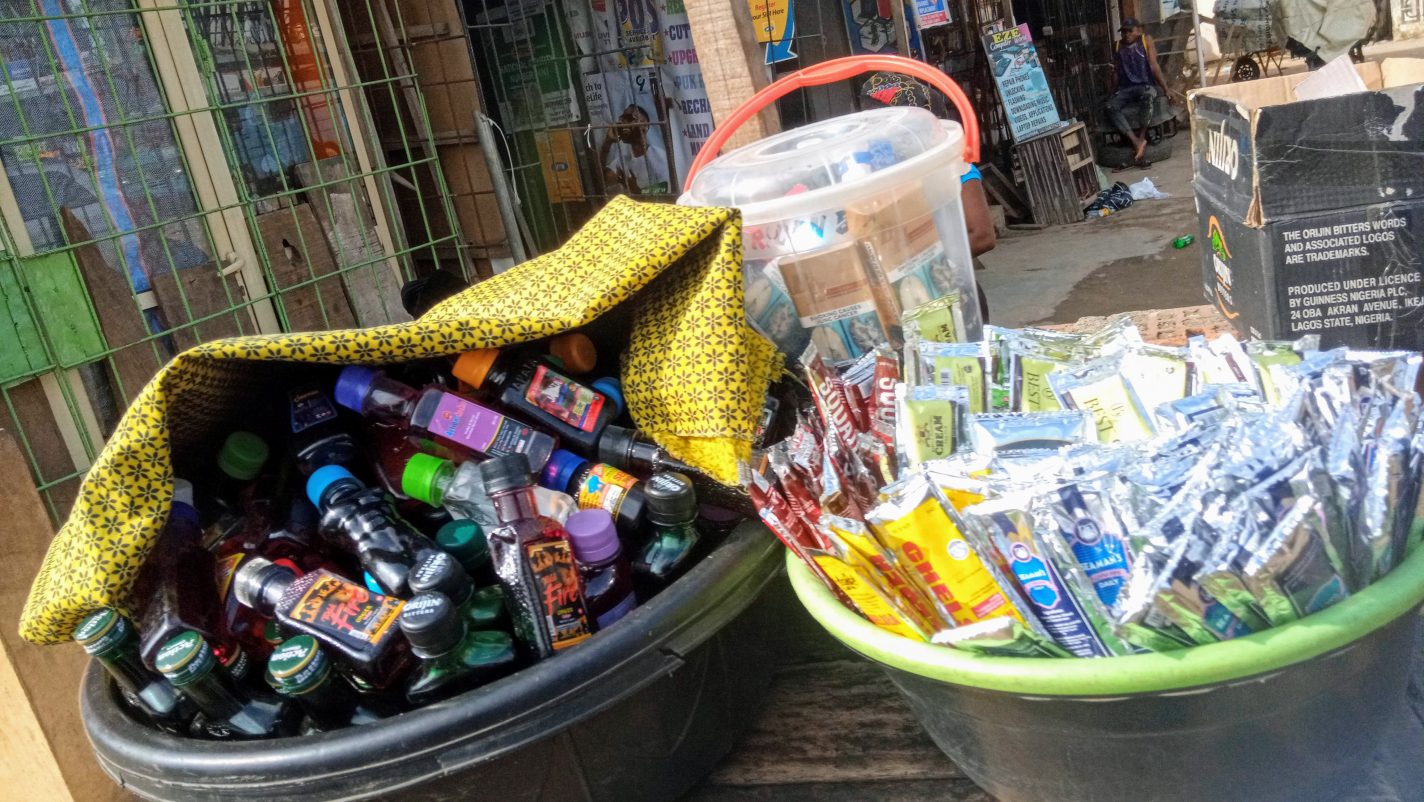
Manufacturers, employers say enforcement risks mass job losses, regulatory uncertainty, and growth of illicit alcohol market
The Manufacturers Association of Nigeria and the Nigeria Employers’ Consultative Association have warned that enforcing a nationwide ban on alcoholic beverages packaged in sachets and small PET bottles could erase investments estimated at over N400bn across the alcoholic beverages value chain.
The warning was issued by the Director-General of NECA, Adewale Oyerinde, and the Director-General of MAN, Segun Ajayi-Kadir, in a joint article published on Monday, as the National Agency for Food and Drug Administration and Control intensifies its renewed campaign to halt the production and sale of sachet alcohol.
Both organisations said the wines and spirits value chain supports hundreds of thousands of direct and indirect jobs and underpins major investments in manufacturing, packaging, logistics, and agriculture. They cautioned that abrupt regulatory actions, such as the current enforcement drive by NAFDAC, could worsen unemployment and push economic activity into informal and unregulated markets.
According to Oyerinde and Ajayi-Kadir, research conducted by the Food and Beverage Division of NECA and MAN shows that the sector directly and indirectly supports more than 500,000 jobs nationwide.
They said these jobs span manufacturing plant workers, quality control technicians, distribution staff, logistics drivers, warehouse operators, botanical suppliers, packaging material producers including glass and staff manufacturers, retail operators, hospitality workers, as well as farmers supplying grains and plastics.
They added that investments tied specifically to production lines, packaging technology, and logistics infrastructure designed for sachet and small PET formats are estimated to exceed N400bn.
The business leaders noted that the combined value of production, distribution, and allied services within the wines, spirits, and broader beverages industry surpassed N2tn in revenue in 2024, while also contributing significantly to excise duties, tax receipts, manufacturing cluster activity, and local market vibrancy.
MAN and NECA warned that enforcement measures such as factory shutdowns, output losses, product seizures, and sudden compliance demands could undermine investor confidence and weaken formal employment.
They said such actions risk hollowing out regulated economic activity and driving production and distribution into informal channels where worker protections are weak and tax contributions are absent.
Oyerinde and Ajayi-Kadir stressed that neither organisation opposes regulation, acknowledging the importance of public health protection and preventing underage drinking.
“To be clear, both organisations are committed to and recognise the importance of protecting public health and preventing underage drinking in any form,” they said, adding that regulation must be evidence-based, proportionate, and coherent.
They argued that banning sachet alcohol produced by duly registered and regulated companies would not address alcohol abuse or underage consumption.
According to them, the policy would instead encourage the spread of unregulated, smuggled, and unsafe alternatives, while triggering job losses, capital flight, loss of government revenue, disruption of value chains, and the erosion of livelihoods.
They also faulted what they described as regulatory inconsistency surrounding the ban, noting that the Office of the Secretary to the Government of the Federation had directed a suspension of enforcement on December 15, 2025, to allow for further stakeholder engagement.
In addition, they pointed out that the House of Representatives had earlier called for restraint following a public hearing on the issue.
Proceeding with enforcement despite these interventions, they warned, creates uncertainty for operators, investors, and workers, while weakening confidence in Nigeria’s regulatory environment and the rule of law.
They said the situation risks discouraging both domestic and foreign investment and undermines trust between government institutions, regulators, and the private sector.
MAN and NECA called for the immediate suspension of enforcement actions in line with existing Federal Government directives and urged regulators to redirect attention toward access control, public education, and retail-level enforcement rather than focusing on packaging formats.
They also demanded the publication of scientific risk assessments specific to sachet alcohol and stronger enforcement of age-verification requirements at points of sale.
The associations emphasised that the sachet and small PET products affected by the ban had undergone testing, registration, and approval by NAFDAC, with alcohol-by-volume levels consistent with global standards.
They said categorising such products as inherently dangerous without presenting new, detailed scientific evidence creates regulatory inconsistency and uncertainty.
According to them, sachet packaging reflects Nigeria’s socio-economic realities by allowing adult consumers with low or irregular incomes to access regulated products, warning that eliminating these options could push consumers toward unsafe and illicit alternatives.
The groups further argued that enforcement resources would be better deployed in tackling illicit drugs and unregistered alcohol products, citing rising concerns about drug abuse among young people.
They concluded by calling for regulations that are science-based, data-driven, and tailored to Nigeria’s economic realities, reaffirming their willingness to work with government and regulators to develop a balanced policy framework that protects minors, supports investment, and promotes job creation and economic growth.
About the Author