Vehicles with inferior safety protection features compared to those in all other major global markets are being permitted to be sold into the South African market because of the compulsory safety standards set by the country’s regulators.
This is the implication of the responses from both Toyota South Africa Motors (TSAM) and Hyundai South Africa to the latest #SaferCarsForAfrica campaign crash test results from Global NCAP (New Car Assessment Programme).
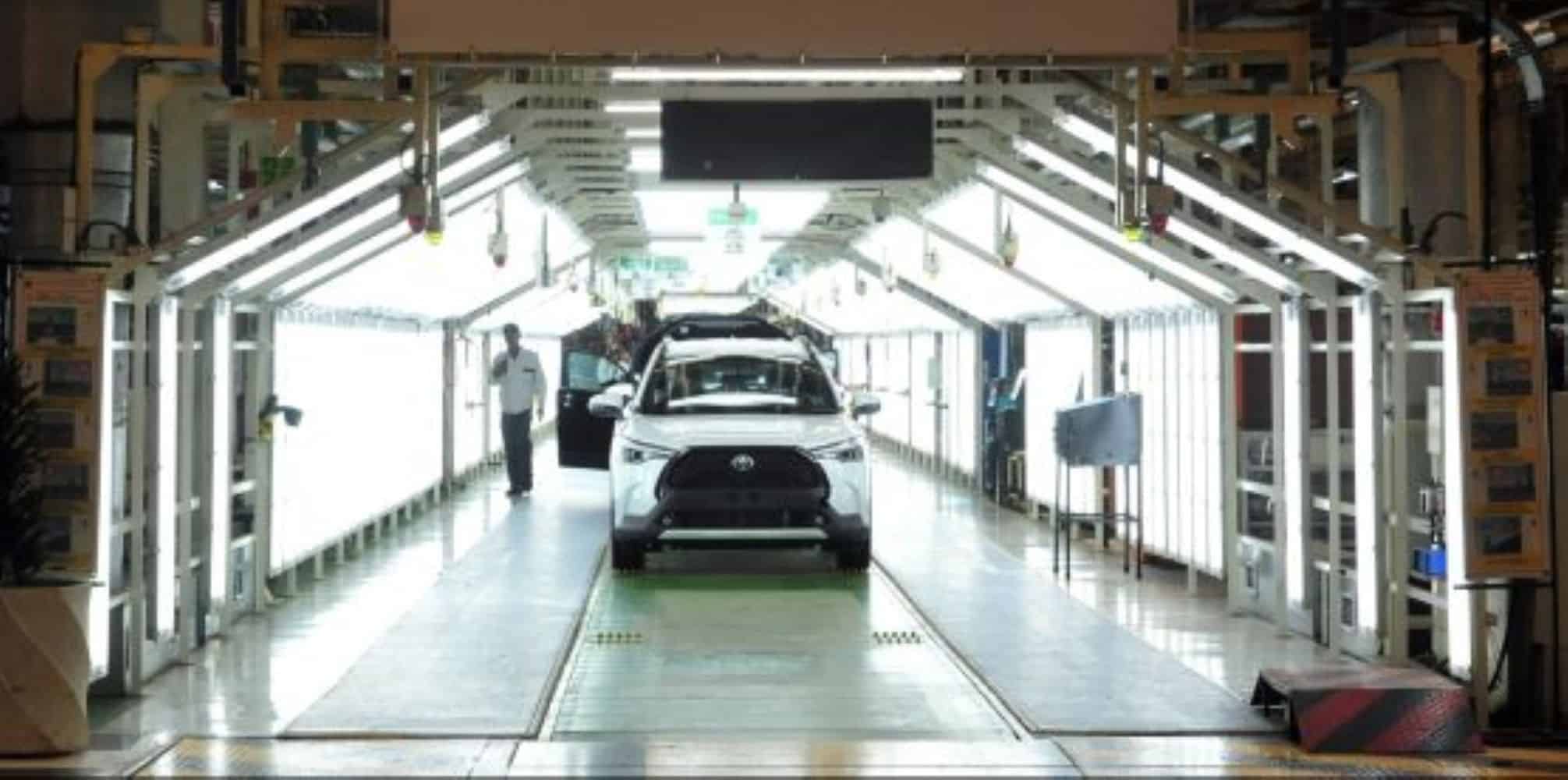
In the tests, the Toyota Corolla Cross received a two-star rating for adult occupant protection due to the absence of standard side head protection, while the Hyundai Grand i10 received a zero-star rating because it offers only basic safety equipment such as driver and passenger airbags, and does not come standard with side body or head protection, nor does it include Electronic Stability Control (ESC).
Toyota confirmed the locally manufactured Corolla Cross “meets and exceeds all applicable local legislative safety requirements”.
Hyundai said the Grand i10 meets all the safety and homologation requirements applicable in South Africa, as stipulated by the National Regulator for Compulsory Specifications (NRCS).
The South African Bureau of Standards (SABS) and the NRCS are responsible for developing, maintaining and enforcing compulsory specifications, including mandatory safety standards.
Moneyweb sent a list of questions to both entities on Friday, but no response has yet been received.
ALSO READ: Excessive regulation causing vehicle non-compliance and safety hazards, says CEO
AA criticises industry practices
Automobile Association (AA) CEO Bobby Ramagwede told Moneyweb in an exclusive interview that the #SaferCarsForAfrica Global NCAP programme has been going for 17 years and, despite the safety-features issues revealed by crash tests on a variety of models of various vehicle brands, “not even a punctuation mark has changed” in the compulsory safety standards for motor vehicles.
Ramagwede added there has been “zero engagement” between the regulators and the AA about the results of the vehicle crash tests.
“And with the original equipment manufacturers (OEMs) knowing this, they can continue resting on the minimum standard.
“We know how the game goes. Until the OEMs have a legal requirement to make some changes, they will forever have a crutch that they can comfortably rest on.”
Ramagwede said there should no longer be any excuse now for differences in safety standards and features between vehicles in SA and those in all the major global markets because the technologies are so well entrenched across virtually every motor manufacturer.
However, he said that based purely on safety features, the same vehicle for the South African market has lower standards than in all other major global markets including Australia, Asia, Europe and, where relevant, the US.
Ramagwede said the Hyundai Grand i10 is assembled in India for the African market, but the specifications for the model that is rolled out to the Indian market “demonstratively have slightly better safety features than what lands on the African continent”.
He said the Toyota Corolla Cross for the African market is assembled in KwaZulu-Natal, while the same model for the European market is assembled elsewhere and differs in its safety specifications.
“The big difference between the local [Toyota Corolla] Cross is that it does not have a curtain airbag, a standard feature providing head protection, whereas the model tested in Europe has all the bells and whistles in terms of safety features.”
ALSO READ: AA: Safety still low on entry-level vehicles
Toyota responds
Toyota told Moneyweb the results of the latest Global NCAP tests for the Corolla Cross relate to specifications that do not compromise the structural integrity of the vehicle, and that the Corolla Cross is equipped with a comprehensive suite of safety features.
“The Global NCAP results coincide with an ongoing internal review of standardised curtain shield airbag fitment across the entire Corolla Cross range for the local market,” it said.
“This review is in line with Toyota’s global philosophy of Kaizen (continuous improvement), which guides TSAM’s ongoing commitment to enhancing product safety, quality and performance throughout the Toyota Production System.”
Asked whether the safety features and standards of the Toyota Corolla Cross for the South African market are lower than in other markets, Toyota said: “Local market specification (and grade strategy) may differ between different markets. We prefer not to speculate on this matter.”
ALSO READ: Hyundai responds to Global NCAP: ‘Grand i10 is safe to drive’
Hyundai’s response
Hyundai Automotive South Africa CEO Stanley Anderson said that for a vehicle to be approved for use on South African roads, it must meet 53 NRCS compliance requirements, including – but not limited to – braking performance, frontal impact protection, door latch integrity, child restraint anchorage systems, airbags and other regulated safety features.
“The Grand i10 meets all 53 of these compliance requirements. Safety is deeply embedded in Hyundai’s global and local product philosophy,” said Anderson.
“The Hyundai Grand i10 has been engineered to meet all South African road and safety requirements, and the NRCS confirmation provides credible assurance to our customers and stakeholders that these standards have been independently verified.
“While additional independent assessments and ratings, such as NCAP, are useful reference points, they continue to evolve and do not replace or override South Africa’s established regulatory standards.”
Ramagwede said manufacturers tend to rest their argument on the minimum compulsory requirements having been satisfied, arguing: “so why should they have to do more than what is required by the state?”.
He said the most common overarching theme is that manufacturers are trying to maximise profits, but will use the word “cost” to posture it as though it is difficult to do because it is a costly exercise.
ALSO READ: Gauteng scholar transport horror: 94% of vehicles fail pre-test inspections
Local versus global models
Ramagwede said in Europe, for instance, it is a mandatory standard that all vehicles must have Electronic Stability Control.
“In an ideal world there should be no difference between the Euro standard and the Africa standard. The reason I say that is because ‘a life is life’.
“Once we start having differences in standards, we are implying that one life is more important or valuable than another,” he said.
Ramagwede said the end point is to put OEMs in a position where they have to “sharpen their pencils elsewhere” and figure out what they need to do to make these vehicles safe.
“Today, they strip out parts and they exclude them in the assembly process and they get away with it, which in my modest opinion is, murder,” he said.
ALSO READ: Recall notice placed on MG3 over seat mechanism defect
#SaferCarsForAfrica
The #SaferCarsForAfrica programme, launched in 2017 by Global NCAP in partnership with the AA and the Fédération Internationale de l’Automobile (FIA) Foundation, exists to independently assess the safety performance of popular, entry-level vehicles sold in African markets against internationally recognised Global NCAP standards.
It was established in response to three persistent challenges in African vehicle markets:
- Outdated minimum safety regulations;
- An anaemic local homologation framework; and
- Differing safety specifications, which can result in potential double standards at source.
Under the NCAP programme, vehicles are anonymously purchased locally by the AA, shipped independently to the Allgemeiner Deutscher Automobil-Club (ADAC) crash-testing facilities in Germany, and subjected to rigorous frontal and side-impact tests, together with a comprehensive assessments of restraint systems and safety equipment, with the aim being transparent real-world safety results, with the end-consumer’s safety in mind.
This article was republished from Moneyweb. Read the original here.
About the Author