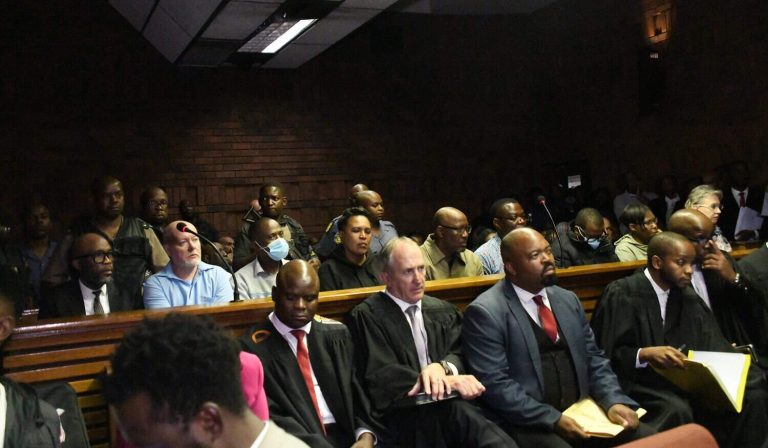
Gambling addicted man with glasses in front of online casino slot machine on laptop computer at night - loosing his money. Dramatic low light grain shot.
People love to gamble. So much so that when the paternalistic hand of apartheid banned gambling outright in South Africa, it had a difficult conundrum to deal with; allow the Bantustans to build casinos or not? The premise of apartheid, at least the way it was sold, was all about separate development being good for all races so infringing on the pseudo-sovereignty of the Bantustans would be a bad look… well, a worse look than the existence of the quasi-states anyway.
And guess what happened! Black and white people came together to gamble – save for the manufactured economic factors that dampened black peoples’ financial capacity to gamble, but still. Gambling isn’t a build it and they will come matter in South Africa. It’s a build it or we’ll find another way truth.
Legalities around gambling
For decades since the turn of democracy, we’ve battled with gambling legalities. Just having a national lottery was a big deal and while you may not know it, your church raffle is probably illegal as a result.
We have an act of parliament to govern the lottery, a separate one to govern gambling, regulations to go with them and as if those weren’t enough, each province has its own additional separate laws.
ALSO READ: Treasury’s 20% online gambling tax stirs controversy
The numbers of tables, games, slot machines are all carefully calculated, worked out and limited in order to, as the National Gabling Act says, safeguard people participating in gambling and their communities against the adverse effect of gambling. Oh my. There are adverse effect of gambling? What could those possibly be?
Perhaps people could become addicted to gambling or perhaps it may cut too deep into the income of some? It would make sense to guard against those things and thank goodness we have all these lovely laws which have so successfully prevented gambling from becoming an addiction and readily accessible. The last thing we need is for a product of the South African basic education system to break their brain trying to balance how to balance their last R10 between how much to put down and how much airtime to buy to put it down.
R1.5 trillion wagered in one year
Except of course we have a gambling problem and of course the law hasn’t done much to prevent it.
Experian has released new research that indicates some distressed households are spending 40% of their gross income on gambling. It would appear that some are even using Sassa grants to place bets and it’s not just the poor.
The National Gabling Board estimates some R1.5 trillion was wagered on all gambling in the 2024/25 financial year. That’s an average of over R23 000 per person, newborns included, that was spent on gambling annually.
Sure, a large amount of that is won back with winning bets but I’ll let you in on a little secret – no casino, online betting platform or slot machine is ever built to give away money. En masse, the house is always supposed to win. That’s not inherently a bad thing. Your luck can be better than the person next to you and that’s generally the wager.
ALSO READ: There’s a national online gambling tax – but where is the online gambling law?
Gambling creates great employment opportunities and does a lot of social good in the form of sponsorships and often, as the Lotto has done, uplifts social development projects that may not always be commercially feasible.
Is gambling being regulated?
Today, you can’t watch a sports game without seeing some form of betting advertising which was hardly the case back in the day. That sponsorship money had to come from somewhere. And if anybody has the imaginative capacity to develop a plan on how to live off of a Sassa grant, perhaps they too could imagine how to survive on a Sassa grant less gambling debt.
So if one is going to make the industry jump through some loopholes to ensure that people participating in gambling and their communities are safeguard against the adverse effect of gambling, you might want to actually safeguard them against the adverse effects of gambling.
But hey, at least gross gambling revenue is growing by 25% at a time when something, anything, needs to drive the economy and it sure isn’t going to be Rand Water.
Regulate or don’t regulate gambling. Just don’t pretend to do it so that nothing actually gets done.
READ NEXT: Call for SRD grant and Nsfas recipients to be banned from gambling – Here’s how
About the Author