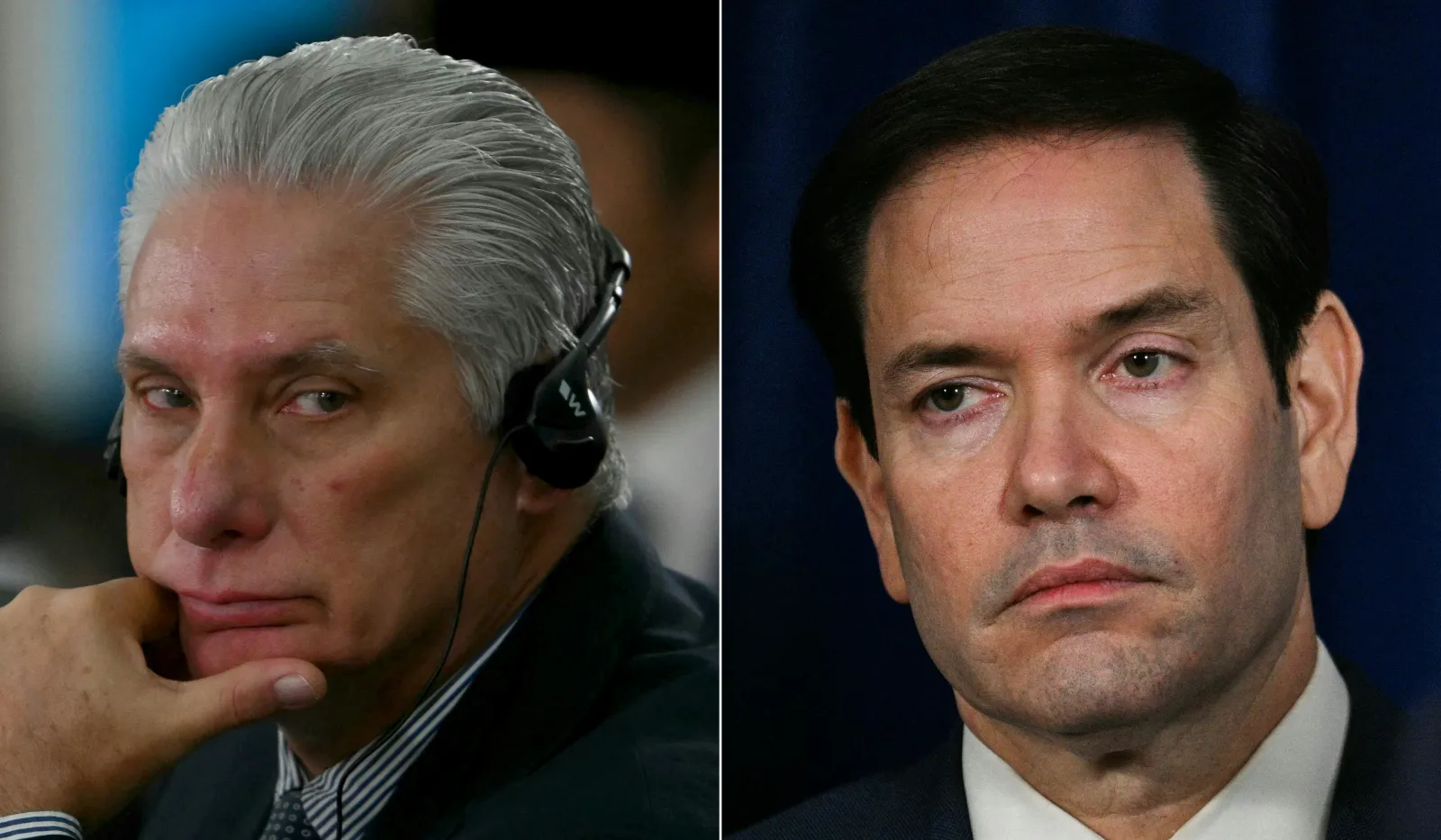
Marco Rubio has dismissed reports suggesting that Washington is pressing for the removal of Miguel Díaz-Canel, calling the claims false amid growing scrutiny over US policy toward Cuba.
In a late-night post on X, Rubio described a report by The New York Times as “fake,” accusing sections of the media of relying on what he called “charlatans and liars claiming to be in the know” for sensitive diplomatic reporting.
The newspaper had reported that officials in the administration of Donald Trump had urged Havana to replace Díaz-Canel, while stopping short of demanding the collapse of Cuba’s communist government.
According to the report, US officials viewed the Cuban leader as resistant to political and economic reform but had not issued any formal ultimatum for his removal.
Rubio did not clarify whether his denial applied to the entire report or only specific elements of it.
The remarks come as Washington intensifies pressure on Cuba, which is facing a worsening economic crisis marked by fuel shortages, energy instability, and nationwide blackouts. Cuba suffered another major power outage this week, underscoring the severity of its internal challenges.
Speaking to reporters earlier, Rubio said Cuba would need to take far more “dramatic” steps than recently announced measures allowing Cubans living abroad to invest in businesses on the island.
A longtime critic of Cuba’s communist system, Rubio — a Cuban-American former senator from Miami — has consistently advocated for political change in Havana, arguing that the model established by Fidel Castro after the 1959 revolution has failed economically and politically.
Under Trump, US pressure on Cuba has intensified further, particularly after Washington moved to halt oil supplies from Venezuela, a key energy lifeline that previously supplied roughly half of Cuba’s fuel needs. The disruption has deepened shortages across the island and added to public frustration.
Trump has publicly suggested he is open to a future “deal” with Cuba, while also making provocative remarks about the United States being capable of taking control of the island because of its current vulnerability.
Unlike in Venezuela or Iran, where Washington has focused on forcing political concessions rather than immediate regime change, analysts say the US approach toward Cuba remains strategically ambiguous.
Although Cuba lacks major oil wealth, the island continues to carry outsized political importance in US domestic politics, particularly among Cuban-American lawmakers — many within the Republican Party — who have long pushed for a tougher stance against Havana.
For now, Rubio’s denial appears aimed at distancing Washington from direct regime-change rhetoric, even as pressure on Cuba continues to mount.
About the Author