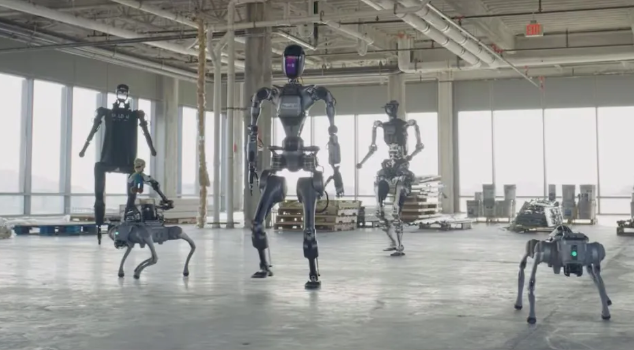
Skild AI Inc., a rapidly growing robotics software startup, secures approximately $1.4 billion in a Series C funding round, valuing the company at more than $14 billion. The valuation marks a more than threefold increase from just seven months ago, underscoring surging investor confidence in artificial intelligence-driven robotics.
The round is led by SoftBank Group Corp., with participation from Nvidia Corp., Macquarie Group Ltd., 1789 Capital, and Jeff Bezos’ investment firm, Bezos Expeditions, according to co-founder and CEO Deepak Pathak. Existing investors Lightspeed Venture Partners, Felicis Ventures, Sequoia Capital, and Coatue Management also participate, alongside new backers including Samsung Electronics, LG Electronics, and Salesforce.
Based in Pittsburgh, Skild has now raised roughly $2 billion since its founding in 2023. The company was valued at about $4.5 billion in mid-2024.
Skild is part of a new wave of robotics startups attracting major capital by pursuing general-purpose intelligence rather than task-specific automation. Its flagship product, the Skild Brain, is designed as a universal AI system that can adapt across robots, environments, and tasks by learning through observation and practice, similar to humans.
“There is no ‘Internet of Robots,’” Pathak says. “You need real-world data to build a general robotic brain, and that’s been our focus from day one.”
The Skild Brain runs on standard GPUs without custom hardware and is trained using large libraries of human videos and simulation data. As robots operate in real environments, their actions and errors generate feedback that continuously improves performance. The system integrates internal signals such as force and joint movement with external perception like vision, enabling situational awareness and resilience.
According to president and co-founder Abhinav Gupta, the technology allows robots to adapt even when parts fail, improving safety and reliability. “If an arm breaks, the robot still completes the task,” he says.
Skild plans to use the new funding to expand deployment of its software, enhance training systems, and roll out robots across more environments. The platform supports a wide range of machines, including quadrupeds, robotic arms, and humanoids, with applications spanning hospitals, warehouses, homes, airports, and construction sites.
The startup reports going from zero to tens of millions of dollars in revenue within months in 2025 and is working with more than eight customers. One client has deployed a Skild-powered service robot at New York’s LaGuardia Airport to monitor air quality, while LG CNS is collaborating with the company on humanoid robotics solutions.
Skild’s soaring valuation reflects a broader trend of major technology companies choosing strategic investments over large acquisitions to gain exposure to emerging AI talent. Nvidia, Samsung, and others continue to back multiple robotics startups as the industry moves toward general-purpose machines.
With more than 100 employees from companies such as Meta, Tesla, Nvidia, Amazon, and Google, Skild positions itself at the center of what analysts describe as robotics’ “GPT moment,” where machines transition from single-function tools to adaptable, intelligent systems.
The founders believe advanced robotics will ultimately fill over a million dangerous or undesirable jobs in the US, complementing human labor rather than replacing it. “This isn’t happening overnight,” Pathak says. “We have time to prepare and the long-term impact can be a good thing.”
Erizia Rubyjeana
About the Author