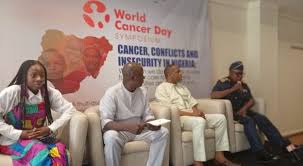
The Nigerian Medical Association (NMA) has cited rising insecurity in Nigeria as a major barrier to cancer care, warning that many patients, including women and internally displaced persons, are unable to access screening, diagnosis, and treatment.
Speaking at the World Cancer Symposium, NMA President and Federal University, Azare Vice-Chancellor, Bala Audu, described a “dual crisis” of rising cancer cases and growing insecurity, noting that health facilities in conflict zones are often abandoned, destroyed, or left without skilled personnel.
“Cancer care in Nigeria is already fragile. When insecurity prevents travel and forces displacement, access becomes nearly impossible”. Audu said. He added that preventive services, such as HPV vaccination and cancer screening, are largely absent in IDP camps, even though breast and cervical cancers remain highly prevalent.
Audu warned that insecurity is driving a brain drain, leaving facilities understaffed or closed. “Health facilities become soft targets. Poor data from conflict zones also hinders planning, what is not measured will not be prioritised”, he said.
The Nigerian Air Force highlighted its role in transporting patients, personnel, and equipment from unsafe areas to safer locations.
Audu highlighted that Nigeria records about 137,000 new cancer cases annually, with over half of patients dying due to late diagnosis and poor access to care. Breast and cervical cancers, which are largely preventable, remain the most common among Nigerian women, accounting for more than half of cases nationwide.
He urged the expansion of awareness campaigns and screening programs, supported through the Basic Health Care Provision Fund and donor partnerships, to reach Nigerians in insecure and remote areas.
Participants called for stronger collaboration to integrate cancer prevention and treatment into humanitarian and conflict-response planning.
About the Author