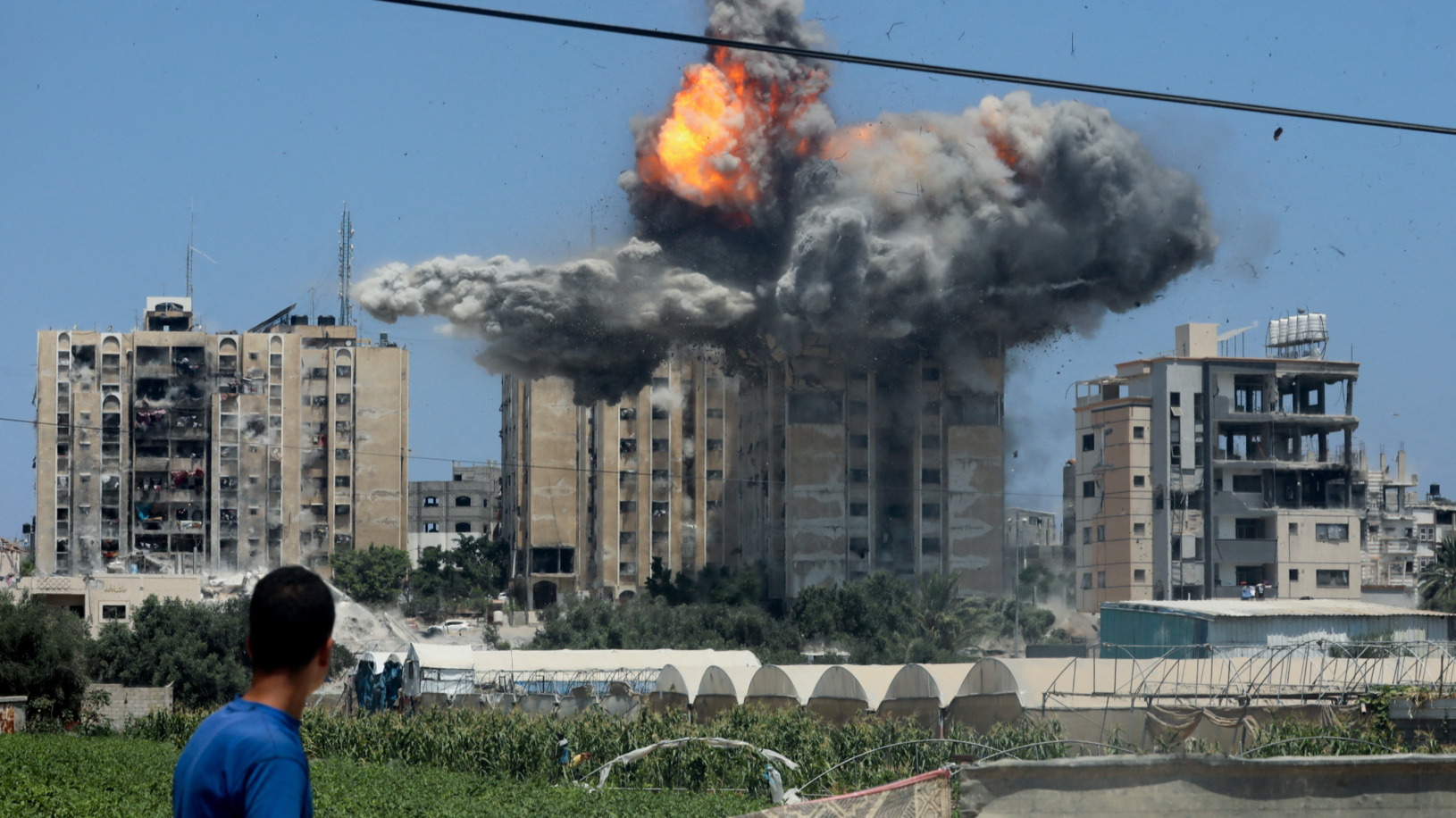
An explosion occurs following an Israeli air strike on a residential building, amid the Israel-Hamas conflict, in Nuseirat in the central Gaza Strip, July 20, 2024. REUTERS/Omar Naaman TPX IMAGES OF THE DAY
A new analysis by the Washington-based think tank Centre for Strategic and International Studies (CSIS) has revealed that the ongoing United States military campaign against Iran is costing American taxpayers close to $890 million per day, highlighting the enormous financial burden of the conflict in its earliest stages.
The report estimates that the first 100 hours of “Operation Epic Fury,” the U.S.-led military offensive targeting Iranian military infrastructure, cost about $3.7 billion, translating to roughly $891.4 million daily.
The figures underscore the steep financial cost of the war, even before accounting for longer-term expenses such as troop deployments, equipment replacement, and post-conflict reconstruction.
According to the CSIS analysis, the bulk of the initial spending stems from the deployment and use of advanced military equipment, including high-precision missiles, air power, naval operations and missile defence systems.
The opening phase of the operation has been especially expensive because modern warfare relies heavily on high-cost munitions and advanced weapons systems. Early estimates cited by defence analysts indicate that U.S. forces used thousands of precision-guided bombs and missiles in the first wave of attacks on Iranian targets, including ballistic missile launchers, air defence systems and naval assets.
Military officials say the opening days of the campaign represent the most intensive phase of the war, which often requires the rapid deployment of forces and the heavy use of advanced weaponry.
Experts warn that while costs may moderate over time as operations shift to less intense combat, the cumulative financial burden could rise sharply if the conflict drags on.
The offensive, launched amid escalating tensions in the Middle East, has already seen the United States and its allies strike nearly 2,000 Iranian targets in the first 100 hours of the operation. These targets reportedly include missile bases, drone launch sites, naval vessels and military infrastructure.
The scale of the campaign has required a massive military buildup, involving aircraft carriers, long-range bombers, fighter jets and tens of thousands of troops stationed across the region.
Analysts say this level of mobilisation inevitably drives up operational costs, particularly when high-end systems such as stealth bombers, cruise missiles and missile defence interceptors are used extensively.
In addition, the US Navy and Air Force are conducting round-the-clock operations across the Persian Gulf and surrounding areas, increasing the consumption of fuel, maintenance resources and ammunition. The financial strain is already forcing the U.S. Department of Defence to seek additional funding from Congress to sustain the campaign and replenish depleted weapons stockpiles.
According to defence officials, the Pentagon has already spent billions of dollars on interceptors, missiles and bombs used during the first wave of strikes against Iranian forces. One estimate suggests the first four days of the war alone cost nearly $11 billion, including the deployment of warships and aircraft to the Middle East. Large quantities of advanced interceptors, used to shoot down Iranian drones and ballistic missiles, have also been fired, further straining U.S. military inventories.
To address the shortage, the Pentagon is reportedly pushing defence contractors to accelerate production of weapons such as Patriot interceptors, Tomahawk cruise missiles and other precision munitions. However, industry experts say manufacturing capacity and supply chain constraints could slow efforts to rebuild stockpiles quickly.
While the CSIS estimate places the daily cost at roughly $890 million, other analysts warn the actual figure could rise significantly as the war continues. Some defence experts estimate that the broader financial impact, including lost equipment, emergency funding and increased military readiness, could push the cost to more than $1 billion per day.
About the Author