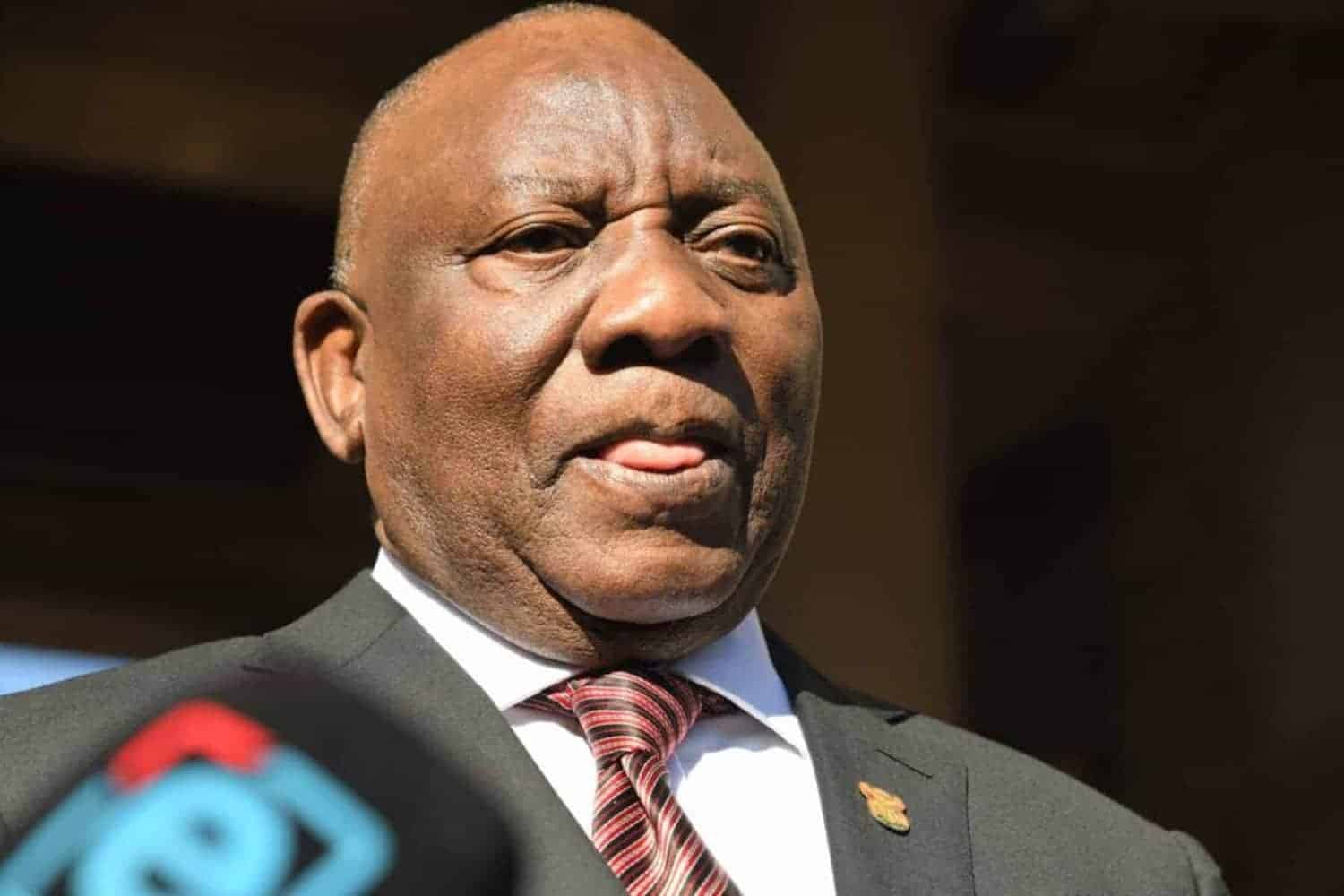
PRETORIA, SOUTH AFRICA - AUGUST 01: President Cyril Ramaphosa during the swearing-in ceremony of the Minister-Designate of Police at Union Buildings on August 01, 2025 in Pretoria, South Africa. President Ramaphosa appointed Professor Cachalia as Acting Minister of Police after Minister Senzo Mchunu was placed on indefinite leave following corruption allegations made against him by the KwaZulu Natal Provincial Police Commissioner, Nhlanhla Mkhwanazi. (Photo by Gallo Images/Frennie Shivambu)
President Cyril Ramaphosa’s response to the Madlanga commission’s interim report spotlights that when it comes to criminality, he differs from Jacob Zuma only in scale but not in essence.
Zuma delays justice by attrition; Ramaphosa delays it by diversion. Zuma turned Stalingrad – a battle fought between Nazi Germany and the Soviet Union – into a contemporary political byword, epitomising lawfare as siege.
The approach is grinding and eye-wateringly expensive. Defend, contest, delay. The goal is not an innocent verdict.
It erodes the attacker’s capacity, in this case, of the state, to win. But Ramaphosa has his own military genius.
This is the “elastic defence”, layered fallback positions, trading ground for time and absorbing shock, rather than meeting it head-on.
Politically, it relies on procedural redoubts – investigations, disciplinary processes, inter-agency referrals, commissions, boards of inquiry – stacked one behind another until the enemy thrust loses momentum.
Ramaphosa’s goal, like Zuma’s, is not victory. It is to erode the capacity of an exhausted nation to care.
The commission response and selective transparency
This is exactly the strategy that Ramaphosa is following with Thursday’s response to the commission’s interim report.
The president said based on prima facie evidence, there will be an “immediate criminal investigation” into five members of the police and the Hawks, four members of the Ekurhuleni municipal police and five civilian employees of that municipality.
Conducted by a special investigative task force, it will look into allegations of criminality, corruption, fraud, murder and perjury.
It will take “urgent decisions” on prosecution, as well as make recommendations on the employment status and recommended suspension of individuals. Nobody has been allowed to view the report’s findings.
The Presidency justified this as “easy to understand”, since the report was “half-baked” because of witnesses still due to return. If it’s too “half-baked” to be subject to interrogation, it’s difficult to see how it is simultaneously baked enough to justify identifying individuals as likely criminals.
ALSO READ: Ramaphosa leads the digital race, but SA ‘needs leaders who are present’ – report
What decisive action would have looked like
If Ramaphosa truly believes acting now is to “restore public trust in the affected state entities tasked with fighting crime and corruption”, what follows should not be the slow rearguard action he appears to be fighting.
A president seeking victory over criminality would have fired police minister Senzo Mchunu, currently on special leave. He would also have suspended from the ANC another key ally, former police minister Bheki Cele.
A fighting president would also have removed Mchunu’s chief of staff, Cedric Nkabinde. He would have fired national police commissioner Fannie Masemola, who was accused by Nkabinde of grave misconduct and intimidation.
ALSO READ: These are officials flagged in Madlanga commission report; Ramaphosa orders task team
Different tactics, same goal
Out of this welter of testimony, we cannot yet conclude what Saps has become after more than three decades of ANC rule, but we can already make out its outline. First, it’s enormous.
There are not just a few bad eggs. Second, the tendrils reach the ANC’s political summit, yet the politicians seemingly have immunity.
It is ludicrous that the very people implicated remain closely involved in appointing the officers who are supposed to investigate the same matters.
Zuma’s Stalingrad strategy and Ramaphosa’s elastic defence strategy have the same impetus, that of self-preservation and survival.
Zuma of his freedom, Ramaphosa of the ANC and his position at the head of it. They’re both succeeding.
NOW READ: Madlanga commission: Ramaphosa accused of protecting ‘comrade’ Mchunu
About the Author