South Africa’s public sector is at a digital crossroads, and a new benchmark study, with President Cyril Ramaphosa leading on a social media platform, shows which institutions are adapting and which are falling behind.
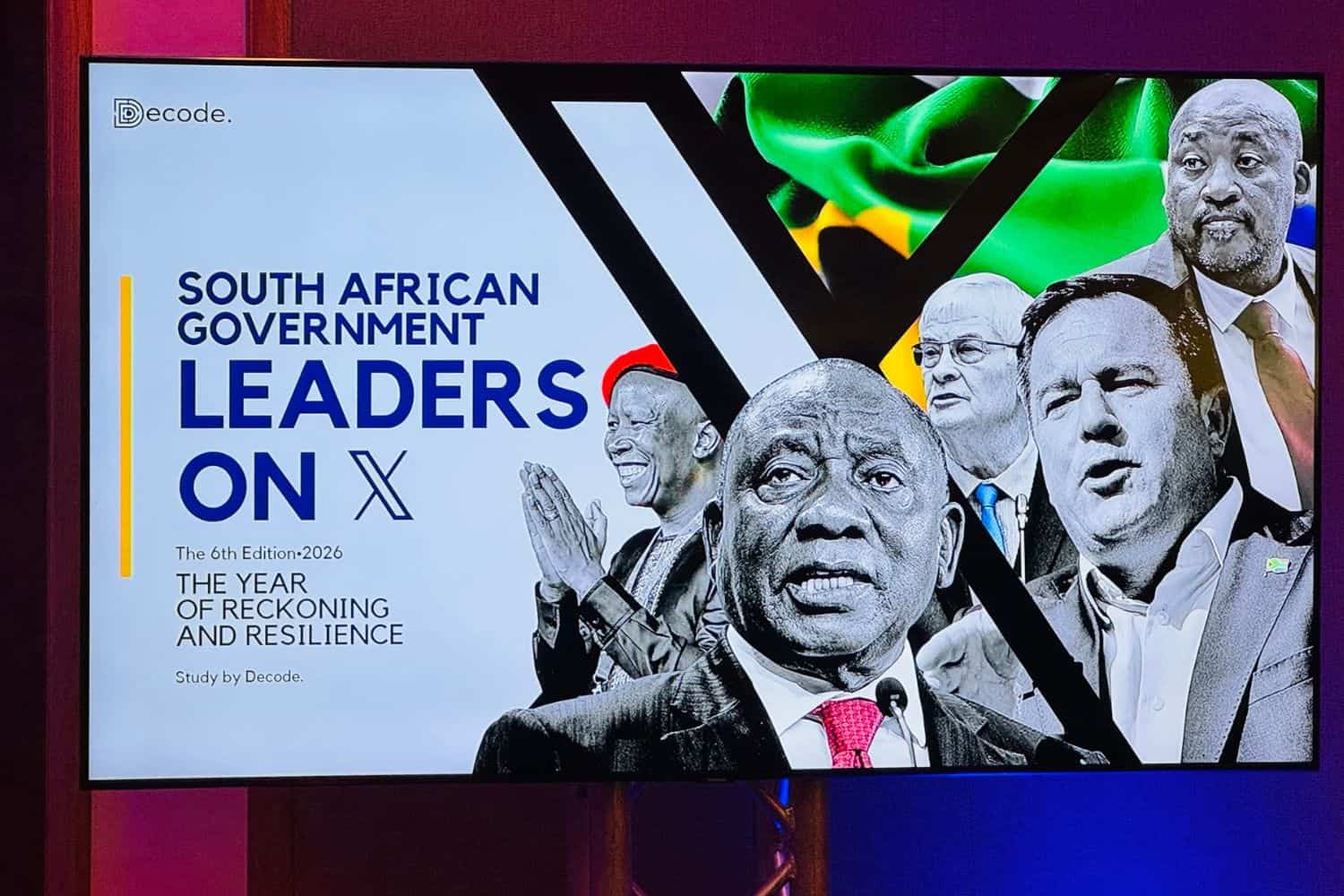
Decode, a Pan-African strategic communications and advisory firm, released the 6th edition of its annual South African Government Leaders on X (formerly Twitter) Report, themed “Year of Reckoning and Resilience on Thursday.
Engaging citizens
The study analyses how government institutions, beyond political principles, engage citizens digitally during a year marked by accountability crises, operational pressure, and public scrutiny.
It underscores the critical role of social media in fostering transparency, accountability, and trust between leaders and citizens.
Anger and frustration
In a country where citizens have expressed anger and frustration over issues like potholes, rising food prices, water shortages, and crime, X has emerged as a virtual imbizo.
Citizens are demanding direct engagement and meaningful dialogue with their leaders.
ALSO READ: Ramaphosa leading on X among government leaders, report finds
Social media
The report assessed how government leaders use X to engage with citizens and comes at a pivotal moment in South Africa’s democratic journey.
The nation is navigating its first government of national unity (GNU) and grappling with pressing socio-economic challenges, including international pressure from the United States on alleged white genocide and global issues.
Earlier this week, government leaders gathered at an extended Cabinet meeting to assess plans and priorities for the year ahead, emphasising fiscal discipline, economic stability, and targeted funding to support the government’s key priorities.
Engagement
Lorato Tshenkeng, CEO of Decode Communications, emphasised the need for meaningful engagement.
“We need leaders who are present. X can’t just be used to push announcements and create an illusion of citizen engagement.
“There are burning issues in our country, and we call on our government leaders to embrace transparency, empathy, and the courage to have difficult but necessary conversations with the people they serve,” Tshenkeng said.
Contrasts
The report revealed sharp contrasts across State-Owned Companies (SOC) and government departments in 2025.
While several SOCs faced credibility and accountability challenges, others demonstrated meaningful operational and reputational turnarounds – most notably Eskom’s resolution of load shedding, which shifted the tone and substance of its digital engagement.
What sets this year’s report apart is its broader lens. It assessed how the public sector as a whole communicates digitally, including cabinet members, provincial leaders, and official spokespeople – and how these platforms are used (or misused) for transparency, trust-building, and citizen engagement.
ALSO READ: This is what South Africans searched for on Google in 2025
Key Findings from the 2025 report
The 2025 edition of the report expands its scope to include deputy ministers, offering a more comprehensive view of digital engagement across government. Key findings include:
Top performers on X
Most followed
President Cyril Ramaphosa leads with 2.95 million followers, followed by Deputy Minister of Defence Bantu Holomisa (682K) and Gauteng Premier Panyaza Lesufi (569K).
Most engaged
Ramaphosa, Lesufi, and Sports, Arts, and Culture Minister Gayton McKenzie top the list of those most engaged.
Most engaging
McKenzie, Lesufi, and Basic Education Minister Siviwe Gwarube are recognised for their proactive and interactive communication styles.
Verification and credibility gaps:
Only 10 of the 34 ministers on X have verified accounts, raising concerns about credibility amid rampant misinformation.
Four ministers have inactive accounts: Sindisiwe Chikunga, Barbara Creecy, Mzamo Buthelezi, and Velenkosini Hlabisa.
Crisis-driven engagement
Crises and controversies drive higher engagement than policy announcements or service delivery updates, highlighting a reactive rather than proactive communication approach.
Newcomers
Newly appointed ministers, including Home Affairs Minister Dr Leon Schreiber (200.46% growth), Basic Education Minister Siviwe Gwarube (108.11% growth), and Sports, Arts, and Culture Minister Gayton McKenzie (39.99% growth), experienced significant follower growth, demonstrating the public’s appetite for fresh voices.
Declining engagement:
Fewer Cabinet spokespeople are active on X, with many accounts dormant or underutilised, signalling a shift in government communication patterns.
Call for government leaders
The report serves as a clarion call for government leaders to embrace X as a strategic tool for nation-building.
Tshenkeng highlighted the importance of this moment
“By expanding its scope to include deputy ministers, this edition offers a more comprehensive reflection of how government leaders use the platform, which we hope they can use to benefit every South African, beyond any political affiliation.
“They need to think more about fostering transparency, building trust, and driving meaningful public discourse,” Tshenkeng said.
“South Africa deserves leadership that speaks not only to its challenges but to its hope and resilience,” said Tshenkeng. “It’s time to lead the conversation—and the nation—forward.”
NOW READ: Communications minister says Icasa data bundle expiry amendment will bring ‘relief’ to users
About the Author