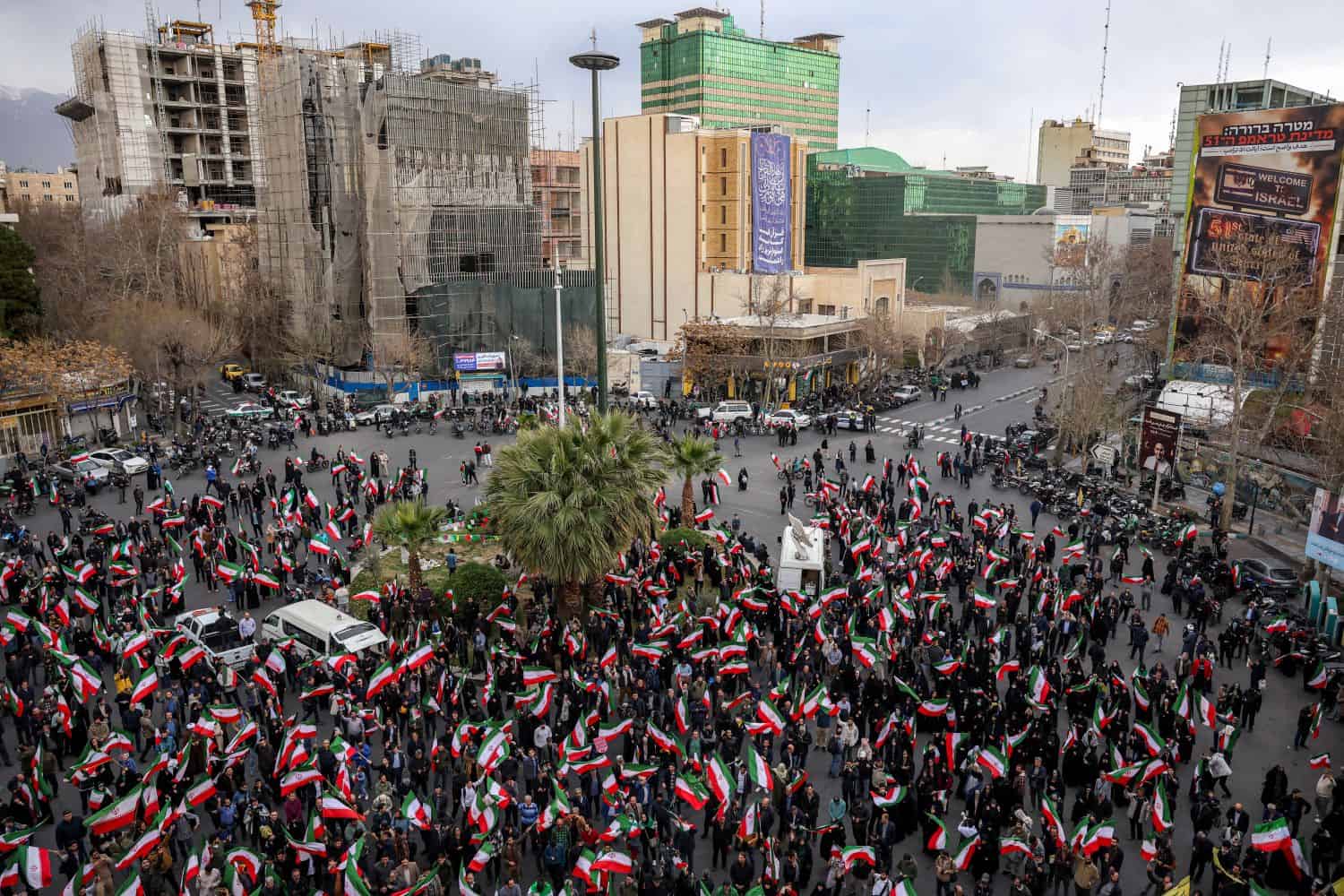
Protesters gather with Iranian national flags during a demonstration in support of the government and against US and Israeli strikes outside a mosque in Tehran on February 28, 2026. The United States and Israel launched strikes against Iran on February 28, with Israel's public broadcaster reporting that supreme leader Ayatollah Ali Khamenei had been targeted, as the Islamic republic retaliated with barrages of missiles at Gulf states and Israel. (Photo by ATTA KENARE / AFP)
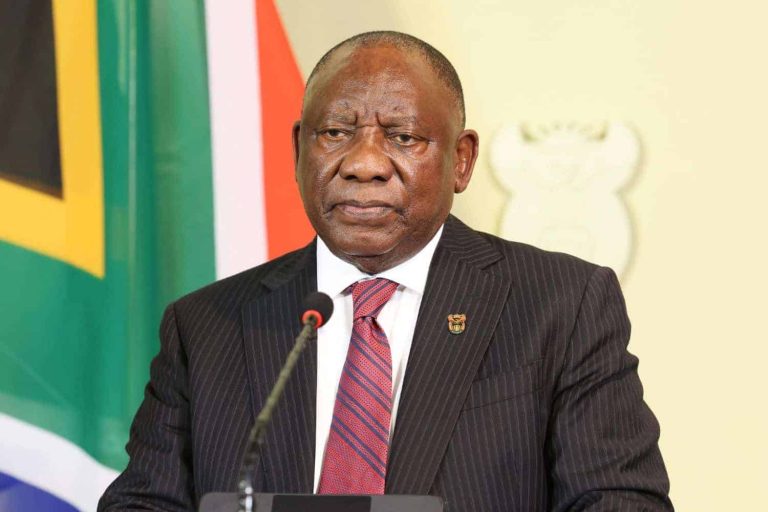
President Cyril Ramaphosa has called on all parties to exercise maximum restraint after the United States and Israel launched strikes against Iran on Saturday, and Iran’s retaliatory missile salvo.
US President Donald Trump on Saturday said America began “major combat operations” in Iran after Israel also said it had launched missile attacks against the country.
Iran strikes
The strikes, which Trump said were aimed at destroying Iranian missiles and annihilating its navy, follow repeated US-Israeli warnings that they would strike Iran if it pressed ahead with its nuclear and ballistic missile programmes.
Iran retaliated, targeting Israel and US assets in multiple Middle East countries, including Qatar, the UAE, Kuwait, Bahrain, Syria, Jordan, Saudi Arabia and Iraq.
ALSO READ: What led to US-Israeli strikes on Iran: protests, nuclear power and proxies
Airspaces closed
The attacks have seen Middle Eastern countries close their airspaces, leaving thousands of travellers, including those travelling to and from South Africa, stranded.
Iran, Iraq, Israel, Syria, Kuwait and the United Arab Emirates all announced at least partial closures of their skies in the hours after smoke began rising over Tehran and Iran began retaliatory attacks in the region.
Ramaphosa’s ‘deep concern’
Ramaphosa’s spokesperson Vincent Magwenya said the president has expressed “deep concern” regarding the escalation of tensions in the Middle East.
“These developments pose a serious threat to regional and international peace and security, with far-reaching humanitarian, diplomatic and economic consequences.
“President Ramaphosa calls on all parties to exercise maximum restraint and to act in a manner consistent with international law, international humanitarian law and the principles of the United Nations Charter,” Magwenya said.
ALSO READ: US allows non-emergency staff to leave Israel as Trump threatens Iran strikes
Magwenya added that Article 51 of the UN Charter provides for self-defence only when a state has been subjected to an armed invasion.
“Anticipatory self-defence is not permitted under international law and self-defence cannot be based on assumption or anticipation.
“Experience has repeatedly demonstrated that there can be no military solution to fundamentally political problems that can and should be resolved diplomatically. Military confrontation has never delivered sustainable peace, nor has it addressed the legitimate grievances that underlie conflict,” Magwenya said.
Magwenya said long-term peace and stability can only be achieved through “inclusive dialogue and a genuine commitment to justice and coexistence”.
Call for diplomacy
Ramaphosa, meanwhile, has reiterated his call for intensified diplomatic efforts to de-escalate tensions and create space for continued meaningful negotiations.
“We urge the international community, including multilateral institutions and regional partners, to redouble efforts aimed at promoting mediation and peaceful resolution.
“As a nation that has emerged from conflict through dialogue and reconciliation, South Africa remains steadfast in its belief that peace is not only possible, but imperative for the shared future of the Middle East and the world,” Ramaphosa said.
The International Atomic Energy Agency (IAEA) said it is “closely monitoring developments in the Middle East and urges restraint to avoid any nuclear safety risks to people in the region”.
“The IAEA is in permanent contact with countries in the region, so far no evidence of any radiological impact,” it said in a post on X, adding that the agency “will keep monitoring the situation and informing”.
Deaths at girls’ school
Meanwhile, more than 50 people, including children, died after a missile hit a girls’ school in southern Iran during the US-Israel strikes on the country.
The missile hit the school in Minab in southern Iran’s Hormozgan province. The city is home to a base of the Iranian Revolutionary Guards.
The death count in the strike kept rising through the day and, in the evening, the Iranian judiciary said the figure had touched 85, as reported by news agency AFP.
NOW READ: Ramaphosa moves inquiry into Iran’s participation in naval drill to Presidency
About the Author