Last week, we discussed how black anime fans feel incensed because of the absence of well-written black characters in the medium.
I dismissed those claims by pointing out that Japanese people have so little exposure to black people that expecting black representation in anime is as ridiculous as expecting Japanese representation in Nollywood.
But wasn’t that the end of the discussion? Well, not quite. We are yet to answer one vital question: why are these accusations of racism happening to begin with? Geography plays a crucial role in this conversation.
Younger viewers were the primary source of the racism accusations. I have yet to encounter anyone who started watching anime in the 1990s or even the noughties, who cares about black representation in anime.
However, many of those older individuals are just as vocal as their younger counterparts about black representation in other media. They turned out in full force when Black Panther debuted in 2018, flooding cinemas the world over in their T’Challa cosplay.
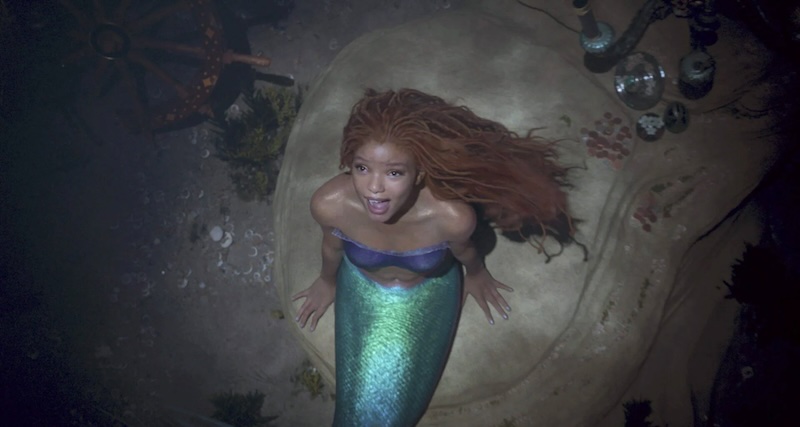
They applauded Disney when the studio cast Halle Bailey, an African American girl, as Ariel in The Little Mermaid, a role typically played by white actresses. They routinely oppose claims of ‘Black-Washing’ whenever a Hollywood documentary or adaptation uses a black woman to portray Cleopatra, who was historically fair-skinned (despite ruling Egypt, Cleopatra was Greek).
But have you met a Ugandan who was passionate about those conversations? Representation does not matter to us, and why would it? If you asked me to choose between a Chinese drama with an all-Chinese cast and a Ugandan drama with an all-Ugandan cast, I would choose the Chinese drama without hesitation. Why?
Because I am a black man living in Uganda, surrounded by Ugandan faces. I’m steeped in Ugandan traditions, cuisine, and culture. Ugandan content featuring Ugandan actors is everywhere in this country.
A Ugandan drama won’t show me anything I don’t see every single day. On the other hand, when will I visit China? Probably never. I don’t think I have ever even spoken to a Chinese person.
The Chinese drama is more exciting because it will take me to a world I have never known, inhabited by people who could not be more different from me. So naturally, black representation is irrelevant to me.
Seeing black faces in science fiction, fantasy, and even anime means nothing to me. However, our brethren in the West are the opposite. Calling them ‘brethren’ is a stretch because black people in Africa and black people in the United States (and Europe) are nothing alike.
I don’t even think they should call themselves ‘African American.’ Black skin does not make them African; they are American. That said, you can sympathise with their plight. If I spent my life surrounded by white faces in a country with a history of severe racism, where open or stealthy discrimination is commonplace, representation would mean everything to me.
Seeing strong characters with black faces in anime would do wonders for my self-esteem. It would, at the very least, add a brick to the foundation from which my self-worth as a human being would eventually emerge.
On the flip side, the absence of black faces in the fictional worlds I love would reinforce the idea that white skin rules the world and black people belong on a lower rung in society. My opinion has not changed.
I don’t think the minds behind anime and manga are racist. However, at the same time, the black people who throw those accusations are not quite as silly as I initially thought they were. We live in different worlds. It is only natural for us to approach this topic from different avenues.
katmic200@gmail.com
About the Author