A clear plastic raincoat once worn by Queen Elizabeth II is among around 300 garments and fashion artifacts now on display at the King’s Gallery in Buckingham Palace, as a new exhibition explores her life, reign, and enduring influence on British fashion.
The late monarch, who famously believed “the monarch had to be seen to be believed,” often adapted her wardrobe to ensure visibility during public engagements—even in Britain’s unpredictable weather. One of her practical innovations, a transparent raincoat, allowed her signature style to remain visible without being hidden by a traditional black umbrella.
The exhibition opens on Friday and is being described as the most comprehensive showcase of her fashion choices ever mounted. It forms part of preparations to mark the centenary of her birth and draws from a collection of about 4,000 items once owned by the queen.
It traces her evolution from a young princess to Britain’s longest-reigning monarch, highlighting how clothing became a key form of public communication and diplomacy.
Curator Caroline de Guitaut said the queen had a strong personal sense of style and intention in her appearance.
“I think she had a definite sense of what suited her,’’ she said. “She absolutely knew how she wanted to appear.”
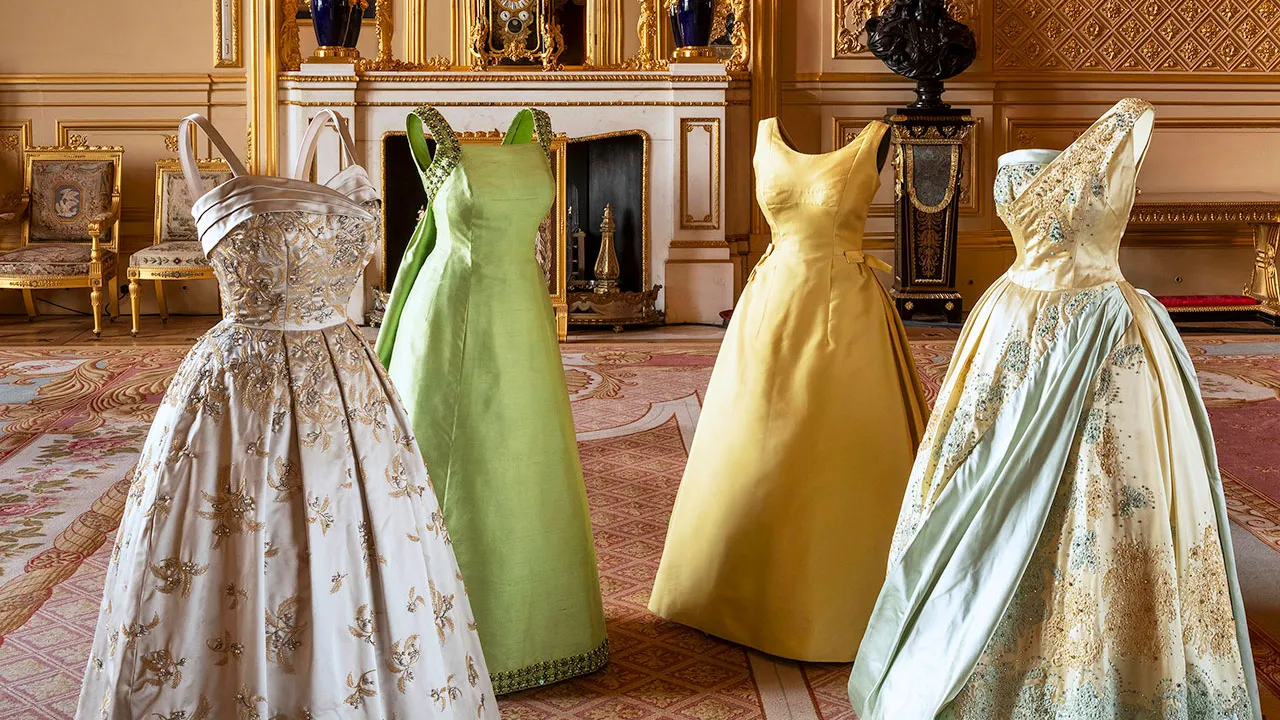
The exhibit includes some of Elizabeth’s most recognizable outfits, such as ball gowns, tweed suits, and trademark headscarves, many of which are now displayed on mannequins rather than being worn, creating an unusual museum perspective on one of the world’s most photographed figures.
Among the standout pieces are rare and unusual items, including the dress and bloomers worn by the queen’s stunt double during the opening ceremony of the 2012 London Olympics.
In the staged sequence alongside actor Daniel Craig in his James Bond role, the illusion showed the monarch parachuting into the stadium before she later appeared in the stands wearing an identical outfit.
Both versions, designed by longtime dressmaker Angela Kelly, are displayed side by side, with the stunt double’s version featuring a large rear zipper for parachute rigging.
The exhibition also highlights how fashion served as a diplomatic tool, with carefully chosen colours and designs used to honour host nations. One example is a green and white Norman Hartnell gown worn during a 1961 state banquet in Pakistan, reflecting the country’s national colours.
“The queen had an intimate understanding of how fashion could lend itself to diplomacy, a trait which, while its origins certainly lay in earlier reigns, the queen developed into nothing short of an art form,’’ de Guitaut said.
“Color or embellishment communicated messages of respect to her host nation before she had even uttered a word in her speech.”
Boluwatife Enome