President Bola Tinubu has formally written to the Senate, seeking the approval of the National Assembly to present the 2026 Appropriation Bill.
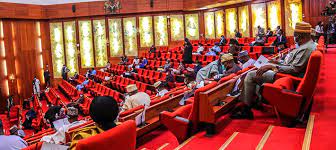
The request was conveyed in a letter read by the Senate President during plenary on Thursday. In the letter, the President proposed to present the 2026 budget to a joint session of the National Assembly on Friday at 2:00 p.m.
However, the proposed timing generated concerns among some lawmakers, who noted that it coincides with the Friday Muslim prayers. Several senators raised objections during the session and appealed for a reconsideration of the schedule to accommodate religious obligations.
In response, the Senate President assured the chamber that he would consult with President Tinubu on the matter with a view to adjusting the proposed time.
President Tinubu last presented the 2025 budget, estimated at ₦49.7 trillion, to a joint session of the National Assembly on December 18, 2024. Key allocations in that proposal included ₦4.91 trillion for defence and security, ₦4.06 trillion for infrastructure, ₦2.4 trillion for health, and ₦3.5 trillion for education, among other sectors.
The 2025 budget represented an increase of about ₦20 trillion over the 2024 budget.
Earlier, in December 2023, the President presented his maiden budget of ₦27.5 trillion for 2024 before the National Assembly. Lawmakers subsequently increased the proposal by ₦1.2 trillion, approving a total budget of ₦28.7 trillion.
In the 2025 fiscal plan, President Tinubu projected crude oil production at 2.06 million barrels per day and expressed optimism that the importation of finished petroleum products would decline, while exports of refined products would rise.
Reaffirming his administration’s commitment to economic recovery and reform, the President said the economy was beginning to respond positively to government interventions and pledged that the reform agenda would not be reversed.
“The reforms are yielding results, and there will be no reversals,” Tinubu said at the time.
He also acknowledged the challenges of corruption and insecurity, describing them as existential threats to the nation, but stressed that they are surmountable through collective effort.
“The time for lamentation is over. The time to act is now,” the President declared.
About the Author