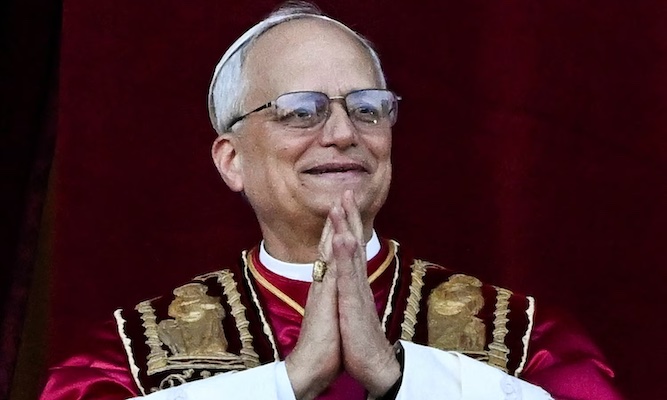
Pope Leo XIV has begun a 10-day tour of Africa, visiting four countries in a mission to draw global attention to the continent where more than a fifth of the world’s Catholics reside.
The pope’s itinerary will take him to Algeria, Cameroon, Angola and Equatorial Guinea, covering nearly 18,000 kilometres across 11 cities and towns through 18 flights.
According to Michael Czerny, a senior official at the Vatican, the trip is intended “to help turn the world’s attention to Africa”.
Leo, the first US-born pope, has made limited foreign trips since his election last May, previously visiting Turkey, Lebanon and Monaco. At 70, he is undertaking one of the most complex papal tours in decades.
Africa accounts for more than 20% of the global Catholic population, with the three sub-Saharan countries on the tour having majority Catholic populations.
However, Algeria remains overwhelmingly Muslim, with fewer than 10,000 Catholics among its roughly 48 million people. The visit marks the first time the country will host a Catholic pope.
The tour is the 24th papal visit to Africa since the late 1960s and is expected to address a wide range of issues.
Matteo Bruni said the pope will deliver 25 speeches during the visit, touching on topics such as natural resource exploitation, interfaith dialogue between Christians and Muslims, and political corruption.
In Cameroon, one of the tour’s key stops, about 600,000 people are expected to attend a Mass in the coastal city of Douala on Friday.
Leo is expected to deliver remarks in multiple languages, including Italian, English, French, Portuguese and Spanish.
The visit begins in Algeria, where the pope will meet political leaders and visit the Great Mosque of Algiers, only his second mosque visit since becoming pope.
He will also travel to Annaba to visit the ruins of Hippo, a site linked to St Augustine, whose teachings influence the Augustinian order to which Leo belongs.
The tour is expected to highlight both the opportunities and challenges facing Africa, while reinforcing the Catholic Church’s growing presence on the continent.
Faridah Abdulkadiri