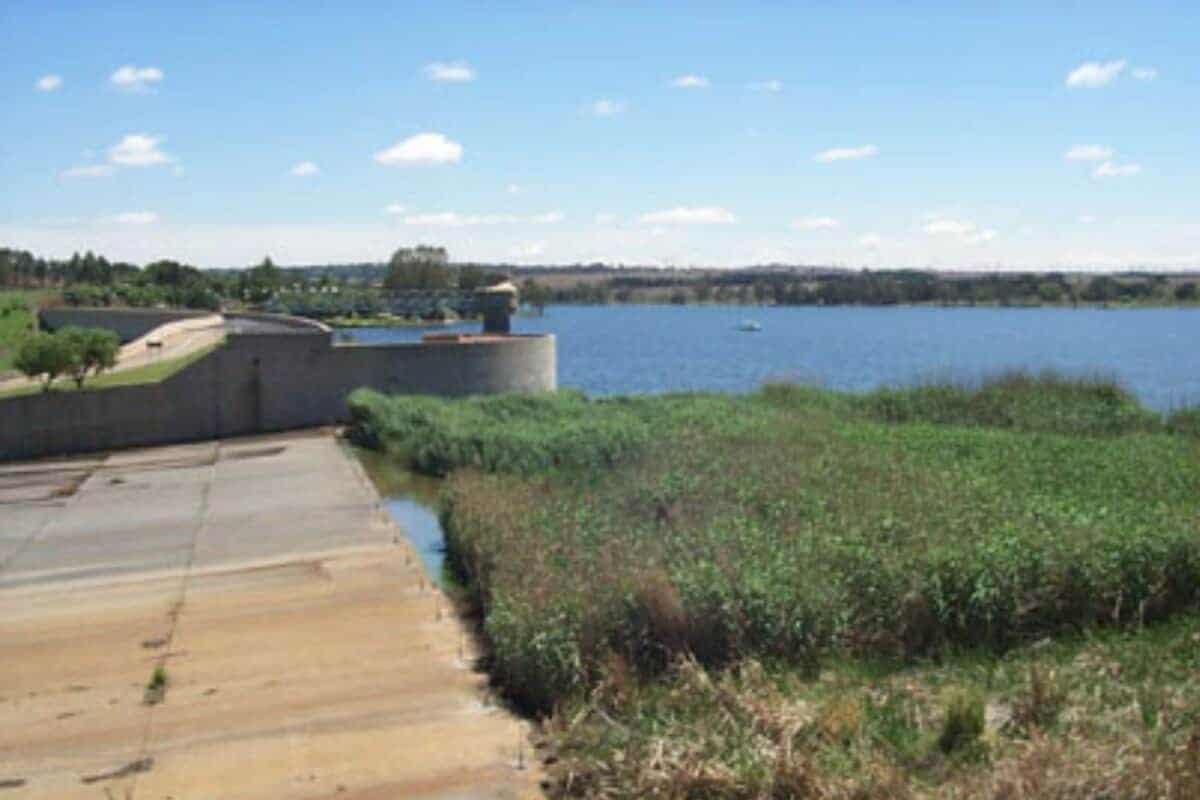
The pollution choking Pretoria’s Rietvlei Dam is no sudden event but the predictable outcome of South Africa’s collapsing wastewater system.
Experts warn without proper funding, maintenance and oversight, rivers and critical water sources will continue to deteriorate, leaving municipalities scrambling for solutions.
DA Tshwane mayoral candidate Cilliers Brink said the poor quality of the effluent discharged into the river remains a major cause of pollution of the Rietvlei Dam.
He had visited the point where the Hartebeestfontein wastewater treatment plant in Ekurhuleni discharges effluent into the Rietvlei River.
“Since last year, the pollution of Rietvlei Dam has meant that Tshwane metro can no longer extract water from this abundant natural source for purification and distribution,” he said.
Brink said Tshwane, on the other hand, has been less than candid about what is happening at Rietvlei.
“ANC deputy mayor Eugene Modise claimed Rietvlei can be rehabilitated in a few months. Judging from the state of pollution, the project to fix Rietvlei will be far more complicated,” he said.
Brink said Tshwane had to do everything in its power, including exploring more than one possible technical solution, to rehabilitate Rietvlei because it holds the potential to make Tshwane significantly more independent from bulk water suppliers.
Last month, Tshwane mayor Nasiphi Moya, along with the Deputy Minister of Water and Sanitation David Mahlobo and MMC for utility services Frans Boshielo, made an oversight visit to the Rietvlei water treatment plant, where she confirmed Ekurhuleni Water Care Company was conducting a rehabilitation programme at the dam, which will conclude in June and coincide with the plant’s rehabilitation.
Moya also said while the plant’s capacity is being upgraded, it was shut down due to a sewage spill upstream that contaminated Rietvlei Dam – a source of water supply for the plant.
WaterCAN executive director Ferrial Adam said the pollution of the Rietvlei Dam is not new; it is the predictable outcome of a national wastewater crisis that has been ignored for years.
“Across South Africa, around 70% of wastewater treatment works are in a critical state and nearly 60% of our rivers are classified as threatened,” she said.
“What we are seeing at Rietvlei is not an isolated failure – it is part of a systemic collapse in how municipalities manage wastewater and protect our water resources.”
Adam said it was deeply frustrating to see this framed as a political revelation, particularly in an election year.
About the Author