The Uganda Police Force is steadily embracing technology as a central pillar in its fight against crime, marking what officials describe as a transition to more professional, intelligence-led policing.
Over the past few years, reforms anchored in digital innovation have begun to yield measurable improvements in traffic management, crime detection, service delivery and institutional efficiency.
Security agencies say the shift reflects a broader strategy to move from reactive enforcement to predictive and data-driven operations. One of the most notable developments has been improved coordination between police and other regulatory bodies.
Integrated data-sharing platforms and centralised command systems have strengthened collaboration between police, road safety authorities and local government structures, enhancing response times and operational oversight.
CCTV expansion and digital records
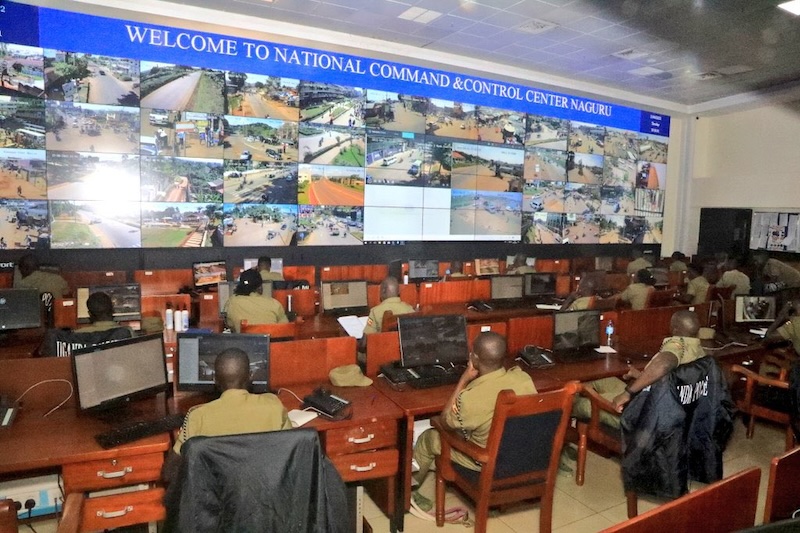
The expansion of the national CCTV infrastructure has significantly bolstered investigative capacity. The National Command Centre in Naguru now monitors live feeds and supports rapid deployment of response units when incidents occur.
At the same time, the digitalisation of police records has improved case tracking and evidence management. Officers can retrieve and share information more efficiently across districts and specialised units, reducing delays associated with manual documentation.
Intelligent Transport Monitoring System
The introduction of the Intelligent Transport Monitoring System (ITMS) has further transformed road enforcement. The system enables rapid data collection and faster intelligence processing, allowing for timely and targeted interventions.

Police recently demonstrated the system’s operational capacity when a stolen vehicle was tracked and recovered within 24 hours of being reported missing. In 2025, police reports indicate that ITMS assisted the rapid response enforcement unit in locating and returning more than 50 vehicles and motorcycles reported stolen.
ITMS also played a role in tracing a vehicle linked to the murder of businessman Anthony Mutinisa. Investigators were able to monitor the car’s movement, leading to the arrest of two suspects in Kanungu district and recovery of the vehicle.
Officials say such cases reflect a broader shift from traditional checkpoint-based policing toward intelligence-driven operations supported by digital surveillance and artificial intelligence tools.
Traffic control centre
In September 2025, police launched a state-of-the-art Traffic Control Centre in Kampala aimed at modernising traffic management across the city.
The facility serves as a central hub equipped with advanced monitoring systems, smart signal control technology and real-time data analytics designed to reduce congestion, improve traffic flow and enhance road safety.
Authorities note that 59 road junctions have already been signalised under the initiative, reducing reliance on manual traffic enforcement.
Motor Vehicle Registry reforms
The Motor Vehicle Registry (MVR) has also introduced an electronic portal to streamline registration and record management services.
The system enables faster data analysis and improves accuracy in transport recovery operations. It is expected to reduce paperwork, eliminate long-standing service bottlenecks and enhance transparency.
Balancing innovation with safeguards
While the technological gains are evident, experts caution that sustained investment in training, infrastructure maintenance and cybersecurity safeguards is essential to ensure long-term effectiveness.
As police continue to integrate digital tools into daily operations, the success of the reforms will depend not only on technology itself, but also on institutional capacity and public trust in emerging surveillance systems.
About the Author