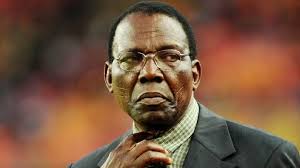
The Nigerian sporting community is in mourning following the announcement that High Chief Festus Adegboye Onigbinde, a monumental figure in the nation’s football history, has transitioned at the age of 88. His passing was confirmed on Monday by family representative Bolade Adesuyi through a formal statement shared with the public, marking the end of an era for the man who broke barriers as the first indigenous head coach of the Super Eagles.
The family’s official tribute highlighted his multifaceted legacy:
“With great gratitude to God for a life well spent, we announce the passing of this great man, a Modakeke High Chief, the first indigenous Nigerian Super Eagles football coach, father, husband, grandfather, great-grandfather, brother and friend, High Chief Festus Adegboye Onigbinde, who passed unto the great beyond a couple of minutes ago.”
Born in March 1938, Onigbinde was a foundational architect of modern Nigerian coaching. His first major milestone came in 1984, when he guided the national team to a silver medal at the Africa Cup of Nations, narrowly falling to Cameroon in the final. After a period away from the top job, he was called upon again in 2002 to lead a squad in transition following the dismissal of the previous technical crew just months before the FIFA World Cup.
His tenure during the tournament in Japan and South Korea was characterized by a bold youth-focused recruitment strategy. However, the experimental side faced a difficult group stage, suffering a 1–0 defeat to Argentina and a 2–1 loss to Sweden—despite an early lead—before concluding with a 0–0 draw against England. While the early exit drew contemporary criticism from star players like Jay-Jay Okocha regarding selection choices, many of the young talents Onigbinde introduced eventually became long-term pillars of the national team.
Beyond the dugout, Onigbinde’s influence extended across the continent and the globe. He served as a highly regarded technical instructor for both CAF and FIFA, dedicating his later years to the education of future coaches. His departure leaves a void in the administrative and technical circles of African football, where he remained a respected voice until his final days.
About the Author