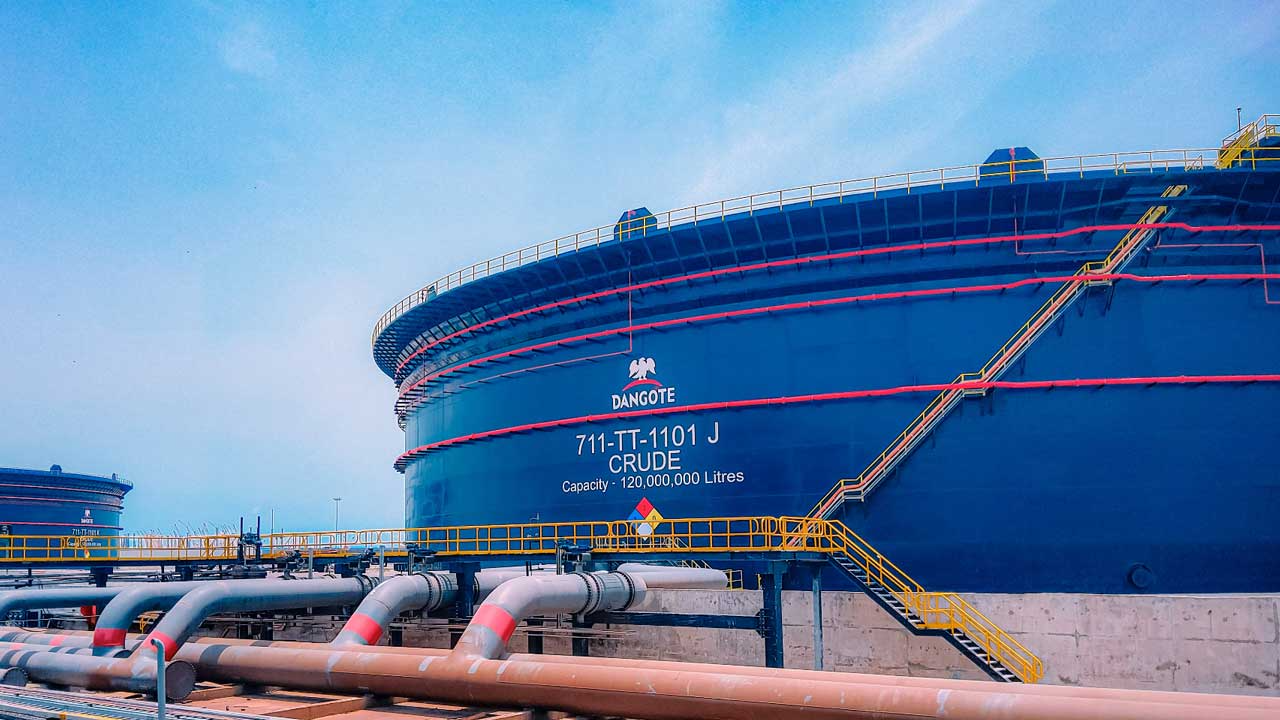
Dangote Refinery says gantry loading remains cheapest option, urges pipeline expansion to cut distribution costs and protect consumers….
Dangote Petroleum Refinery has cautioned that continued reliance on coastal transportation of petroleum products could drive petrol prices in Nigeria close to N1,000 per litre, warning of significant cost implications for consumers and the wider economy.
In a statement issued on Thursday, the refinery maintained that direct gantry loading remains the most efficient and cost-effective distribution method, capable of supporting price stability across the downstream sector.
The company said its position is backed by sustained investment in critical logistics infrastructure, including a world-class gantry facility with 91 loading bays capable of dispatching up to 2,900 tankers daily. Operating round the clock, the facility can evacuate more than 50 million litres of premium motor spirit (PMS), 14 million litres of diesel, and other refined products each day.
While acknowledging that coastal shipping may be necessary in certain logistical situations, the refinery emphasised that gantry evacuation eliminates avoidable expenses.
“Direct gantry evacuation removes port charges, maritime levies and vessel-related costs that do not add value to end users. This helps optimise costs, improve distribution efficiency and support price stability,” the company said.
The refinery added that marketers remain free to choose their preferred evacuation method, with PMS and other products available at competitive gantry prices.
However, it warned that heavy dependence on coastal delivery, particularly within Lagos, could introduce avoidable costs with far-reaching consequences for fuel pricing and consumer welfare.
“Coastal logistics can add approximately N75 per litre to the cost of petrol. If transferred to consumers, this could push the pump price of PMS close to N1,000 per litre,” the refinery stated.
According to the company, prolonged reliance on coastal distribution could generate additional annual costs of about N1.75 trillion, based on Nigeria’s average daily consumption of roughly 50 million litres of PMS and 14 million litres of diesel. It noted that such costs would ultimately be borne either by producers or consumers.
Dangote Refinery also renewed its call for coordinated nationwide investment in pipeline infrastructure, arguing that efficient pipelines linking refineries to depots would significantly reduce distribution expenses, improve supply reliability and strengthen national energy security.
Responding to claims that it imports finished petroleum products, the refinery described the allegations as misleading. It explained that while its Residue Fluid Catalytic Cracking Unit is currently undergoing maintenance, only intermediate feedstock is being imported in line with global refining practice.
“We challenge anyone with credible evidence of finished product importation to present it to the appropriate regulatory authorities. Such claims are often driven by interests seeking to justify continued dependence on fuel imports,” the statement said.
Highlighting the impact of domestic refining, the company noted that since operations commenced, diesel prices have declined from about N1,700 per litre to between N980 and N990, while PMS prices have fallen from roughly N1,250 per litre to a range of N839 to N900.
It added that increased local refining has significantly reduced fuel importation, eased pressure on foreign exchange demand and supported currency stability, with the naira recently trading around N1,385 to the dollar.
The refinery concluded by urging marketers, regulators and policymakers to prioritise logistics and distribution strategies that align with national economic interests, protect consumers and preserve the long-term gains of domestic refining.
About the Author