Former Anambra governor cites new policy study showing poverty may have climbed above 60%, saying millions of Nigerians are struggling to afford basic needs…..
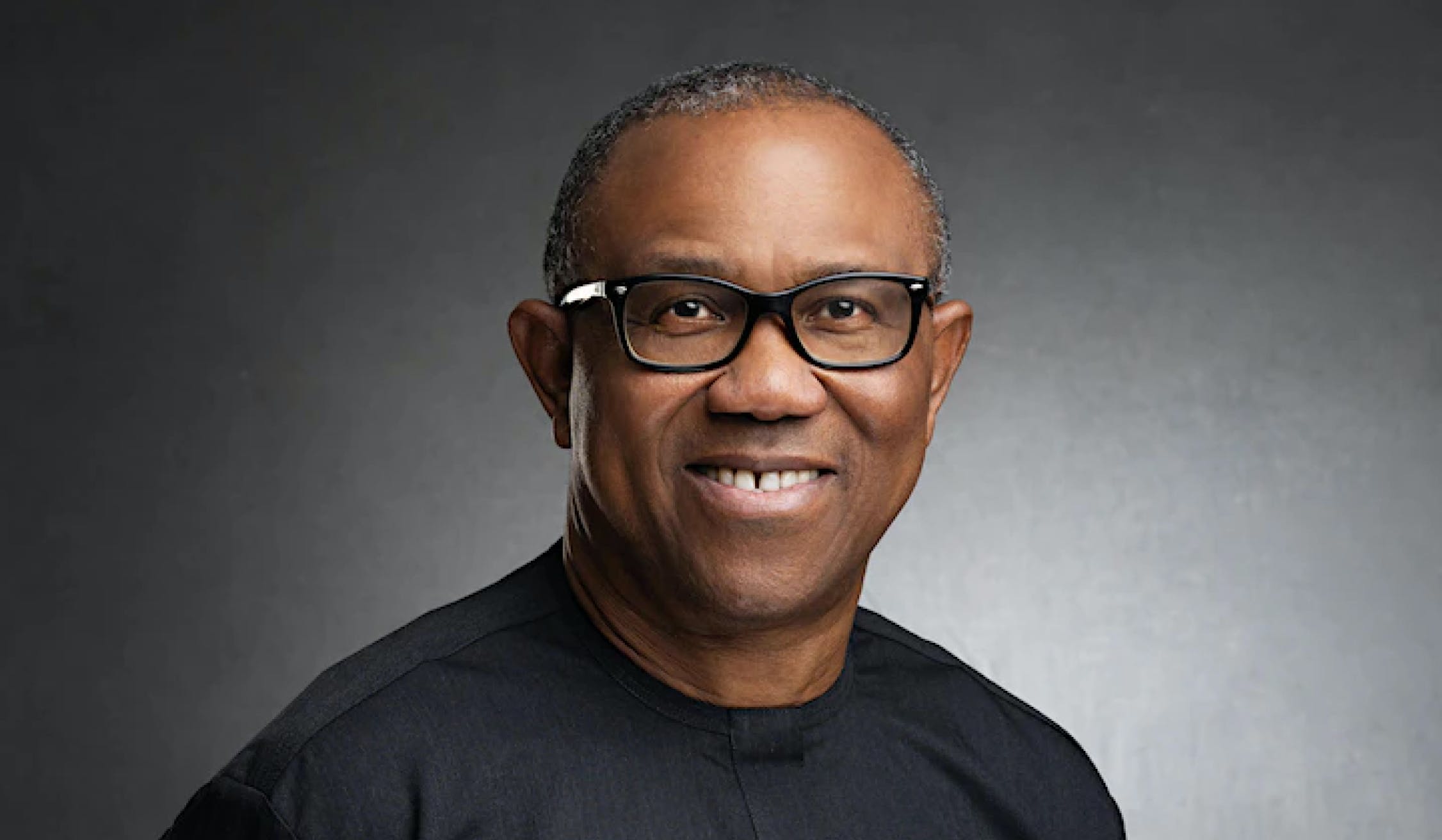
Former Anambra State Governor and Labour Party presidential candidate, Peter Obi, has attributed the rising number of Nigerians living in poverty to the economic reforms implemented by President Bola Ahmed Tinubu’s administration.
In a statement shared on his official X account on Sunday, Obi argued that the policies introduced since the current government assumed office have significantly worsened living conditions for many citizens.
According to him, a recent policy study conducted by Agora Policy indicates that Nigeria’s poverty rate has surged dramatically, climbing from a baseline of about 49.8 percent to roughly 63 percent after the reforms were introduced.
Obi said the figures highlight the growing economic hardship faced by households across the country.
“For a nation with an estimated population of more than 220 million people, this means that well above 140 million Nigerians are now living in poverty,” he stated. “Families across the country are finding it increasingly difficult to afford basic necessities such as food, transportation, rent, and healthcare.”
He further explained that many households in Nigeria’s six geopolitical zones are adopting difficult survival strategies as economic pressures intensify. According to him, some families are cutting down on meals, trekking long distances to avoid transportation costs, and relying on borrowing to stay afloat. He also warned that a growing number of small businesses are shutting down due to the challenging economic environment.
The study referenced by Obi was presented during a stakeholders’ dialogue organised by Agora Policy in Abuja.
During the presentation, economist Mohammed Shuaibu, a senior lecturer in the Department of Economics at the University of Abuja, explained that the sharp increase in poverty followed major policy changes such as the removal of petrol subsidy and adjustments to electricity tariffs.
Shuaibu noted that household consumption declined nationwide after these reforms took effect. However, he added that social protection initiatives introduced by the government helped soften the economic shock for some low-income households.
Despite the concerns over rising poverty, Nigeria’s macroeconomic indicators have shown signs of improvement in recent months.
Data released by the National Bureau of Statistics revealed that the country’s economy expanded by 4.07 percent year-on-year in real terms during the fourth quarter of 2025. The figure represents an increase from the 3.76 percent growth recorded during the same period in 2024, indicating stronger economic activity toward the end of last year.
However, Obi argued that economic growth figures alone do not reflect the everyday reality faced by millions of Nigerians.
According to him, genuine economic reform should focus on improving the welfare of citizens while maintaining fiscal discipline.
“True economic reform must be people-centred,” he said. “It must protect the most vulnerable while pursuing fiscal sustainability. Reforms that deepen poverty, widen inequality, and force small businesses to shut down cannot be described as successful.”
Since assuming office in 2023, President Bola Ahmed Tinubu has rolled out several major economic reforms aimed at restructuring Nigeria’s economy. Among the most notable policies are the removal of the long-standing petrol subsidy and the unification of the country’s multiple foreign exchange rates.
The reforms have been widely praised by international financial institutions, including the International Monetary Fund and the World Bank, which argue that the measures are necessary to stabilize the economy and encourage long-term growth in Africa’s largest economy.
The IMF has projected that Nigeria’s economy will grow by 3.9 percent in 2025 and 4.2 percent in 2026. Similarly, the World Bank forecasts growth of 4.4 percent by 2027 and recently upgraded its 2026 projection for Nigeria’s economy to 4.4 percent, up from an earlier estimate of 3.7 percent.
Nevertheless, critics like Obi insist that improvements in macroeconomic indicators will mean little unless they translate into better living conditions for ordinary Nigerians.
About the Author