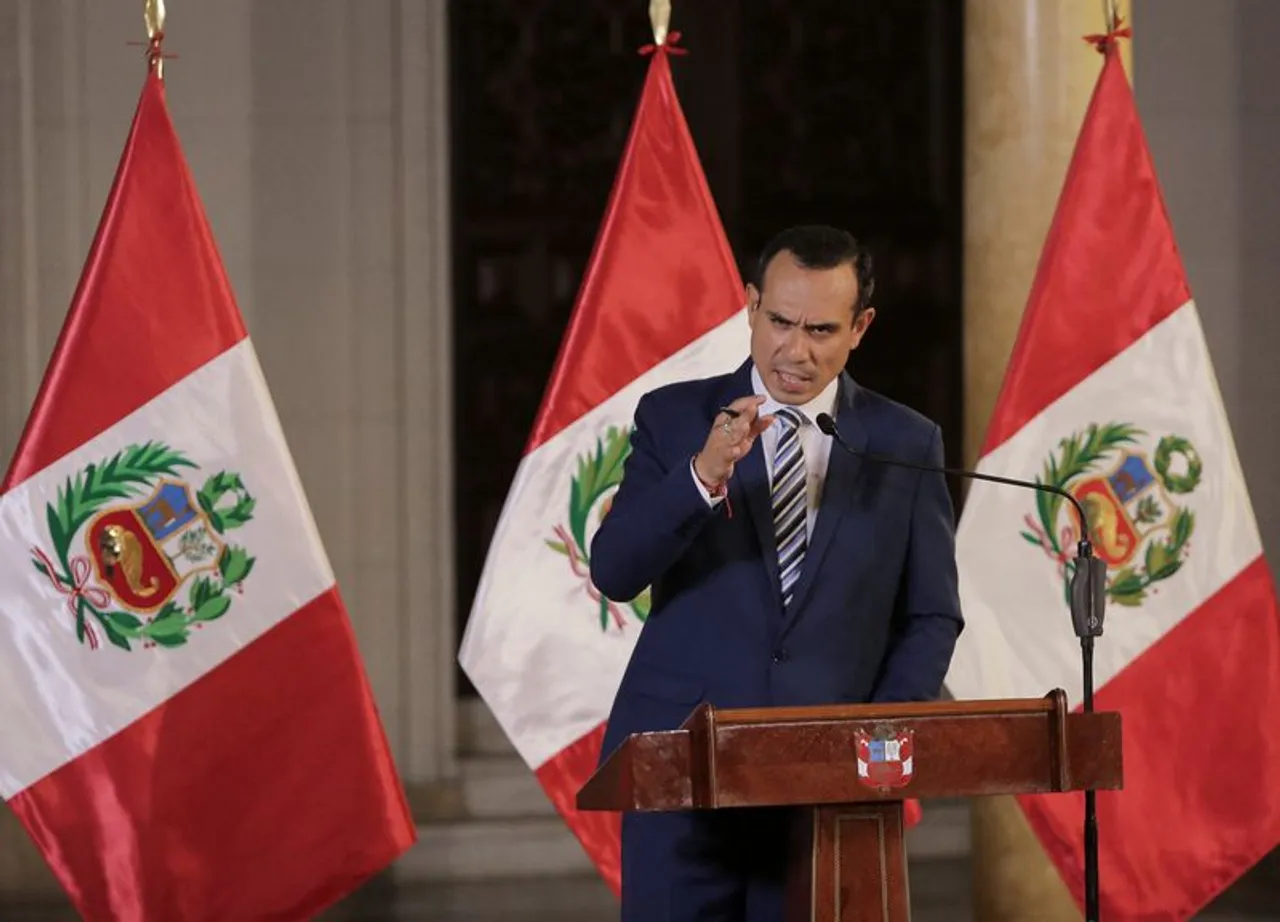
Peru’s Congress has impeached interim president José Jeri, marking yet another dramatic turn in the country’s prolonged political turmoil. At just 39, Jeri becomes Peru’s seventh head of state in less than a decade — and the latest to fall amid allegations of corruption.
Jeri, who assumed office last October, was accused of irregularly facilitating the hiring of several women into government positions and of engaging in suspected graft involving a Chinese businessman with commercial ties to the state.
Prosecutors recently launched a formal investigation to determine whether the president exercised undue influence in public appointments.
The allegations gained traction following a report by investigative television program Cuarto Poder, which claimed that at least five women secured positions in the presidential office and the environment ministry after meeting with Jeri. Prosecutors later stated the number may be as high as nine.
In a separate probe, Jeri is also under investigation for alleged “illegal sponsorship of interests” after reportedly holding a secret meeting with a Chinese businessman connected to government contracts.
Jeri has denied all accusations, maintaining his innocence.
A Presidency Cut Short
Jeri had stepped into the role after Congress impeached his predecessor, Dina Boluarte, amid widespread protests over corruption and escalating violence linked to organized crime.
As head of Peru’s unicameral Congress at the time, Jeri was appointed to complete Boluarte’s term, which runs until July. Elections are scheduled for April 12, and under constitutional rules, Jeri was barred from running.
His removal comes just weeks before Peruvians head to the polls, with more than 30 candidates — a record number — competing in a deeply fragmented political landscape.
Some analysts suggest political maneuvering may have played a role in Jeri’s swift downfall. Rafael López Aliaga, the right-wing Popular Renewal candidate and current frontrunner in opinion surveys, has been among the most vocal critics calling for Jeri’s ouster.
Deepening Institutional Crisis
Congress is now expected to elect a new parliamentary leader, who will automatically assume the interim presidency until July. However, concerns are mounting over the credibility of Peru’s political class.
“It will be difficult to find a replacement with political legitimacy in the current Congress, given the evidence of mediocrity and strong suspicion of widespread corruption,” political analyst Augusto Álvarez told AFP ahead of the impeachment vote.
Peru’s revolving-door presidency underscores a broader institutional crisis. Since 2016, the country has cycled through seven presidents — several impeached, investigated, or convicted of corruption.
At the same time, the nation faces a worsening security crisis. Extortion rackets linked to organized crime have surged dramatically, with bus drivers frequently targeted and, in some cases, shot while on duty if their companies refuse to pay protection money. Reported extortion cases have skyrocketed from 2,396 two years ago to more than 25,000 in 2025.
As Peru approaches another pivotal election, the impeachment of José Jeri adds yet another layer of uncertainty to a country struggling to restore political stability and public trust.