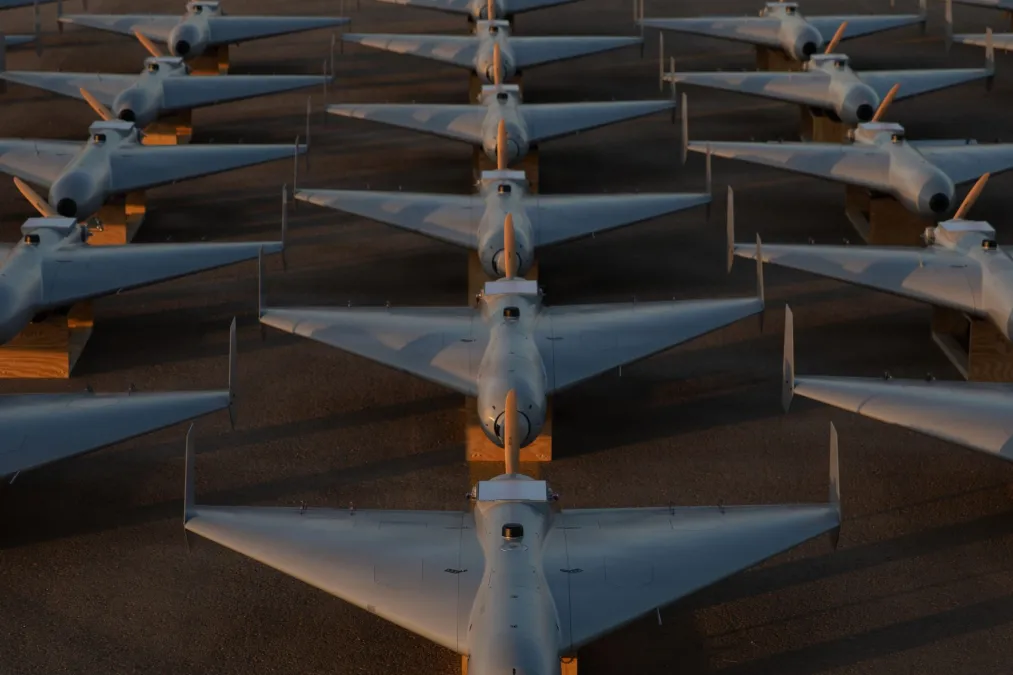
The United States has reportedly deployed a low-cost suicide drone in combat operations in Iran, marking the operational debut of the system just eight months after its public unveiling by the Pentagon.
The drone, known as the Low-Cost Uncrewed Combat Attack System (LUCAS), was developed by SpektreWorks in Arizona. The system was first showcased in July 2025 when U.S. Defense Secretary Pete Hegseth toured a Pentagon exhibition featuring multiple competing defence contractors.
The rapid battlefield deployment reflects a broader U.S. strategy to accelerate weapons development and field low-cost unmanned systems in response to modern warfare trends highlighted by the conflict in Ukraine, where both Ukrainian and Russian forces have extensively utilised swarm-style drone technology.
According to the United States Central Command, the LUCAS platform was partly designed based on characteristics of the Iranian-made Shahed drone series, which have been widely used in regional and international conflicts.
The programme represents a significant shift from traditional Pentagon procurement cycles, which often require several years to move from development to operational deployment. Defence officials say the compressed timeline reflects lessons learned from recent drone warfare, where thousands of inexpensive unmanned systems have been used to achieve strategic battlefield effects.
The deployment is linked to the Pentagon’s broader initiative to scale domestic production of affordable, expendable drones under the approximately $1 billion Drone Dominance Program, authorised under the 2025 defence appropriations framework informally referred to as the “One Big Beautiful Bill.”
The LUCAS drone features an open-architecture design that allows operators to integrate different payloads and communication modules. It can be launched from the ground or mounted on vehicles and used either as a strike platform or as a target training drone.
At an estimated unit cost of about $35,000, the system is significantly cheaper than the MQ-9 Reaper, which costs between $20 million and $40 million per unit but offers greater endurance and advanced surveillance capabilities.
Although the U.S. government holds the intellectual property rights to the LUCAS design, allowing multiple manufacturers to produce the system in the future, SpektreWorks currently retains primary production contracts.
About the Author