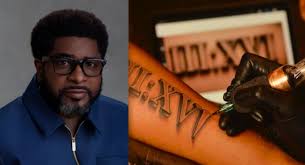
Founder of David Christian Centre, Pastor Kingsley Okonkwo, has addressed criticism trailing his decision to get a Bible-inspired tattoo, describing some reactions from fellow ministers as insulting.
The controversy began after a video surfaced showing the cleric receiving a tattoo of John 3:16 written in Roman numerals, “III: XVI.” The post sparked debate within Christian circles, with some questioning whether the act was appropriate for a pastor.
Responding to the backlash, Okonkwo said only a handful of ministers fully understood his decision. He argued that many of the criticisms were rooted in what he described as “religious bias.”
“On my tattoo issue, only one or two ministers were grounded and sound enough to understand it. Most of them are just religious people,” he said.
He further criticised arguments that, while acknowledging tattooing is not a sin, questioned its necessity or the decision to publicise it. “They said, ‘Tattoo is not a sin, but is it expedient? Why did you post it? Why must you do it?’ That is stupid talk, and I am insulted,” he added.
The pastor also spoke about hierarchy and spiritual authority within Christian leadership, suggesting that not every minister is in a position to challenge others. “There is ranking in the spirit. My junior cannot talk when I am talking. There are people you cannot correct. The scope of what they are handling, you cannot grasp it,” he said.
To support his stance, Okonkwo referenced international Christian figures who have tattoos, including Joyce Meyer and Max Lucado, noting that their actions did not diminish their faith or influence.
“Am I higher than Joyce Meyer? She had a tattoo at eight years old. Am I higher than Max Lucado? He got his tattoo at 70,” he said.
Okonkwo explained that his decision to share the tattoo publicly was connected to his personal calling and audience. He maintained that diversity in expression exists within Christianity and that individual choices should not be used to judge others’ faith.
“In Christianity, there are different flavours. It is not only your style that matters. You don’t want to wear shoes—so what? I want to wear shoes. How does that affect anybody’s faith?” he said.
The debate continues to generate conversation online, reflecting broader discussions about tradition, personal conviction, and evolving expressions of faith within modern Christianity.
About the Author