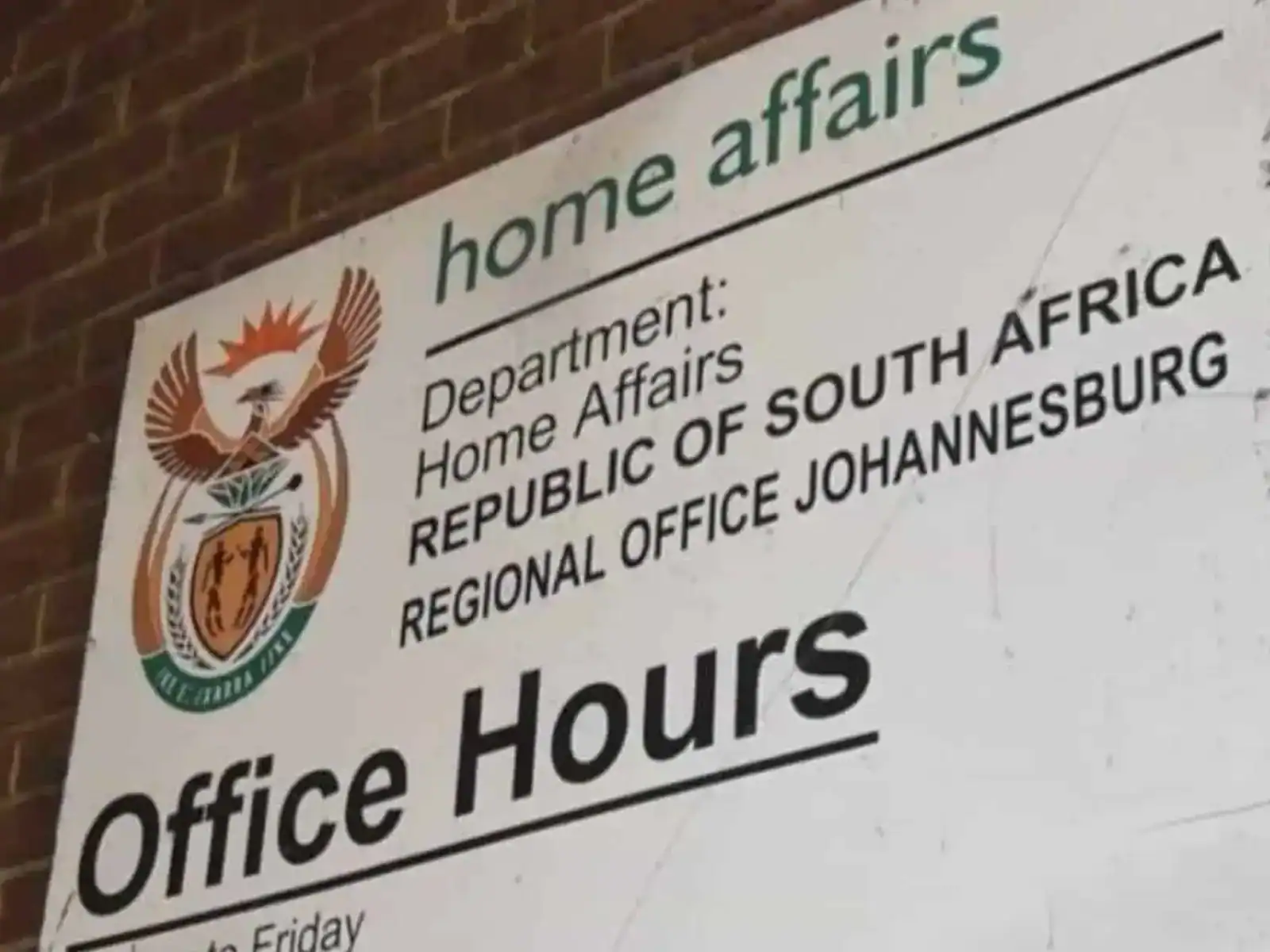
The portfolio committee on home affairs recently hit out at the Department of Public Works and Infrastructure (DPWI) after officials acknowledged persistent failures in securing adequate office space for the Department of Home Affairs, yet arrived before the committee without a credible plan to fix the problem.
The admission came during a heated engagement with the home affairs leadership from the Eastern Cape, KwaZulu-Natal and the Western Cape, alongside senior DPWI officials.
Committee chairperson Mosa Chabane made clear that acknowledgement alone was insufficient.
“It is not enough for the DPWI to simply acknowledge its shortcomings without presenting concrete solutions to ensure the availability of suitable office space,” he said.
“While acknowledging a problem is the first step towards resolving it, the reality is that the DPWI is failing the Department of Home Affairs.”
Chabane said the committee’s concern deepened when officials conceded that a number of offices did not meet basic legal requirements for the people working in and visiting them.
“It is even more concerning that there is an admission that some offices do not comply with occupational health and safety standards,” he said.
He added that the risk posed to members of the public accessing these services could not be ignored.
Fifteen-year procurement delays, costly month-to-month leases exposed
Among the cases that drew the sharpest criticism was the Pietermaritzburg Home Affairs office, where correspondence and procurement processes have reportedly dragged on for 15 years without resolution.
Chabane said the committee viewed this not as an isolated failure but as symptomatic of a broader pattern of institutional inertia within the DPWI that had gone unchecked for far too long.
The committee was equally troubled by the government’s continued dependence on month-to-month lease agreements with private landlords, arrangements Chabane described as fiscally reckless, offering neither stability nor value for public money while leaving client departments permanently exposed to the decisions of private property owners.
“While the committee acknowledged the benefits of relocating some DHA offices to shopping malls, it cautioned that this move may inadvertently place an additional financial burden on poorer communities who must travel further to access services,” Chabane stated.
Furthermore, the committee warned that pulling government offices out of central business districts risked accelerating the economic decline of those areas.
On possible solutions, Chabane said the committee urged the DPWI to consider granting Section 18 exceptions to Home Affairs under the Government Immovable Asset Management Act, which would allow for faster response times and clearer lines of accountability.
It also pushed for greater use of government-owned buildings over private rentals, calling for a long-term infrastructure development model.
Additionally, the committee demanded that clear timelines be attached to all procurement processes.
“The current open-ended approach is unsustainable,” Chabane said, “and cannot be allowed to continue at the expense of South Africans who need these services.”
Staffing crisis leaves provinces running on empty
Beyond the infrastructure crisis, Chabane said the committee was deeply troubled by the severity of understaffing across all three provinces.
The Eastern Cape is currently operating at just 34% of its required staff complement, KwaZulu-Natal at 32%, and the Western Cape at 49%, figures he described as a direct indictment of the state’s failure to prioritise frontline service delivery.
“The chronic under-capacitation of offices, coupled with frequent system downtime, are the main drivers of the long queues experienced at DHA offices,” Chabane said. “Urgent solutions are required to alleviate these challenges and improve the efficiency of the department.”
The committee called for immediate interventions to fill vacant posts, with Chabane noting that the combination of skeleton staffing and regular system outages had created conditions in which effective service delivery had become nearly impossible.
He said the committee was firm that overworked personnel could not be expected to absorb the consequences of poor planning indefinitely, and that excessive overtime was not a solution but a symptom of a system in crisis.
ALSO READ: Here’s how much it will cost you to apply for Smart ID at these bank branches
Birth registration programme under strain
The staffing shortfall is also undermining one of the department’s most critical programmes.
The Early Registration of Birth initiative, which serves as the first point of entry into the national population register, is struggling to cope, particularly in KwaZulu-Natal, where just 14 clerks are responsible for servicing 47 connected healthcare facilities across the entire province.
Chabane said the committee was alarmed by the downstream consequences of this gap, warning that many births were not being registered within the required 30-day period.
He said every child who entered the world without timely documentation faced compounding barriers to accessing education, healthcare and social support.
Chabane called for the ERB programme to be treated as a priority intervention requiring dedicated staffing rather than an afterthought absorbed into an already overstretched workforce.
Thousands of ID documents sit uncollected at offices
The committee also raised concern about the growing volumes of uncollected Smart ID cards and green bar-coded identity documents accumulating at Home Affairs offices.
In some cases, Chabane noted, green bar-coded IDs were being stored at offices that no longer even issued that type of document, an administrative failure he said was compounding the department’s existing backlogs.
The committee urged the department to consider ward-based collection campaigns in partnership with municipalities, with Chabane stressing that the stakes were particularly high given both the approaching election season and the role identification plays in accessing Sassa grants.
“A citizen who cannot collect their ID because no one has made it easy enough to do so is a citizen whose rights are being quietly undermined,” he said.
The committee also called on the department to fast-track the disposal process for documents that remain uncollected beyond the stipulated period.
Appointment booking system exploited
The committee raised the alarm over allegations that the Branch Appointment Booking System, designed to improve public access to Home Affairs services, was being manipulated by intermediaries reportedly selling appointment slots.
Chabane said the committee viewed the alleged exploitation as a betrayal of the system’s original purpose and a direct harm to the most vulnerable members of the public, who were least able to pay inflated prices for access to services that should be free.
“The DHA must urgently implement measures to secure the system and ensure that the public is protected from unscrupulous individuals who seek to exploit it for selfish gain,” Chabane said.
He warned that a failure to act swiftly would amount to tacit acceptance of corruption at the very point of public contact.
“A system designed to improve access cannot be allowed to become a system that prices out the poor,” he added.
Progress noted at Atlantis office
On a more positive note, Chabane acknowledged progress following his own visit to the Atlantis Home Affairs office.
New offices have since been secured at a nearby mall, and temporary measures have been put in place, with mobile trucks now deployed every Tuesday and Thursday to maintain access for residents in the interim.
He said the committee welcomed the development as proof that swift action is possible when the will to act exists, expressing hope it would serve as a model for resolving similar challenges elsewhere in the country.
READ NEXT: Who gets the credit? Government drags itself into Smart ID bank plans debate
About the Author