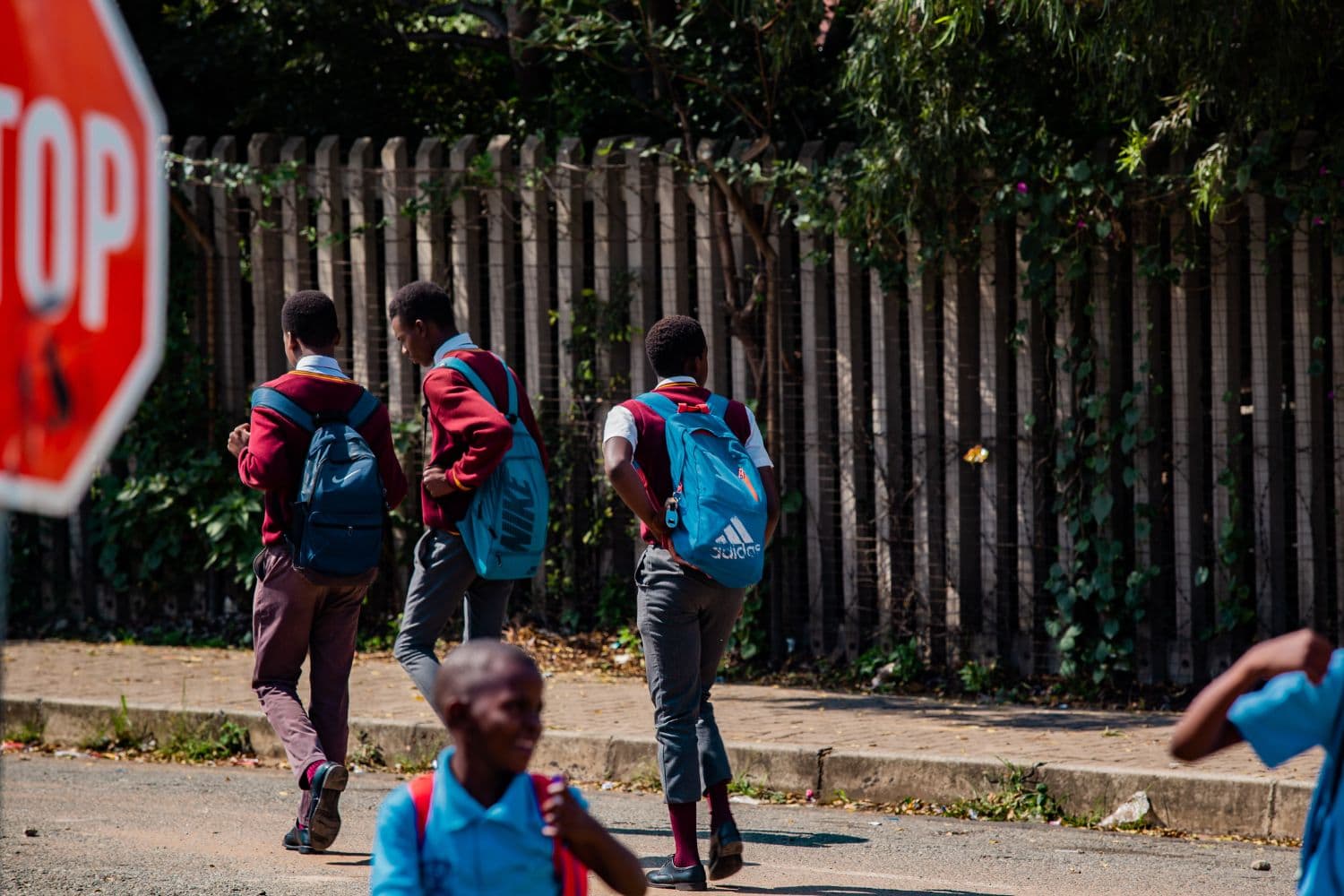
As the new school term gets underway, families across South Africa are being reminded that a child’s journey to and from school can be just as important as what happens in the classroom.
Parents and caregivers have been called upon to take greater responsibility for how children travel each day, particularly when using scholar transport services with public schools set to reopen on 14 January 2026.
Road safety authorities warn that children between the ages of 5 and 14 remain among the most vulnerable road users, with traffic-related incidents continuing to claim young lives.
ALSO READ: Back to school 2026 and everything SA parents should do right now
According to figures by the Road Traffic Management Corporation (RTMC), pupils made up just over 5% of more than 12 000 road deaths recorded nationwide in 2024, underscoring the urgent need for stronger preventive action.
“This is an unacceptable situation as these unfortunate fatalities could have been prevented if proper precautions were taken.
“Parents must understand that road safety starts at home before a child gets into a vehicle that transports them,” RTMC spokesperson Simon Zwane said in a joint statement.
Scholar transport safety: Call for parental vigilance
Zaitoon Rabaney, executive director of ChildSafe South Africa, has emphasised that ensuring pupil safety cannot rest on authorities alone.
She noted that while scholar transport operators are subject to inspection, parents and caregivers play a vital role in identifying potential risks by paying attention to the condition of the vehicles their children use.
Rabaney urged parents to seek other transport options whenever a vehicle shows signs of being unsafe or not fit for the road.
READ MORE: Outcry as Gauteng scraps school security
Parents are also encouraged to verify driver credentials before allowing children to board.
“Scholar transport must never be viewed as a mere convenience, but as a critical service that requires rigorous safety standards.
“Collectively, we must ensure that operators are not only legally compliant but also fit for the duty of transporting children.”
Government steps up enforcement
Speaking to the media this week, Transport Minister Barbara Creecy highlighted that scholar transport safety formed the final phase of the December–January road safety campaign.
She visited the North West on Thursday to inspect 60 school buses at a depot, where officials tested brakes, gears and other safety components.
“We want to make sure that these vehicles are in good condition,” Creecy said.
READ MORE: Grade R learner dies in tragic scholar bus accident
The minister acknowledged ongoing safety challenges in scholar transport and indicated that the North West provincial government had responded by establishing a dedicated enforcement unit.
The province operates a fleet of 786 buses from more than 300 service providers.
“If a bus company brings a roadworthy vehicle here, but then substitutes that with an unroadworthy vehicle, they will be caught by the law enforcement authorities that they’re now patrolling villages and schools in villages because this is where we have seen cheating.”
Watch the video below:
Creecy pointed out private scholar transport vehicles hired by parents must be clearly marked and tested.
“They must also be brought to road safety vehicle testing sites so that they can be tested for road worthiness.”
She emphasised the importance of policing driver behaviour following a serious incident last year in which a roadworthy bus was driven by an intoxicated driver.
“We want to make sure that taxi associations and bus operators are self-policing and making sure that their drivers are behaving in a responsible manner when they carry people’s precious children to and from schools.”
Road conditions and funding challenges
Addressing poor road conditions, Creecy said responsibility lay with provincial and municipal authorities, adding that a unified set of road maintenance standards had been adopted last year.
This aims to ensure conditional grants are properly spent and that municipalities do not return infrastructure funding while roads deteriorate.
Creecy added tat funding for scholar transport remains under discussion following engagements with Education Minister Siviwe Gwarube.
“That policy is aimed at trying to address the question of the standard of transport that learners receive, the amount of transport that learners receive, and in the longer term in conjunction with National Treasury, the financing of scholar transport.”
NOW READ: Back-to-school: Cost of Grade 8 surges far beyond inflation
About the Author